
It only took $4 per gallon of gasoline to encourage Americans to adopt hybrid cars. But with limited supply from Detroit’s big automakers, people are turning to their Asian rivals in droves.
Korean automaker Hyundai reported Thursday that its hybrid sales rose 39% in the third quarter, while Kia’s hybrid sales more than doubled, increasing 152%. Japanese automakers also reported exceptionally strong hybrid sales during the quarter, with Toyota’s sales increasing 29% and Honda’s sales increasing 21%.
Gas prices have soared since the start of the war with Iran in late February. American car buyers are now looking for more fuel-efficient cars, like hybrids. But unlike their Japanese and Korean counterparts, most U.S. automakers sell very few hybrid vehicle lines.
“It just highlights how important it is to have the right product at the right time, but you can’t predict that as well as you’d like,” said Ivan Drury, chief information officer at car-buying site Edmunds.
However, sales of purely electric vehicles have fallen sharply over the past year. They are more expensive than gasoline cars, even more so after a $7,500 tax credit for electric vehicle buyers ended last September. Tesla, the nation’s largest electric vehicle maker, announced Friday that its third-quarter sales fell 2% from a year ago.
But hybrids, which use a combination of gasoline and electric motors, are much more affordable.
“I think this is one of the clearest examples of how consumers are going to find that going with a hybrid will meet their needs much more easily and at a lower price than an electric vehicle,” Drury said.

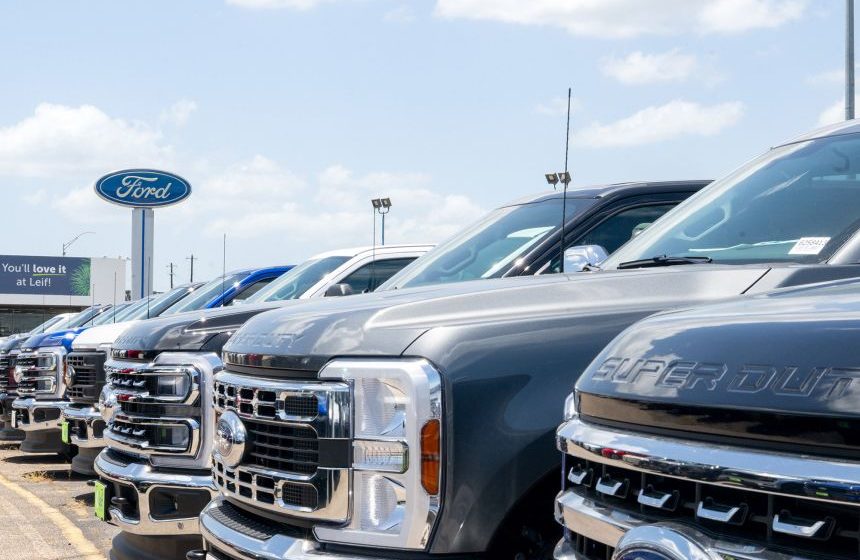
Rising hybrid sales almost allowed Korean automakers to overtake Ford in U.S. sales for the first time ever.
Hyundai and Kia reported combined sales of 506,200 vehicles in the third quarter, up 5.4% from a year ago. Ford, the third largest American automaker by volume, saw its sales fall 6.6% to 509,764, according to figures released by the company on Friday. (Since Hyundai has a significant stake in Kia, most analysts count them together when ranking sales.)
Ford lost its title as America’s second-largest automaker to Japan’s Toyota in 2007, part of a decades-long trend of Americans abandoning Detroit’s Big Three automakers — Ford, General Motors and Jeep and Chrysler maker Stellantis — in favor of Asian automakers. Asian brands first made significant inroads into the U.S. market during the oil shock 50 years ago, and were clearly helped by the latest surge in gasoline prices.
Asian automakers sold more than half of all new cars during the quarter, according to Cox Automotive. American businesses are at an all-time high.
“With Detroit automakers having limited hybrid powertrain options and few passenger car offerings, this trend appears likely to continue,” said Charlie Chesbrough, senior economist at Cox Automotive.
For decades, Detroit’s Big Three companies have abandoned their lines of fuel-efficient sedans and smaller cars to produce large SUVs and trucks with higher profit margins. And before the Iran war, American buyers had no problem purchasing larger, more fuel-guzzling vehicles.
But as the national average rises above $4 a gallon, American buyers are paying new attention to energy efficiency. And American businesses have few options.
Ford only has one mid-size hybrid pickup, the Maverick, and has discontinued its Escape hybrid SUV. Sales of all versions of the Escape fell 85% during the quarter due to dwindling inventories of the car at dealers. GM only offers one hybrid model, which is a version of its niche Corvette sports car. Stellantis announced in January the gradual withdrawal of its plug-in hybrid models in North America.
Even though Ford and GM plan more hybrid models in the coming years, it will take time to change course.
The sales results come just days after the Trump administration announced new, less stringent fuel efficiency requirements for automakers. That could save Detroit automakers money in fines if they don’t meet mileage targets.
But the lack of fuel-efficient models, like hybrids, can hurt long-term growth if buyers go elsewhere, Drury said.
“The momentum that the Big Three have given up is tremendous,” he said. “Repeat purchases are the lifeblood of the auto industry. If you lose someone, getting them back is the hardest thing you can do.”
Gn bussni