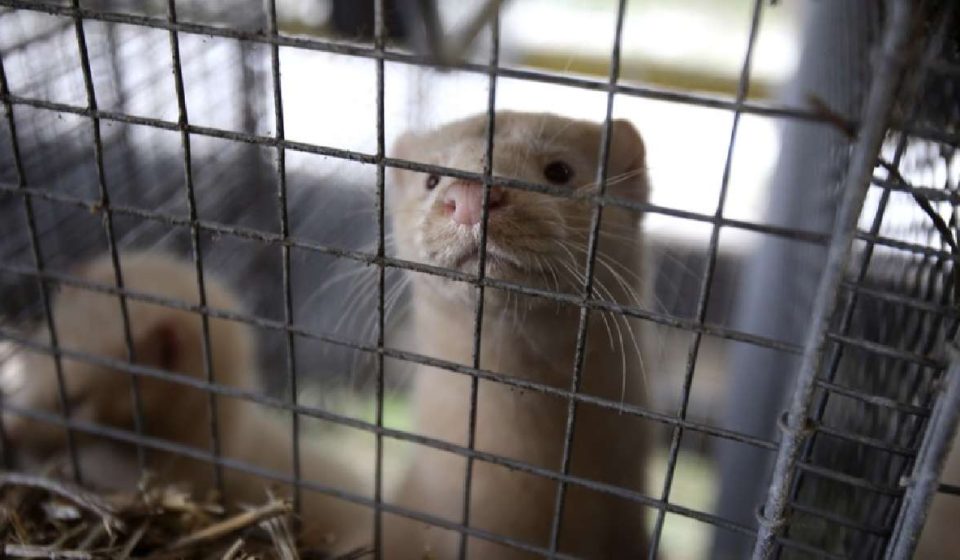

SALT LAKE CITY — After reports emerged of a bird flu outbreak at a Utah mink farm, animal welfare advocates are calling the state’s response “dangerously lax.”
Details of the outbreak are still unclear publicly. A spokesperson for the Utah Department of Agriculture and Food said that “due to the limited scope and ongoing nature of the outbreak, we are unable to answer some overly specific questions about the case in order to protect the grower’s privacy.”
However, Department of Agriculture records show seven cases of avian flu among captive mink in Salt Lake County, collected and confirmed in August — although the data may be incomplete, the agency said on its website.
Animal Wellness Action and the Center for a Humane Economy, two advocacy groups, have criticized the lack of information disclosed to the public, including about the mink population on the affected farm, whether there has been mink-to-mink transmission of the virus, its source or any results of worker exposure.
“This is not an obscure infection in an isolated wild animal,” Wayne Pacelle, president of Animal Wellness Action and the Center for a Humane Economy, said in a news release. “This occurred in intensely confined mink, animals with a documented history of amplifying respiratory viruses and providing opportunities for viral evolution. Americans deserve to know what happened and what the government discovered.”
In 2020, COVID-19 killed approximately 12,000 minks in Utah, one of the nation’s top mink-producing states.
The avian flu outbreak is the first of its kind documented in the country, according to the Animal Welfare Institute. The group discovered through a public records request to the Utah Department of Agriculture and Food that the affected farm expected to lose about 80 percent of its mink to the disease and that officials were unsure of the proper protocol for containing the virus.
Without a standard for quarantining the farm, one official said, “our only options at this point are to watch them die or get emergency approval of a vaccine.”
Leon Page, public information officer for the Utah Department of Agriculture and Food, said that because this is the first avian flu outbreak in mink in the country, there is no precedent for treatment or response.
“However, the (Utah Department of Agriculture and Food) staff is also doing everything they can during the process to support growers and ensure we are maximizing safety and minimizing damage as much as possible,” he said.
But animal rights groups are not reassured.
“It only takes one unfortunate mutation of this dangerous virus to trigger a human health crisis, and we can no longer ignore the threat posed by the proliferation of disease on mink farms,” Kate Dylewsky, deputy director of government affairs at the Animal Welfare Institute, said in a statement. “The failure of state and federal authorities to prepare for this scenario, or to implement significant biosecurity measures in response to the outbreak, demonstrates how mink farming operates with almost no oversight, escalating the threat to the public.”
The agency notified the Utah Department of Health and Human Services of the case as it investigated the possibility of transmission to humans, “which has not yet been shown to be a high risk,” Page said. The department also imposed a “verbal hold” on the facility, rather than a legal quarantine, before authorities continued their investigation.
Similar cases in other countries have been resolved through depopulation rather than quarantines, “so there is little international precedent for a protocol that does not immediately resort to depopulation,” he said.
Options the department is considering to deal with the outbreak are depopulation, quarantine and vaccination, Page said. But the latter can only be approved by Agriculture Secretary Brooke Rollins, not by state departments.
“Because (avian flu) in mink is new to the United States, research is limited and there is little guidance on dosing or effectiveness in mink specifically,” Page said. “If approved, the vaccine will be released to the state veterinarian and closely monitored by that office to ensure there is no diversion to poultry, dairy cattle or other farms. USDA is having internal discussions about when it can or would allow vaccinations.”
The key takeaways from this article were generated with the help of large language models and reviewed by our editorial team. The article itself is solely written by humans.
Gn Health