As lockout looms, union head Bruce Meyer says MLB is “speaking out of both sides of its mouth.”

NEW YORK — Bruce Meyer wasn’t shocked to see Major League Baseball’s highly produced five-minute video last week telling fans why they should support a salary cap.
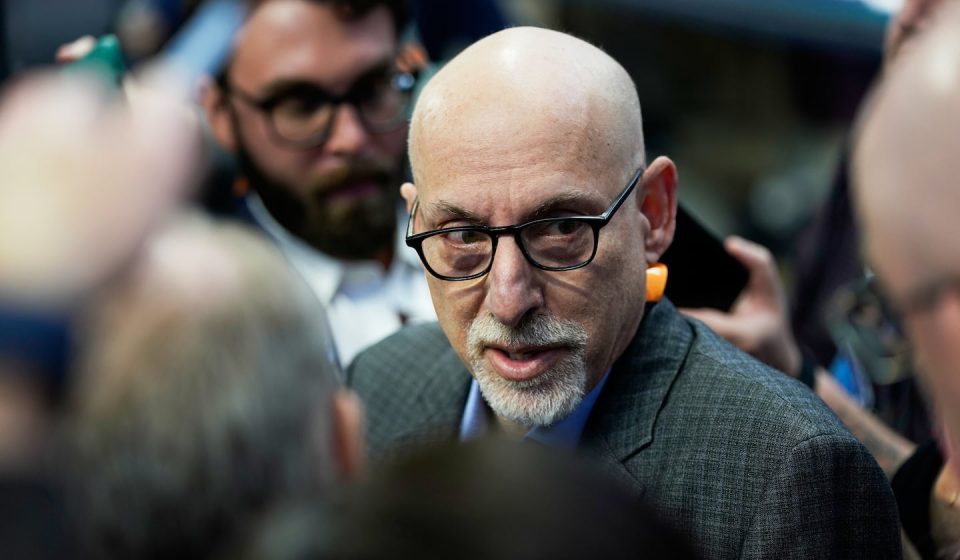
From his office in downtown Manhattan on Tuesday, the interim executive director of the MLB Players Association told the Globe that the video shows how the league is not serious about engaging with the union in a way that would prevent a player lockout on Dec. 2, a move that threatens part or all of the 2027 season.
“Ultimately, this is going to come back to the negotiating table, and we’ve been looking for months, since May, for a serious negotiating partner and the league has insisted since May that it would not negotiate on anything economic outside of our agreement on a salary cap,” Meyer said. “In that regard, we wasted months of time when we could have had a serious negotiation. So I would say the more the league focuses on other things other than negotiating in good faith with us, I would say it’s counterproductive.”
Commissioner Rob Manfred is expected to deliver his assessment of the status of negotiations Wednesday, when owners’ meetings conclude at MLB headquarters, a few blocks from the union’s headquarters.
Meyer said the union would continue to put out messages on its social media channels and could “fight back against some of the misinformation the league is putting out.”
He found it “ironic and interesting” that MLB was still trying to convince fans about a salary cap when the league said early on that polls showed fans thought it would level the playing field.
“There’s something that doesn’t make sense,” Meyer said.
An equally inconsistent message, he said, concerns how players will benefit from a 50-50 revenue split in the cap-and-floor proposal tabled to begin in 2028.
Meyer read the letter Manfred sent to players the day after the owners’ lockout five years ago, on December 2, 2021: “Baseball players have the best collective bargaining agreement of any major professional sport – a contract that players would not trade for another league’s CBA. Baseball players earn well over 50 percent of league revenue, have no maximum on the length or amount of contracts and are not subject to a cap salary.”
Meyer looked up.
“I’m not sure what’s changed now,” he said, noting that the union estimates it already receives 55 to 56 percent of the revenue. “What (Manfred) said at the time is directly inconsistent with what they’ve been saying for six months: ‘Oh, you’re going to make more.’ I’ve been saying for months that by their definitions we’re already getting well over 50 percent. They speak out of both sides of their mouth.
The union believes owners want the cap in order, Meyer said, “to increase their profits and the value of their franchises.” The players, he added, made proposals to address those concerns, but they were ignored unless a salary cap was part of the deal.
“They are the ones who have chosen to present proposals that blow up the current system in a way that they know players have opposed for decades. It’s a choice they made,” he said. “That’s the only reason why, on economic issues, we haven’t made progress.”
Meyer said the parties have made progress on a few of the issues that are not considered economic, such as the drug deal, grievance procedures and domestic violence and gambling policies.
The exact direction of the negotiations after the imposition of the lockout remains unknown. Concessions from either side are not expected until at least February. Assuming the salary cap proposals remain in place and negotiations are unsuccessful, an impasse could eventually be declared and players could go on strike.
Another strategy: the union dissolves and decertifies itself. Such a move would strip players of their collective bargaining rights, but would allow them to file an antitrust lawsuit — the Curt Flood Act of 1998 provides an entry point for challenging MLB’s antitrust exemption — which could result in steep financial penalties for owners.
“I don’t want to get into any legal scenarios,” Meyer said. “We are currently 100 percent focused on collective bargaining, and bargaining in good faith is our only focus at this time.”
He also declined to comment on the not-far-fetched suggestion that President Trump might decide to weigh in on the dispute.
The union will hold its annual board meeting in Scottsdale, Ariz., in late November. Meyer said MLB has not yet communicated whether negotiators will travel to Arizona for negotiations before the current agreement expires Dec. 1 at 11:59 p.m.
Asked for his reaction to Meyer’s comments, MLB spokesman Glen Caplin said via email: “We will continue to listen to our fans who overwhelmingly support the same system that every other league uses, and whose average player has done much better financially than the average MLB player over the last decade.”
“The Union’s economic proposal would worsen the problem of wage disparity by allowing high-income teams to spend even more and making it harder for lower-income clubs to compete. In exchange for the system used by other sports, we have offered players earlier freedom of action for the first time in history, a substantial increase in salaries for young players and protections against demotion that will directly benefit players who have not benefited from the current labor system.”
Michael Silverman can be contacted at michael.silverman@globe.com.
Gn sports