When you leave bananas in a fruit bowl for a few days, they may start to feel sorry for themselves.
However, unappealing bananas could soon be a thing of the past when genetically modified crops that don’t brown hit UK shelves for the first time.
A DNA-edited fruit variety has reached the final approval stage before it can be legally allowed to be sold to the public.
The Environment Secretary has approved a marketing notice for bananas that resist browning as they age or become damaged, allowing them to remain edible longer and reducing waste.
British company Tropic Biosciences, based in Norfolk, created this crop and used a laboratory technique known as CRISPR-Cas9 to modify three genes responsible for browning fruit.
These changes prevent the plant from producing an enzyme called polyphenol oxidase (PPO), which is responsible for the browning process.
The plant will be able to be sold legally in England if Tropic submits the bananas to the Food Standards Agency (FSA) for the usual food safety checks.
The Department for Environment, Food and Rural Affairs (Defra) says browning of bananas is responsible for “around 20 per cent of banana yield losses” and that preventing this waste would improve profitability for farmers while improving shelf life for consumers.
It adds that the genetically modified variety “is intended for import, retail and consumption purposes similar to those of conventional bananas.”
The PPO enzyme is found in a variety of fruits and causes them to turn brown when peeled and in contact with oxygen.
With this enzyme disabled, experts say, bananas will last up to 24 hours once peeled or cut.
By allowing them to stay fresh longer, customers can more easily enjoy them in other dishes, such as banoffee tarts, fruit salads, smoothies, cakes and pastries.
Changes to the banana’s genetic makeup are also thought to make it more able to withstand bumps or bruises on the way to the stores.
Current estimates suggest that up to 1.4 million edible bananas are thrown away by UK households each year.
Genetically modified crops are a nascent industry in Britain as post-Brexit freedoms have relaxed regulations that were previously governed by stricter European laws.
Scientists and farmers believe that gene editing could allow them to improve yields and profits by growing crops that are more resilient to climate change, more disease resistant and healthier.
Other Defra-approved genetically modified crops officially labeled as precision-breeding organisms include strawberries which produce fruit for longer and vitamin D-rich ‘sunshine tomatoes’.
The government also approved scientists’ submissions for disease-resistant potatoes, high-fat barley to feed cows and wheat containing low levels of a chemical linked to cancer.
“All new plant varieties are subject to testing. These crops will be held to the same standards, if not higher,” Professor Cathie Martin, who runs the laboratory where the tomatoes were developed, previously told the Telegraph.
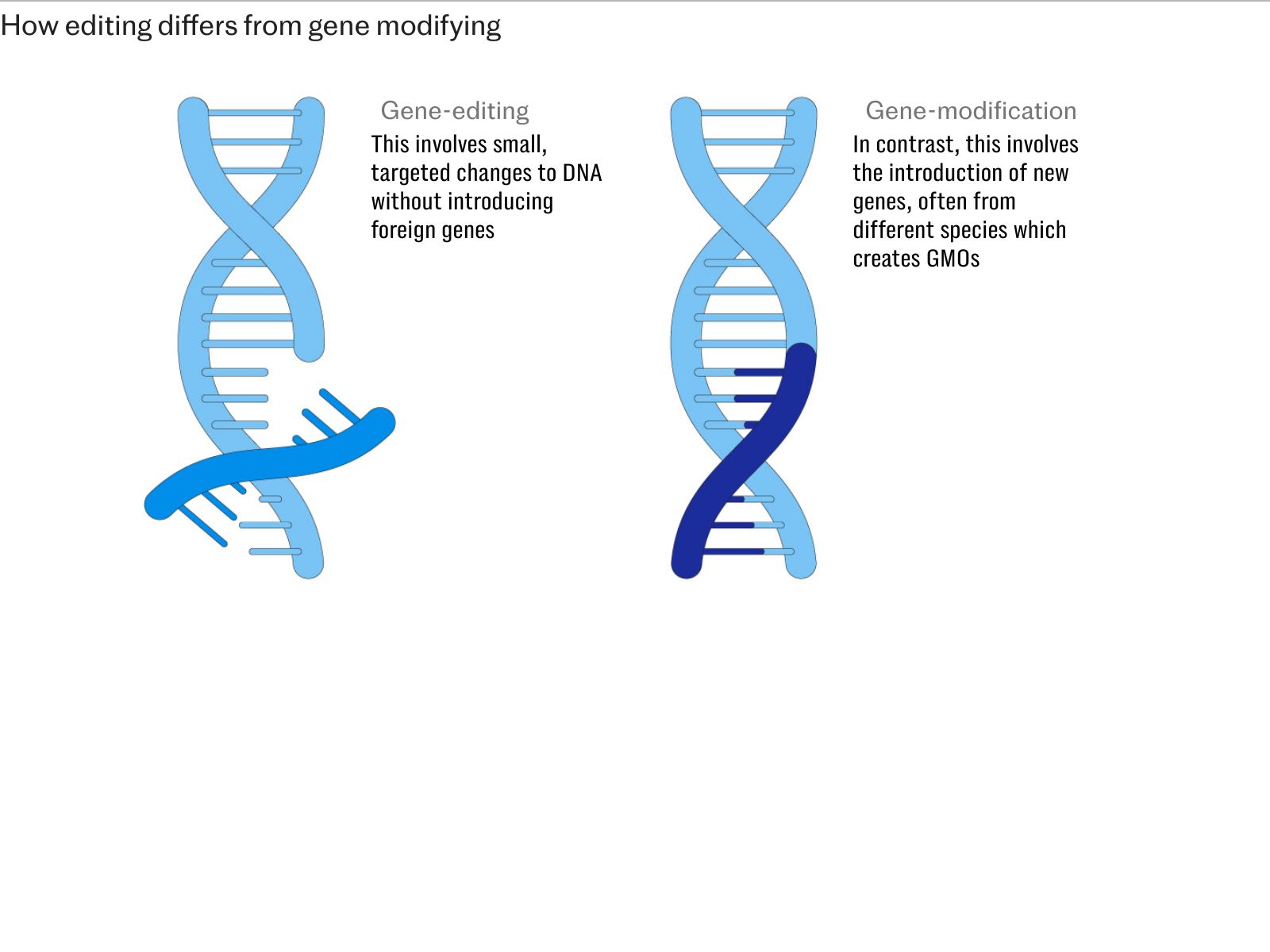
Once products hit shelves, they will no longer need a label identifying them as genetically modified. Gene editing involves making small, specific changes to a product’s existing DNA or removing a section of DNA. This process differs from genetic modification, which adds new genes to crops.
The Precision Breeding Act 2022 allows crops to be modified with laboratory techniques, which can include turning off genes, making them inert, or removing them.
This can slightly change the characteristics of a culture, which could have happened naturally.
However, no genes can be inserted from different species as this would be considered genetic modification, which is not covered by the law and is illegal.
Gene editing of animals is also prohibited and is not covered by the law.
The FSA has not yet approved the sale of genetically modified foods. The products will only be available in England, with officials in the devolved administrations still having reservations about their safety.
English experts believe that genetically modified foods are fundamentally no different from traditional alternatives. Therefore, they will not need to be labeled to identify them as genetically modified.
Boris Johnson, in his first speech to Downing Street in 2019, said: “As we prepare for a post-Brexit future…let’s start now to free the UK’s extraordinary bioscience sector from anti-genetic editing rules and develop the blight-resistant crops that will feed the world.”
Gn Health