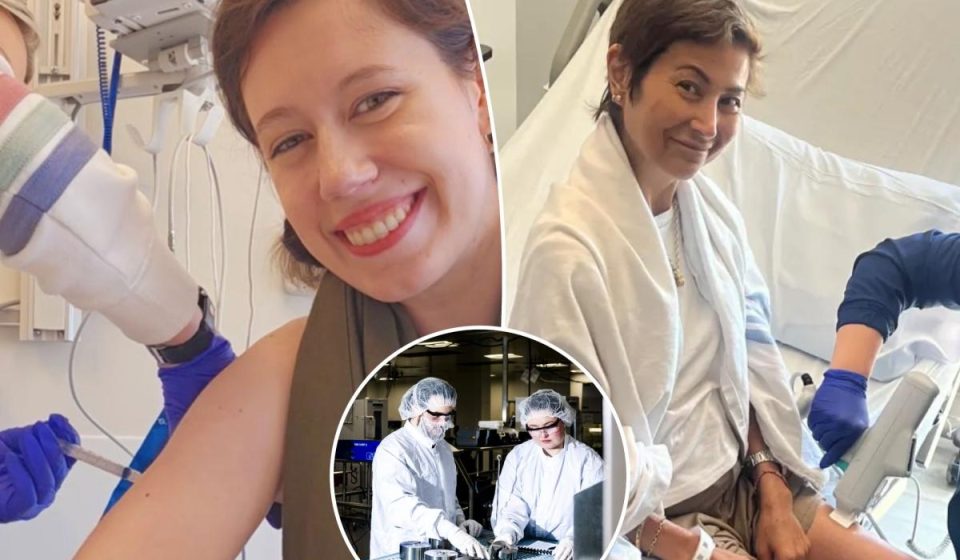

At 31, Molly Hones was preparing to die.
She had had a huge tumor removed from her liver the year before, but now she learned that the cancer had spread to her bones and blood.
Hones suffered from a rare cancer called fibrolamellar carcinoma that was now in stage 4. After being told that most chemotherapies wouldn’t work for her, she decided she’d rather go six to 24 months without treatment, “sailing off into the sunset and enjoying my life,” she told the Post.
With a career helping children and families, Hones has long had a “deep commitment” to serving others. Knowing it could help researchers better understand the disease, she told her doctor, “I want to donate my body to science.” »
If she was willing to do it, the doctors asked her: why not participate in a trial of an experimental drug? She accepted. It’s something she now considers a “moonshot.”
It was April 2024. By September of the same year, five months later, she was in complete remission from her cancer and still is today.
It wasn’t a miracle that helped banish cancer, it was a vaccine against cancer.
Unlike chemotherapy and radiation, which attack cancer directly but can damage healthy cells along the way, cancer vaccines teach the immune system to recognize and destroy cancer cells on its own. This allows the body to fight cancer on its own, even years after treatment.
“I think this is the time where we could really make cancer curable by using cancer vaccines in addition to other therapies,” Kristen Dahlgren, a breast cancer survivor and chief external affairs officer at the Parker Institute for Cancer Immunotherapy (PICI), told the Post. “I think we are on the verge of a profound change for cancer patients. »
For the 18 million Americans who live with or have survived cancer, the type of lasting remission Hones experienced no longer seems so far-fetched.
In August, Moderna announced that its personalized melanoma vaccine had successfully completed Phase 3 trials, the final phase before moving to the FDA for approval and marketing.
The first of its kind, it could be available as early as next year and is also being tested in lung, kidney, bladder, pancreatic and stomach cancers.
While this may all seem quite sudden, the cancer vaccine landscape builds on more than a century of research and development, with a wave of progress over the past two decades.
What exactly are vaccines against cancer?
When most people think of vaccines, they think of virus prevention: measles, polio, flu.
But most cancer research focuses on therapeutic vaccines, which treat existing cancer.
However, preventive and therapeutic vaccines attempt to stimulate the immune system, creating a lasting memory so the body can continue to fight a threat, explained Dr. Cathy Wu, a cancer vaccine researcher at the Dana-Farber Cancer Institute.
“It almost feels like with cancer vaccines, all these prayers are coming true. »
Molly Hones
“We use vaccines to prevent relapses in patients at high risk of relapse,” she said. “We’re trying…to prevent the cancer from coming back.”
Cancer vaccines can also be “off-the-shelf” or personalized. Commercially available vaccines target characteristics common to many patients, rather than being tailored to a single person. This is how we’re used to vaccines working: the ones we get for the flu, for example, are essentially the same for everyone.
Hones’ experimental vaccine was commercially available. Its cancer, fibrolamellar carcinoma, almost always produces a specific abnormality in patients. This allowed scientists to develop a vaccine that would work on many patients with the same cancer.
But most cancers aren’t so cooperative. They occur when cells accumulate mutations that allow them to grow out of control. These mutations vary from person to person and continue to accumulate as the cancer progresses. The result: no two tumors are identical, and even different cells within the same tumor can carry different mutations.
This is where personalized cancer vaccines come into play. Doctors sequence a patient’s cancer DNA and develop a personalized vaccine to teach the body to target and destroy it.
This process is still very new and very expensive. Each vaccine costs more than $100,000 to make. Researchers are now working to streamline this process, with the goal of making personalized vaccine production faster and more affordable.
Looking for treatment
Cancer vaccines remain limited to clinical trials for now, leaving many patients struggling to get treatment.
Two years after her breast cancer diagnosis, Ari Nakata had undergone chemotherapy and radiation therapy — and her tumor marker tests showed no evidence that the cancer had returned.
But her back suddenly “gave out,” she told the Post, and she was worried.
“Cancer is such a complicated, individualized and personalized disease,” the mother of two said. “What they don’t tell you is that not everything applies to everyone. So in my case, these tumor marker blood tests indicated that everything was fine, but it wasn’t.”
She had an MRI which revealed the cancer had spread to her back, bones, lungs and liver.
“It was terrifying,” she said. “(But) I try not to get overwhelmed by the whole situation. I’m like, okay, what are we going to do next? What are my options?”
She studied shark and scorpion injections, tried hormone therapy and started taking ice baths.
Nakata couldn’t find what she needed online, so she went to hospitals and met with doctors to find out which clinical trials she could apply to in a narrow eligibility window. Since there was no system to transfer her tissue samples between hospitals, she even packed dry ice and carried them on her own.
Get vaccinated against cancer
Nakata eventually contacted PICI, which helped her enroll in a cancer vaccine trial at the University of Washington.
His vaccine was to be administered by electroporation, in which an electrical pulse opens a temporary hole in cell membranes so the vaccine can enter. The first time she did it, the bed she was lying on wasn’t locked and “everyone flew out.”
“We actually started laughing because it was so ridiculous,” she recalls.
Otherwise, “I literally had no side effects from the vaccine other than leg pain for a few days afterward, and you can imagine why.”
She received six vaccinations, one each month. Then his doctors had good news: 24 of Nakata’s 59 targets had responded to the treatment, a huge success.
“I have had great results from the vaccine and I have very high hopes for what this can open up,” she said.
The future of cancer treatment
Today, Nakata feels “really healthy.” She has scheduled a few extra doses and is following a targeted chemotherapy regimen, which has been “excellent in terms of quality of life.” She also has hair that is growing back.
Cancer vaccines are usually used in combination with other therapies. The upcoming Moderna vaccines, for example, are combined with immunotherapy that prevents cancer from hiding from attacks by the immune system, making it easier to kill.
Combining vaccines with treatments that attack cancer in different ways could make them more effective, and ongoing trials are helping researchers determine which combinations work best for which cancers.
Dr. Nina Bhardwaj, a cancer vaccine researcher at Mount Sinai, points out how many types of platforms are being developed: Moderna’s uses mRNA, while others use DNA, virus and bacteria vectors, cells and peptides as vaccine platforms.
“I’m really excited about these new platforms… We’re seeing that they have the ability to target many (types of) cells… I think the delivery capacity is going to be pretty huge,” she said. Many of these approaches are still in the early stages of development, and some newer technologies have not yet been tested in humans.
But the field is progressing at a remarkable pace. The vaccine Hones received shows promise in human trials. Her cancer primarily affects young people aged 12 to 30, and she thinks about the children who might one day get this vaccine – and finish school, go on adventures around the world and start a family.
“We’re at a moment where we’re redefining where this is all going,” she said. “I think of all the thoughts and prayers we’ve had for other people with cancer in the past. Some of those prayers may not have been answered at the time… but it almost feels like with cancer vaccines, all those prayers are coming to fruition.”
Gn Health