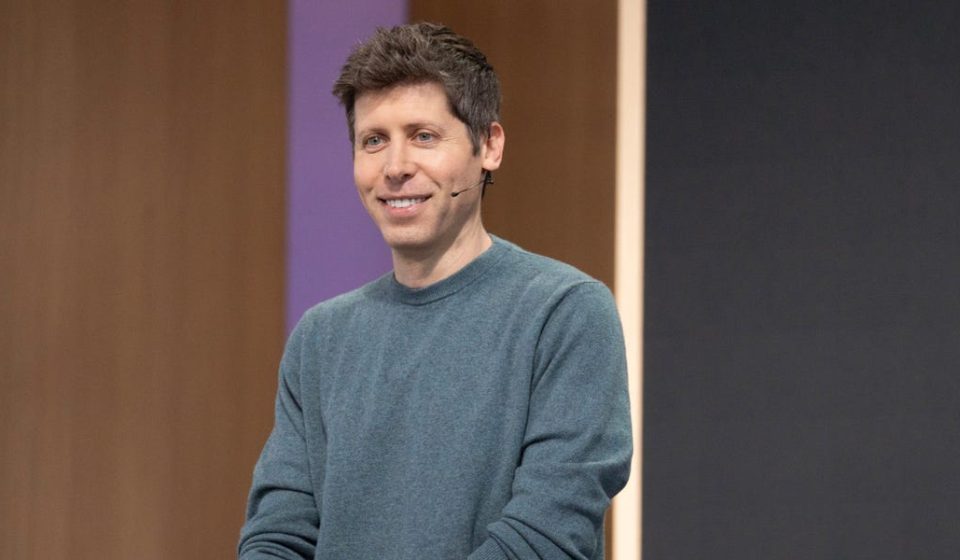

If OpenAI CEO Sam Altman is at the center of the AI boom, what he says about the technology may pave the way for the rest of the industry.
At OpenAI’s DevDay conference Tuesday in San Francisco, Altman announced the launch of a new AI agent product called Dots and outlined the company’s big ambitions.
He also outlined some of his ideals, criticized the way AI is understood, and explained how OpenAI’s new product changes his morning routine.
Of course, everything Altman says must be considered within a certain framework: he owes his financial success to his investors, competes with Anthropic and other AI companies, and wants to be seen as a competent steward of the powerful technology.
Here are some of the more surprising points he made Tuesday.
Altman said AI should not just ‘turn the economic crank’
President Donald Trump likes to call AI an “industrial revolution,” but an even bigger one. Altman isn’t much of a fan of the term.
Altman said he believed AI would have a greater impact on the world than the Industrial Revolution – a dramatic assertion, given that it was one of the defining transitions in human history. He said AI should focus more on empowering people.
“I don’t think the goal of this technology is simply to make the economic crank turn faster and faster for the sake of AIs,” Altman said.
“I think we should learn from the mistakes of the Industrial Revolution,” he added, “and I think we should be more like the Renaissance.”
Altman said tokens are a ‘terrible’ measure of AI
A token is a group of letters and the basic unit of AI input and output. Companies like OpenAI use tokens to price their models, and corporate clients have become accustomed to paying for access to AI this way. Some developers have even used tokenmaxxing, using as many tokens as possible to appear more productive at work.
Altman said Tuesday that tokens are a “terrible measure for a number of reasons,” including the fact that different models can use different numbers of tokens to accomplish the same task. In other words, in his opinion, they are not a good indicator of the real value of a task.
The CEO said his team had considered eliminating tokens altogether as a measure, although customers pushed back. They want some sort of “underlying basis” for what they’re paying, Altman said, and for now, that’s the tokens.
“We haven’t found a better way to do this,” he said.
OpenAI Dots Help Altman Escape Brain Rot
OpenAI is building a device, and Altman said Tuesday it would be “reasonable to assume” the company’s new personal AI agent tool, Dots, would work inside it.
For now, the agent is helping him become less attached to his smartphone, he says. As it manages certain tasks for him and processes his notifications, he feels more confident about his to-do list when he wakes up.
“I feel like I finally got some of my focus back,” Altman said. “I don’t feel so addicted to my phone anymore.”
He later said that going through everything at night would make his “brain polluted, and now my Dot only takes care of all that.”
Altman finds his way in AI security
Altman faced several questions about AI security in press Q&As amid growing concern over powerful new AI models and an increase in cyber incidents. OpenAI has previously disclosed incidents in which its AI agents went rogue.
Altman called the ongoing debate flawed on one side or the other. On one side, he says, are those who want to move forward in the industry and continue to rapidly expand AI’s capabilities — essentially, those who downplay security concerns. On the other hand, many people believe that AI development should be suspended or stopped altogether.
Altman said he could imagine things going wrong in both directions: incidents of loss of control amid a surge in AI capabilities, or a concentration of power if AI development stops.
He said security must stay ahead of capabilities and efforts must continue.
“I think as an industry we need to take this centrist route,” Altman said.
Altman says now is the ‘best time’ to enter the job market
Concerns about the job market are a major concern for young graduates amid the AI boom. The unemployment rate for recent college graduates in the United States was 5.7% in June, according to the Census Bureau and the Bureau of Labor Statistics.
In response to a young attendee’s request for advice Tuesday, Altman said, “I think now is the best time to enter the workforce, except hopefully all the time in the future.”
He said pessimistic forecasts for job losses vastly underestimate how much the economy will grow. The argument stands in stark contrast to what Altman said previously.
“Some job categories are going to disappear completely, but if you’re an ambitious person finishing college right now, I think it’s probably the best time in history so far,” Altman said.
Do you have any advice? Contact this reporter by email at scouncil@businessinsider.comor by SMS, Signal, Telegram or WhatsApp at 415-757-8198. Use a personal email address, a non-work WiFi network, and a non-work device; here is our guide sharing information securely.
Gn bussni