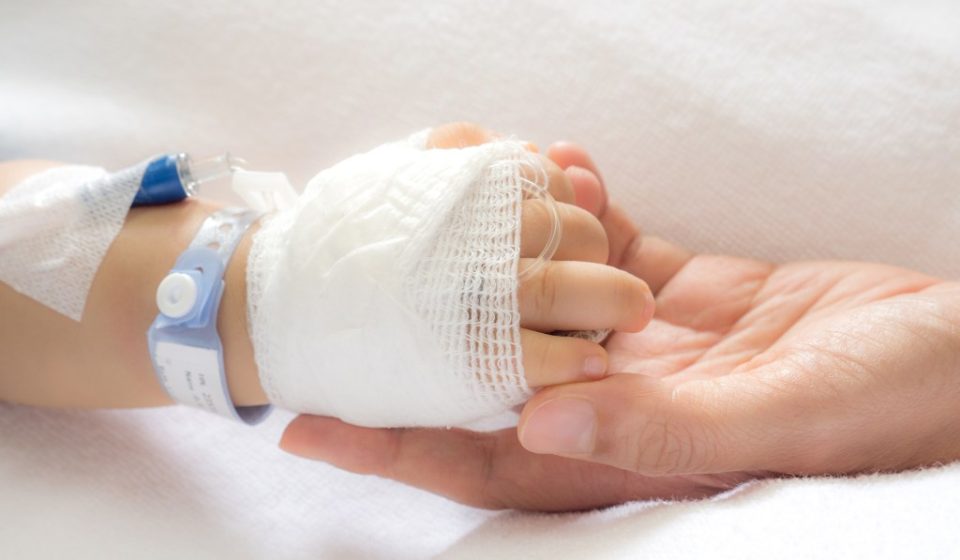

The first terminally ill child to be euthanized in the Netherlands under a controversial expansion of assisted dying laws was just a one-year-old baby.
Dutch government officials first revealed in June that a child had died by euthanasia last year, saying only that it was the first assisted death of someone under 12, but without giving further details, including the gender or illness from which the tragic child was dying.
Now a government report released reveals the child was born prematurely abroad at 26 weeks, battled sepsis and was diagnosed with “very significant brain damage” at four and a half months.

The child was diagnosed with severe cerebral palsy before being diagnosed with infantile epileptic spasm syndrome – a very serious form of epilepsy – when he was just eight months old.
The epilepsy led to a “severe sleep disturbance” and caused “coughing fits and the child had difficulty swallowing,” the report said.
“In the months before the child’s death, seizures increased significantly when the child was eating,” says the report published by the Committee for the Evaluation of Late Terminations of Pregnancy and Terminations of Life in Newborns and Children Aged 1 to 12 Years.
“The significant brain damage severely affected the child’s functioning.
“The child presented a very significant developmental delay; at almost two years old, his developmental age was estimated to be that of a six-week-old baby.
“The child suffered from multiple and very severe disabilities, both mental and physical, and the prognosis was that he would be dependent on support with all activities of daily living for the rest of his life. »
The baby was at “significantly higher risk” of developing respiratory infections and doctors judged “there was a very high probability that the child would die at a very young age due to complications”.
The Dutch government legalized euthanasia for seriously ill children aged 1 to 12 in 2024.
“Euthanasia is only authorized for patients whose unbearable suffering, with no prospect of improvement, has a medical dimension,” specifies the government.
The report reveals that the doctor acted completely legally throughout the process.
Doctors concluded there was “a realistic expectation…the child’s situation would deteriorate further.”
Doctors must consult a six-point checklist before deciding whether to end a patient’s life under the Ending Life on Request and Assisted Suicide (Review Procedures) Act.
They must declare that the patient is not subject to coercion and decide whether their “suffering is unbearable and without prospect of improvement”, according to the government.
The doctors were “convinced that there was no reasonable way to reduce or end the child’s suffering other than to end his life.”
The doctor fully informed the child’s parents about the procedure, obtained their consent, consulted at least one independent doctor and exercised due diligence, thereby acting legally.
Doctors who illegally practice euthanasia face up to 12 years in prison, as well as a fine.
In 2002, the Netherlands was the first country in the world to legalize euthanasia under strict conditions. All cases of euthanasia must be reported to medical review boards.
Last year, 10,341 deaths by assisted suicide or euthanasia were reported in the Netherlands, according to regional euthanasia review committees. This is an increase of 3.8% compared to 2024.
The Netherlands is not the first country to allow medical assistance in dying for children of all ages. Belgium has authorized it since 2014.
Canada legalized the practice of assisted suicide, medical assistance in dying, in 2016 and statistics reveal that assisted suicide accounts for more than one in 10 deaths in some regions of the country.
Gn world