
DOJ’s Civil Rights Division redefines its mission away from discrimination: NPR


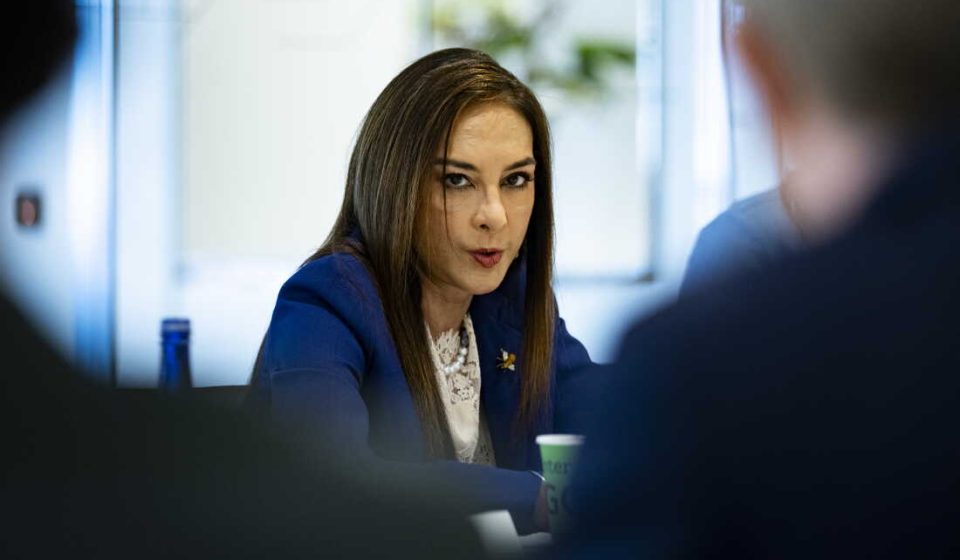
Harmeet Dhillon, assistant attorney general for civil rights at the U.S. Department of Justice, during an interview in Washington, DC, August 2026.
Al Drago/Bloomberg via Getty Images
hide caption
Al Drago/Bloomberg via Getty Images
When Harmeet Dhillon took over as head of the Justice Department’s civil rights division last April, the conservative lawyer pledged to radically reshape that storied unit and its mission.
Over the past 18 months, Dhillon has moved aggressively to make this goal a reality. She ousted hundreds of longtime attorneys, replaced many of them with inexperienced ideological allies and used the division’s coercive powers to pursue President Trump’s MAGA agenda, according to four current and former division officials.
Three of the individuals spoke on condition of anonymity for fear of reprisals.
At the root of these changes is Dhillon’s vision of the Civil Rights Division and its mission as a radical departure from tradition.
Established nearly 70 years ago during the movement to end racial segregation, the Civil Rights Division has always sought to combat discrimination and protect the constitutional rights of all Americans in everything from voting to housing to employment to education to law enforcement. The division’s priorities have shifted from one administration to another, although its core work has remained consistent.

But Dhillon, who was born in India and immigrated to the United States as a child, says that over the years the division’s mission has narrowed to protecting the rights of just one segment of society: people of color.
She said this created a form of “benevolent racism” intended to punish “the descendants of those who may have been responsible for the sins of the past.”
“As logic goes, white oppressors of years past have kept Black and Brown people down, why not give them a taste of their own medicine?” she said last November at an event for the conservative Federalist Society. “That’s really the thinking behind a lot of our civil rights work.”
An orientation transformed since the arrival of Trump
Everything changed, she said, in 2025, when President Trump returned to power and Dhillon arrived at the Justice Department.
Since then, the division has abandoned its investigations and withdrawn its declarations of interest in dozens of cases, including those involving voting rights, racial discrimination and civil actions against anti-abortion activists.

He ended investigations against police departments for alleged constitutional violations.
Some of the most aggressive work of his tenure has been on the voting front, where the division sent observers to keep tabs on state primary elections and filed lawsuits demanding voter information from a large number of states, a continuation of Trump’s focus on allegations of voter fraud by noncitizens.
State election officials — Republicans and Democrats — pushed back, accusing the Justice Department of going too far. Judges have dismissed more than two dozen lawsuits filed by the department, including the most recent in Georgia.

Education has been another active front.
In just the past two months, the Civil Rights Division has accused the law schools of the University of California at Berkeley and Duke University as well as the medical schools of the University of California at San Francisco and George Washington University of discriminating against white and Asian students in admissions.
He also sued UCLA and Harvard for allegedly allowing anti-Semitism to flourish on campus.
In August, a federal judge dismissed the department’s lawsuit against Harvard, finding that the anti-Semitism allegations were “too isolated and episodic” to prove the school was violating civil rights laws.
In a statement to NPR, Dhillon defended the division’s work under his leadership.
“Under this administration, the division has held universities accountable for anti-Semitic harassment, defended the constitutional rights of Americans of all faiths, and protected the integrity of federal elections,” she said. “Civil rights laws exist to protect individuals from discrimination, and that is exactly how we enforce them. Critics calling equal enforcement “weaponization” speak for themselves.
Although several sections have seen drastic changes to their work, not all units have been affected to the same degree, say three current and former division officials.
Sections dealing with housing and disability rights, for example, are still doing much of the work they traditionally did. Last year, for example, the department sued Uber for refusing to transport passengers with service dogs or wheelchairs.
Out with the old, in with the new
One of the ways Dhillon has implemented his vision is by changing those who do the work: the attorneys and division staff.
Early in her tenure, she accused the division’s prosecutors of pursuing a left-wing agenda.
“The job here is to enforce federal civil rights laws, not woke ideology,” Dhillon told Glenn Beck in an interview last year. She encouraged attorneys and staff who did not want to implement her vision of the division’s mission to leave the department.
That’s exactly what up to 80 percent of the division’s staff did, during a wave of departures that decimated the division’s institutional knowledge.

Much of the mass exodus occurred at the height of the Trump administration’s Department of Government Efficiency, or DOGE, cuts, and current and former division officials say many people left or chose to retire early to avoid staff reductions imposed from above.
Current and former officials say that left the division short-staffed, lacking core talent, expertise and manpower.
“There are so few people there working on civil rights,” said Georgetown law professor Christy Lopez, who worked for more than a decade in the division before leaving in 2017.
Since Trump returned to office, some 300 lawyers have left the division, according to current and former officials. The Justice Department says some 130 people have been hired to replace them.
There are now more division lawyers hired during the second Trump administration than holdovers from previous administrations, according to current and former officials.

Accusations of political hiring
Current and former officials say Dhillon altered the hiring process, ignoring rules that were intended to protect him from partisan political considerations.
The rules were put in place about 20 years ago after a political recruiting scandal during the George W. Bush administration, when the division lost about 70 percent of its lawyers and political appointees were accused of barring lawyers from investigating cases.
In response, the division changed its policies to give non-political career staff a leading role in recruiting. Career attorneys would review resumes, conduct interviews, then write a memo recommending a candidate for hire. The division’s front office would then review the memo and send it to the attorney general for a final decision.
The recommendation has almost always been honored, current and former officials say.

“These rules were put in place to prevent politics from dictating who gets a position in the Civil Rights Division rather than merit, rather than their experience, skills and commitment to civil rights,” Lopez said.
However, under Dhillon, the front office, comprised of political figures and ideological allies, removed the usual career staff from the process and took charge of recruiting.
A Justice Department spokesperson denied any changes had been made to the hiring process.
“Career staff are hiring career staff, just like in previous administrations. Any assertion to the contrary is a deliberate misrepresentation motivated by political bias,” the spokesperson said. “The result is 130 exceptional new attorneys, many of whom have worked under federal district and appellate judges. We are proud of each of them, and they are already strengthening the Division’s enforcement work.”
But current and former officials say political ideology appears to be an important factor in hiring decisions. Some of the new hires have previously worked for conservative legal groups, including the Pacific Legal Foundation and Only Citizens Vote Coalition.
There are also serious concerns about the qualifications of many of those hired.
Current and former officials say most of the lawyers who have been hired don’t have much, if any, experience in civil rights. Some of them have little legal experience, which has hampered some of the division’s efforts to pursue Trump’s agenda.
“I could understand if Harmeet wanted to recruit people who could both advance the president’s priorities and continue the division’s law enforcement work, its traditional enforcement work,” said Dena Robinson, who left the division last year and now works at the ACLU. “But that doesn’t happen anymore.”
Gn headline


