
By now you are probably well aware that Nvidia (NVDA +2.39%) is one of the biggest winners of the artificial intelligence (AI) revolution. Its graphics processing units (GPUs) provide essential infrastructure for companies developing generative AI models. This has fueled an unprecedented spending boom among technology companies and specialist cloud computing providers.
However, two leading investors are sounding the alarm about the sustainability of this infrastructure spending. Over the weekend, Elon Musk and venture capitalist Chamath Palihapitiya warned that AI infrastructure development could face a major upheaval in 2027.
Their concerns revolve around tightening credit markets, delayed construction of data centers and the possibility of expensive IT equipment going unused. For Nvidia investors, these problems raise an uncomfortable question: What happens when the biggest buyers of GPUs can no longer afford them?
Image source: Nvidia.
What risks does the AI infrastructure boom face?
In a recent article on X (formerly Twitter), Palihapitiya offered his assessment of the AI data center industry. Drawing on his experience investing in stressed land assets, he argued that specialist cloud computing providers – commonly known as neoclouds – are poorly capitalized and struggling to execute on their expansion efforts.
The most common neoclouds are CoreWeave And Nebius. Unlike traditional hyperscalers like Microsoft, AmazonAnd Alphabetneoclouds primarily focus on providing accelerated compute infrastructure to customers developing and deploying AI applications.
Building a data center requires much more than just purchasing GPUs. Operators must obtain land, electricity, cooling systems, network equipment and financing. Even after securing these resources, delays in construction or obtaining permits can prevent IT equipment from becoming operational.
Palihapitiya warns that these challenges could leave “a lot of calculations partially blocked” in storage next year. If true, he believes hyperscalers facing capacity constraints will prioritize their own AI workloads over third-party clients. In turn, small businesses will scramble to find alternatives.
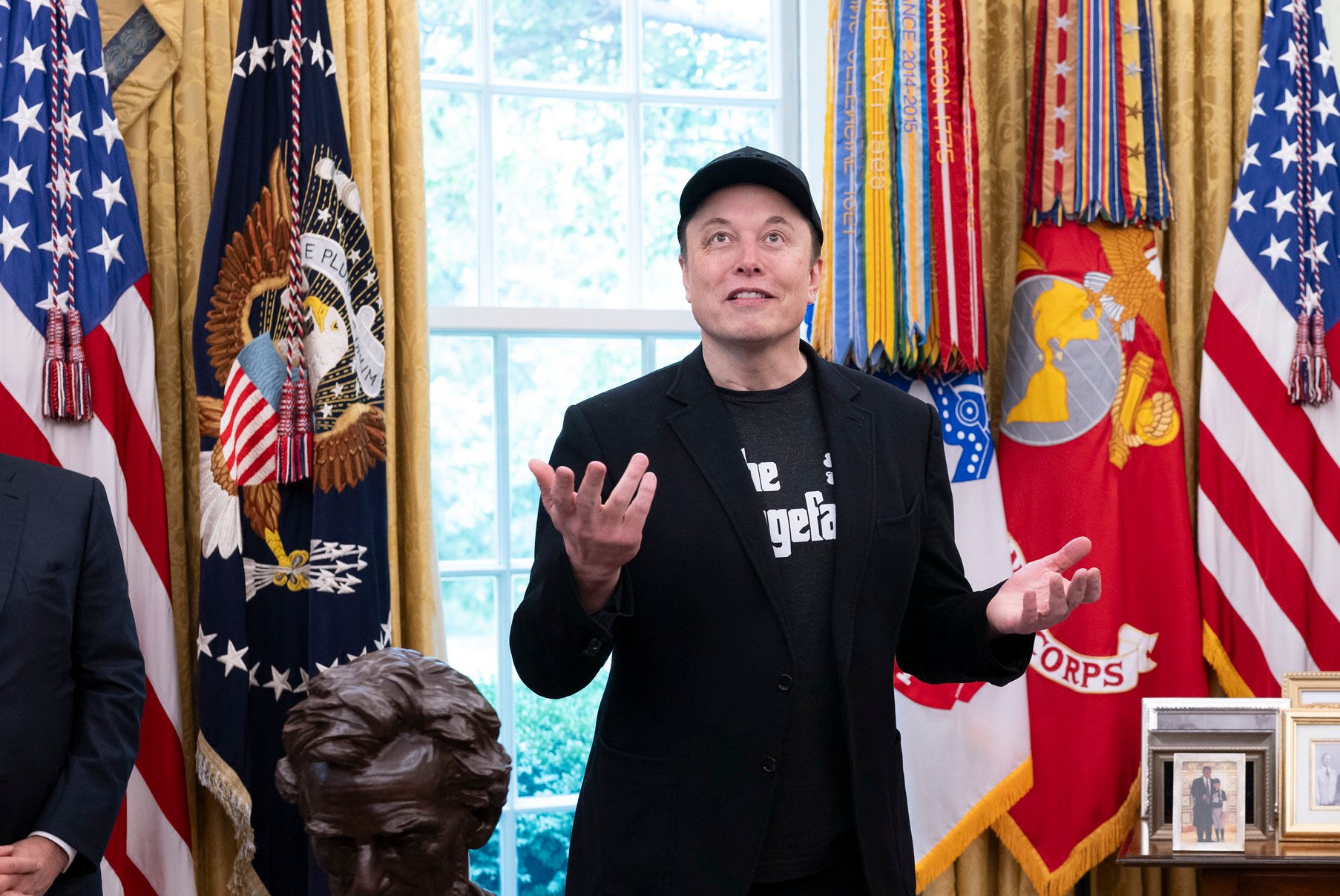
Elon Musk, CEO of SpaceX. Image source: The White House.
Musk agreed with this perspective. He explained that lenders have become reluctant to finance companies that do not have “substantial revenue independent of AI data centers.” While Musk Space exploration technologies Recently securing $40 billion in debt financing for GPUs, Musk pointed out that the company was able to raise this money because the company’s credit profile is investment grade and it has other established businesses through Starlink and rocket launch cadences, providing a financial advantage that most neoclouds lack.
How Slowing Infrastructure Spending Affects Nvidia
Let’s take a look at how the AI infrastructure supply chain works. Nvidia designs GPUs purchased by hyperscalers and neoclouds. These customers install the chips in data centers and provide calculations to AI developers. This business model is critically dependent on continued access to capital and timely completion of data center construction. If financing becomes unavailable or electrical connections are delayed, a company could be forced to postpone construction. Therefore, this could delay or even cancel planned GPU purchases.
Now imagine these issues impacting dozens of operators at the same time. Nvidia would almost certainly see a significant slowdown in orders, even if underlying demand for AI remains strong overall.
The situation amplifies when we consider hyperscalers. Companies like Microsoft, Amazon, and Alphabet all have stronger balance sheets than most neoclouds. However, their expenses are not unlimited. If infrastructure bottlenecks prevent them from deploying and monetizing existing GPUs, the costs of purchasing additional equipment will be less attractive until these issues are resolved.
NVDA Nvidia
$216.00+$5.04 (+2.39%)
NASDAQ · At 4 p.m. ET on 10/26/26
What could happen to Nvidia stock in 2027?
It is important to understand that Nvidia’s competitive advantages remain significant. Outside of GPUs, the company’s networking technology and CUDA software have helped Nvidia create an ecosystem and establish the company as a dominant AI infrastructure provider.
That said, Musk and Palihapitiya express risks that investors should not ignore. The AI infrastructure boom depends on huge capital expenditures (capex), access to debt markets and the ability to complete construction projects on time. Ultimately, Musk’s comments suggest that the AI industry is approaching a tougher phase where financial discipline is just as important as technological innovation.
What Nvidia investors need to remember is that demand for AI can remain strong while infrastructure spending slows. Both things can be true at the same time. If 2027 brings the consolidation expected by Musk and Palihapitiya, Nvidia will have to accept that the world’s most sought-after chips are not immune to financial limitations.
For investors, the worry is that Nvidia’s valuation already reflects expectations for robust growth. If GPU orders slow down, even temporarily, Wall Street will reassess how much it is willing to pay for the company’s future profits.
Gn bussni