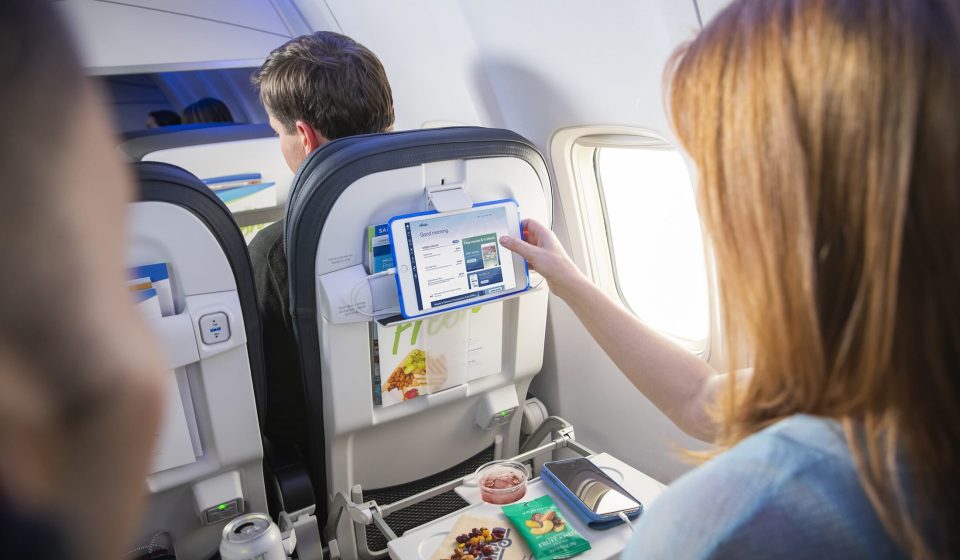


Alaska Airlines is finally adding seatback screens to its Boeing 737 fleet, but only for passengers in its two premium cabins on the incoming 737 MAX 10. Everyone will use their own devices. I welcome the investment upfront, but I think leaving screens out of the economy is a mistake…especially on planes intended to compete for high-end transcontinental revenue.
At Alaska Airlines’ media and investor day in Seattle this week, the airline confirmed an interesting choice for its new Boeing 737 MAX 10 premium plane: screens in the Aurora and Premium Reserve suites, but none in Premium Class or the main cabin.
As I highlighted earlier this week, Alaska plans to introduce at least 25 aircraft with 12 reclining Aurora Suites and 12 Premium Reserve seats starting in 2028. These passengers will enjoy Panasonic Astrova entertainment systems, with 19-inch screens in the Aurora Suites and 16-inch screens in the Premium Reserve. Further-afield passengers, including those who pay extra for Premium Class’ extra legroom, will use their own phone, tablet or laptop.
Alaska thinks Starlink makes this a reasonable compromise. I love Starlink, but I don’t think it makes a folder screen superfluous.
Is Alaska’s explanation for omitting the screens reasonable?
Alaska’s explanation involves both putting these planes into service and its confidence in what passengers can do with fast, free Wi-Fi.
Runway Girl Network reports that certification concerns, including head and neck injury requirements and special complications related to the first row of seats, influenced the decision. Alaska did not want another potential delay of a plane already delayed for years and that is certainly legitimate.
Still, my first reaction was to wonder why Alaska couldn’t just buy an existing economy seat with a screen… Alaska doesn’t need to invent anything revolutionary here. Am I showing my ignorance? I know that an existing seat is not automatically approved for every aircraft and cabin configuration. FAA guidelines make clear that occupant protection depends on factors such as seat recline and structures a passenger might strike. Therefore, purchasing a seat that already exists does not eliminate the work required to approve its installation.
Still, it’s a choice about which investments Alaska considers worth making. He accepts the work necessary to install screens in the two premium cabins, so why not in economy too?
The other part of his argument is that passengers want access to their own entertainment. Alaska President and CFO Shane Tackett said recent passenger feedback highlights “that’s the most important thing: giving me immediate access to my own content.”
I understand that. But wanting to access your own content doesn’t mean you’d rather not have a screen. Passengers in the Aurora and Premium Reserve suites will benefit from both. Why is this combination worth it from the start but useless a few lines behind?
Starlink is wonderful, but watching a movie on your phone isn’t the same
Give me a reliable internet connection and a working power outlet, and I can be very happy without a screen on the back of the seat…my work never seems to end. But when I want to watch a movie, I much prefer to use the screen in front of me rather than my phone.
A tablet is a better substitute, but I don’t own one and watching on a laptop takes up shelf space that you might need for a meal or something else. So a seatback screen is just simpler. Sit down, put on your headphones and choose something to watch. Your phone remains available for messages and your tray remains available for whatever you need. On a cross-country flight, this is useful. For families traveling with children, this can be particularly useful.
The screens convey something about the airline, even to passengers who rarely use them. Step into a cabin with modern screens at every seat and it seems like an airline has invested in the passenger experience. That alone doesn’t make it a good steal, but it helps with the impression.
American Airlines appears to have reached a similar conclusion (even though it already offers screens on its premium transcon flights). After abandoning screens on a large part of its national fleet, it announced their return, with installations on new Airbus and Boeing delivered from 2028 and on modernized planes. American is also investing in Starlink: it sees the benefit of offering both.
Will a screen alone persuade me to choose one airline over another? Probably not. The schedule, the price and the seat itself matter more. But when these are comparable, it’s all the more reason to choose the airline with the best experience.
Alaska wants to generate more revenue by giving passengers more reasons to pay for its product. I applaud this, and the new suites and premium economy seats are substantial improvements. But economy class passengers are also customers. The same goes for travelers paying extra for Premium class, who still won’t have a screen. It’s harder to build a premium reputation if much of the investment is limited to the front of the plane.
Maybe I’m making a big deal out of this, but a screen is something passengers can see as they board and surveys suggest that matters.
CONCLUSION
Alaska has a reasonably plausible explanation for why screens aren’t cost-effective on its premium 737 MAX 10 plane. Certification takes time, and Starlink will make streaming on personal devices much easier.
But I think he made the wrong choice.
While passengers can certainly be entertained without a seatback screen, the question is whether Alaska offers a product worth choosing over its competitors, especially when it hopes to get a revenue premium. My answer: Screens are a profitable investment.
image: Alaska Airlines

Gn bussni