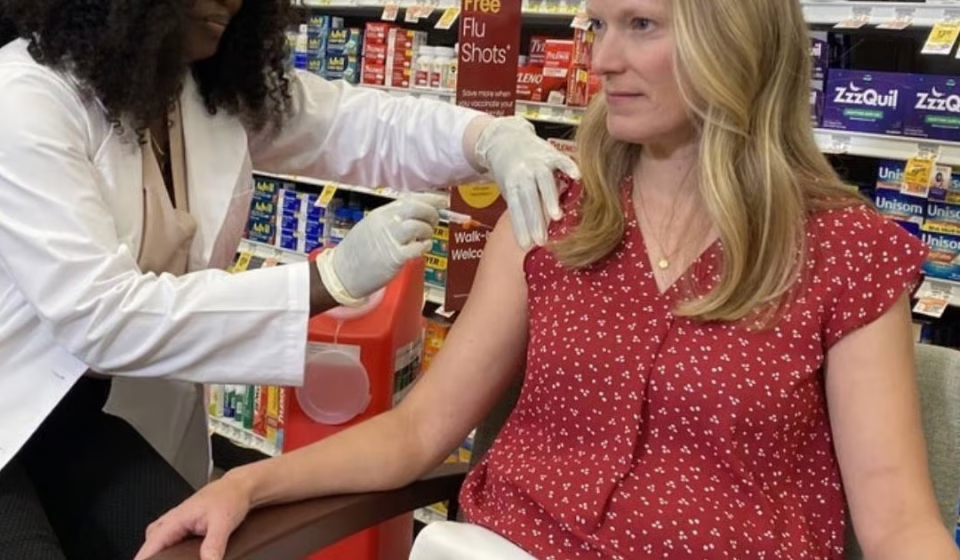

Flu trends are on the rise in Colorado.
Overall viral respiratory activity in Colorado is still low, according to data published by the state health department on its Viral Respiratory Disease Dashboard.
But Dr. Rachel Herlihy, the state epidemiologist, said she’s seeing a pretty sharp increase in a number of indicators. These include “percentage positivity, emergency room visits, and then also hospitalizations,” she said. “The numbers are still low, but show that the flu is here and that it is increasing. »
Last week, forty-six people were hospitalized with the flu – a figure that has increased every week since the end of August, when only one person was hospitalized.
Herlihy advises getting vaccinated. She says the predominant virus circulating now is the one used to make flu vaccines for this season – a good sign of effectiveness.
The flu has hit Coloradans like a ton of bricks over the past two seasons, causing record hospitalizations, with more than 5,900 hospitalizations last year, including nearly 1,200 children.
The virus ruined last winter’s holidays for about 800 people, a record number, who were hospitalized in the week between Christmas and New Year.
“The time is certainly right for these viral respiratory vaccines. I think it’s really the perfect time. We know COVID is already here. We know the flu is coming now,” Herlihy said. “RSV will probably only arrive in a few weeks. This is really the optimal time to start receiving these vaccines.”
She said people should keep in mind that it takes a few weeks before you have full protection. “I would absolutely encourage Coloradans to receive these vaccines now to prepare for the height of flu, RSV and COVID season,” she said.
COVID-19 is increasing in wastewater, which is often a harbinger of new cases to come.
The coronavirus is increasingly showing up in Colorado wastewater, according to the dashboard.
Over the past few weeks, the state has seen increasing trends for the virus that causes coronavirus in nearly every utility that tracks it.
“There’s definitely a virus going around, and I think we’re just grateful that it doesn’t seem to be translating into a high number of hospitalizations or a high number of deaths,” Herlihy said.
Researchers from the state health department teamed up with the Colorado School of Public Health last year to study the use of wastewater monitoring, an innovation that emerged early in the pandemic.
The study found that wastewater signals for COVID remained one of the most reliable, real-time primary indicators for anticipating demand for hospital beds in Colorado.
As of mid-September, 43 people were hospitalized with COVID-19. This is the highest number since March. Since then, the number has declined. “I think we’re actually in the middle of this situation right now. And if anything, I think we’re starting to see some of our COVID trends stabilize,” Herlihy said.
Doctors advise getting vaccinated against covid, flu and RSV. They are available for free or at low cost at clinics and pharmacies.
Dr. Michelle Barron, an infectious disease physician at UCHealth, said she advises anyone over six months of age to get flu and COVID vaccines. She highly recommends them to the very young and anyone over 65, as well as pregnant people.
“It’s been shown year after year that it doesn’t necessarily stop you from getting the flu, but you don’t die and generally end up in the hospital. I think those are victories,” she said.
The COVID-19 vaccine also protects against long COVID, which can cause headaches, brain fog and heart problems, she said, another major benefit.
“It’s a big problem and it affects people who are sometimes very healthy and don’t fully recover to baseline,” Barron said. “COVID vaccines have been shown to prevent this, and it’s not limited to adults. It can happen in children as well. So that’s another benefit of why it’s important to get vaccinated.”
Gn Health