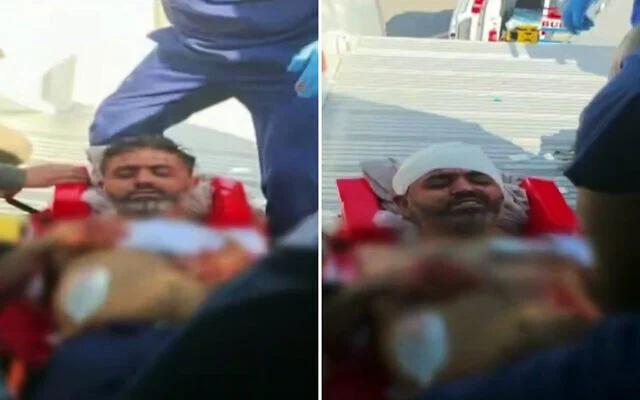
Flydubai’s captain said the co-pilot asked for prayer, then hit him from behind; describes exactly how he opened the cockpit door

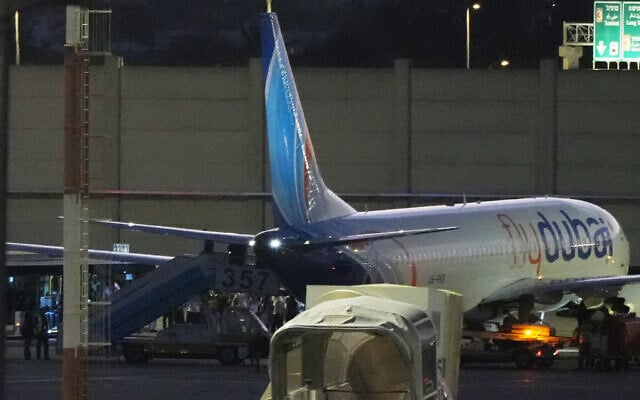
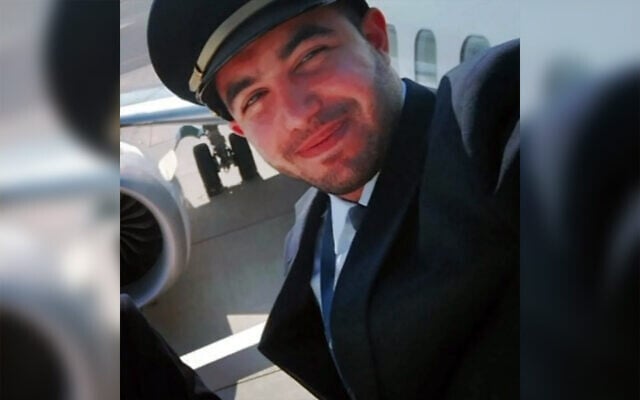
Prime Minister Benjamin Netanyahu hailed as “a true hero” the Indian captain who helped foil the terrorist attack aboard a flydubai flight to Tel Aviv, as the pilot recalled his dramatic account of being bludgeoned by his Omani co-pilot as the plane plunged to the ground.
Captain Smit Machchhar spoke with Netanyahu by telephone on Saturday as further details of the Flight 1073 rescue were revealed, as well as questions regarding Israeli negligence before the near-disaster.
Machchhar told the prime minister that shortly before the attack on the Dubai-Tel Aviv flight, his co-pilot, identified Friday as Hamam al-Hammami, asked for prayers.
Machchhar said that four or five minutes later he was suddenly hit by “a big blow” to the back of the head and initially thought the plane had suffered catastrophic damage.
“But then the blows kept falling, one after the other,” said the pilot, who is in the United Arab Emirates recovering from his injuries. “That’s when I realized it wasn’t the plane, but the other guy who was in the cockpit with me.”
Al-Hammami attacked Machchhar inside the cockpit with an ax and tried to take control of the plane, the UAE attorney general said on Saturday. Crash axes are kept in cockpits for emergencies, such as cutting panels or breaking windows.
Barely able to see after being hit several times, Machchhar said he then felt the plane “crash suddenly.”
His first attempt to open the cockpit door was thwarted by al-Hammami, he said. As he lay on the cockpit floor, he remembered hearing people screaming. “I had one last fight left in me,” Machchhar said
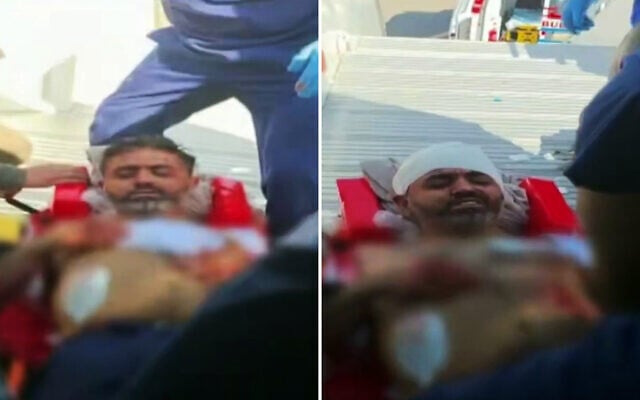
“If I don’t do this, I’m going to die,” he remembers thinking. “I gave everything I had, went to the door and opened the door.” Passengers waiting outside then rushed into the cockpit and helped regain control of the plane.
Machchhar explained that the cockpit door could be opened from the inside using a twist-open mechanism, while anyone trying to enter from the outside needed a code.
“My colleagues from outside were trying to enter the code, but the guy wouldn’t allow the code to be opened,” he explained.
He added that he managed to reach the cockpit door handle and give it a “short, quick twist” to open it.
“It’s a twist of fate,” Netanyahu responded, “and it’s a stroke of faith, and what you’ve done is remarkable.”
During the conversation, Netanyahu invited Machchhar and Indian Prime Minister Narendra Modi, an ally of the prime minister, to light a torch at Israel’s upcoming Independence Day celebration, although they do not have the authority to make a unilateral selection.
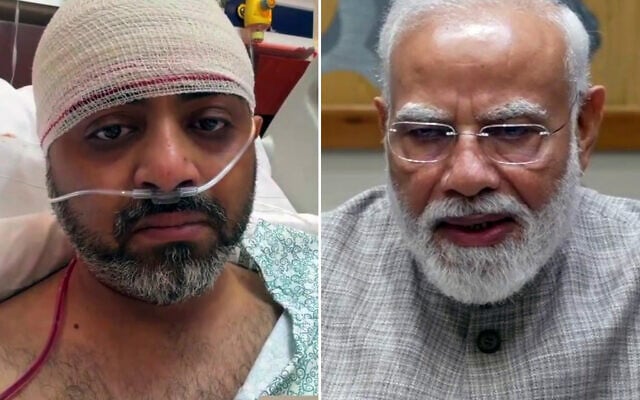
Under the government-established selection process, torch lighters are chosen by a public advisory committee and then approved by the designated ministerial process, which, under recent Netanyahu governments, has been led by Likud loyalist Transportation Minister Miri Regev.
“You are a hero of Israel, you are a hero of India and you are a hero of the whole world,” Netanyahu told Machchhar. “And I can tell you that the people here will welcome you with open arms. »
Passenger recounts his struggle to save a falling plane
Meanwhile, Yaniv Hayun, the plumber who stopped Flight 1073 from plunging after the Machchhar attack, offered his own blow-by-blow account of the chaos aboard the plane.
Speaking to Channel 12, Hayun said he rushed to the cockpit after hearing screams that someone had been stabbed, only to be knocked to the ground as the plane shook violently.
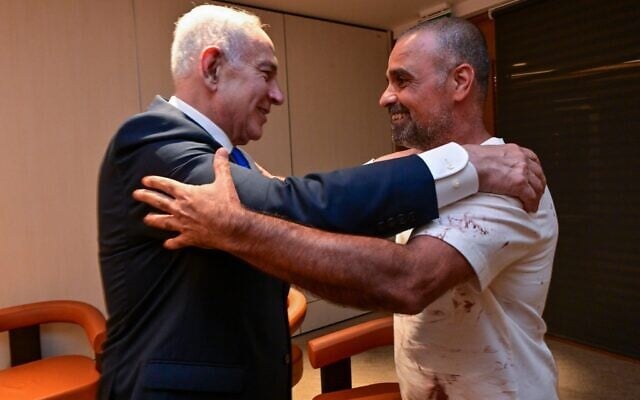
“At one point I was able to get up when the plane balanced a little,” Hayun recalled. “Then I walked towards the (cockpit) door. There was a crew member there, apparently a pilot, because he was wearing a white shirt… I moved him and opened the door. He didn’t resist. It was a little difficult (to open) because the Indian pilot was lying on the door. The terrorist was leaning with his knees on the controls between the pilot seats in the cockpit and trying to break the equipment.”
Hayun said he then grabbed al-Hammami by the neck and pulled him aside, after which other Israelis managed to tie him up.
After leading the terrorist away from the cockpit, Hayun said he looked out the window and saw the plane heading toward the ground, but “not in a very steep direction.”
He grabbed the controls and helped stabilize the plane until, seconds later, one of the off-duty pilots on board took over. He once remembered knowing how to stabilize a plane after watching a TV show about air disasters.
“I returned to the terrorist. A little later, we beat him so that he no longer resisted,” Hayun added.
Hayun said passengers remained suspicious of other crew members after the attack, unsure whether any were linked to al-Hammami, and kept them under close surveillance for the rest of the flight.
Attack reveals ‘colossal’ failure of Israeli security
Al-Hammami, who was previously reportedly banned from flying by Oman’s national airline due to fears of radicalization, had piloted a flydubai plane on the Dubai-Tel Aviv route several times before allegedly trying to crash Flight 1073, according to a Channel 12 report on Saturday.
Israeli authorities are reportedly investigating whether he took the same route in the days immediately preceding the terrorist attack.
Flydubai provided Israeli authorities with the names of the flight crew, including al-Hammami, before Wednesday’s flight, but none raised security concerns, Channel 12 reported.
Israel was unaware that al-Hammami had been banned from flying by his former employer, Oman Air, due to concerns about his radicalization. According to the report, the Transportation Ministry does not supervise the selection of pilots by foreign airlines as required by law, while the Shin Bet and Mossad do not conduct their own background checks. The department confirmed it was not conducting background checks later Saturday.
Anonymous security sources described the failure as a “colossal security mistake,” saying al-Hammami had been planning the attack for some time while Israel had “not a single piece of information on him.”
As of Saturday, Israeli investigators had not yet had access to al-Hammami, who is under investigation in the United Arab Emirates, and are relying on evidence provided by the United Arab Emirates and Saudi Arabia, where he was first detained after the plane landed, the report noted.
Channel 12 also reported that Israel, working with unnamed foreign officials, was “racing against time” to determine whether there were additional pilots from enemy and hostile states flying foreign airlines to and from Ben Gurion Airport following the attack.
In recent years, pilots from Iran, Syria, Iraq and other enemy states have flown foreign airliners to and from Israel, the outlet reported, citing unnamed professional sources. These pilots would have dual nationality, with a second passport potentially issued by a non-enemy state.
Gn world