Following Legionnaires’ outbreaks, a debate over the influence of water and industry in New York

A cascade of deadly Legionnaires’ disease outbreaks over the past two years has resurfaced an old question about how New York City manages its water supply. Should it build a massive, multibillion-dollar filtration plant for the billions of gallons of drinking water that flow into the five boroughs of the Catskill Mountains every day?
According to Bob Bowcock, a water management expert and board member of the Legionnaires’ Disease Prevention Alliance, the answer is yes.
He recently argued to city officials that the water supply is a source of dangerous Legionella bacteria that can enter a building’s plumbing system, as well as rooftop cooling towers, which have come under increased scrutiny and regulation because they are capable of releasing Legionella into the air and causing an outbreak.
“Regulating cooling towers alone does not constitute complete prevention of Legionnaires’ disease,” Bowcock told members of the City Council’s health committee in September, arguing that Legionella bacteria in drinking water contaminates buildings and cooling equipment. “The water in the tower is the same water that circulates throughout the system. »
Rising temperatures and increased precipitation are leading to an increase in the number of Legionnaires’ infections, according to several studies. And that leaves scientists with many unknowns about how Legionella grows and spreads in the built environment, said Annette Davison, an Australia-based water systems expert who is not affiliated with the alliance and does not advocate filtration.
“Due to climate change in particular, our systems are going to change,” Davison said.
City officials point to previous studies that show only low levels of Legionella in the city’s water supply and insist that filtering is not necessary because the bacteria are not present in quantities that would pose a threat to public health. And to Bowcock’s opponents, the alliance he represents is nothing more than a nonprofit front for a cooling tower industry that would like to distract lawmakers from the role its products play in outbreaks.
“They are concerned that the focus on cooling towers will hurt their business,” said Janet Stout, a leading expert on Legionella and cooling towers. She said filtering the city’s water would be costly and would do little to prevent future outbreaks, and she criticized the alliance for influencing other states’ regulations that placed more responsibility on water utilities. She said cooling towers are the main cause of outbreaks and public health departments should stay focused on them.
Tax filings show the Legionnaires’ Disease Prevention Alliance is a who’s who of cooling tower manufacturers. For the past 10 years, its board of directors has included executives from the nation’s largest cooling tower manufacturers, including Don Fetzer, president of Baltimore Aircoil Company; William Bartley, president of Evapco; and Kenneth Mortenson, research and development manager at SPX Cooling Technologies.
The group has long argued that the city focuses too narrowly on cooling towers, instead advocating what it calls a “source-to-tap” approach that treats and monitors Legionella levels in drinking water. Eight years ago, as city lawmakers were considering how to strengthen inspection requirements, the alliance’s director of technology and science, Daryn Cline, testified before the City Council.
“Equipment-driven requirements will not solve New York City’s (Legionnaires’ disease) problems,” Cline told officials at the 2018 hearing. “Filter all the city’s water.”
While he acknowledged during Council questioning that the alliance was founded by cooling equipment companies, he did not reveal that he was also a longtime Evapco executive.
Cline, Fetzer and Mortenson did not immediately respond to a request for comment.
Bartley, president of Evapco and a founding member of the organization’s board of directors, said Stout and other water consultants who favor strict cooling tower regulations have their own financial interests, particularly regular testing requirements.
Stout is the founder of Special Pathogens Technology, a laboratory that performs legionella testing. City records show the company has signed contracts worth more than $2 million through 2026 to provide Legionella testing services to the city health department. Stout said she sold the company in 2021 and advocated for Legionella testing, long before starting the lab.
Bob Bowcock, Alliance to Prevent Legionnaire’s Disease
New York City Council
More recently, some members of the Legionnaires’ Disease Prevention Alliance, including Bowcock, have applauded the city’s strict cooling tower rules while continuing to push for filtration. Bill McQuade, global vice president of Baltimore Aircoil Company, is also the past president of the American Society of Heating Refrigerating and Air-Conditioning Engineers, or ASHRAE, which has become an authority on cooling tower regulation. New York City’s own health code is based on ASHRAE standards.
“No matter how strict they are with regulations in New York on cooling towers, they’re going to continue to have recurring outbreaks,” McQuade said in an interview with Gothamist. He also testified at the City Council Health Committee hearing in September.
It’s unclear how successful his arguments were with local lawmakers. Samie New, a spokeswoman for Health Committee Chair Lynn Schulman, said the committee was still reviewing testimony from alliance members and declined to answer questions about increased enforcement of building water systems and the possibility of filtering the city’s tap water.
Unfiltered system
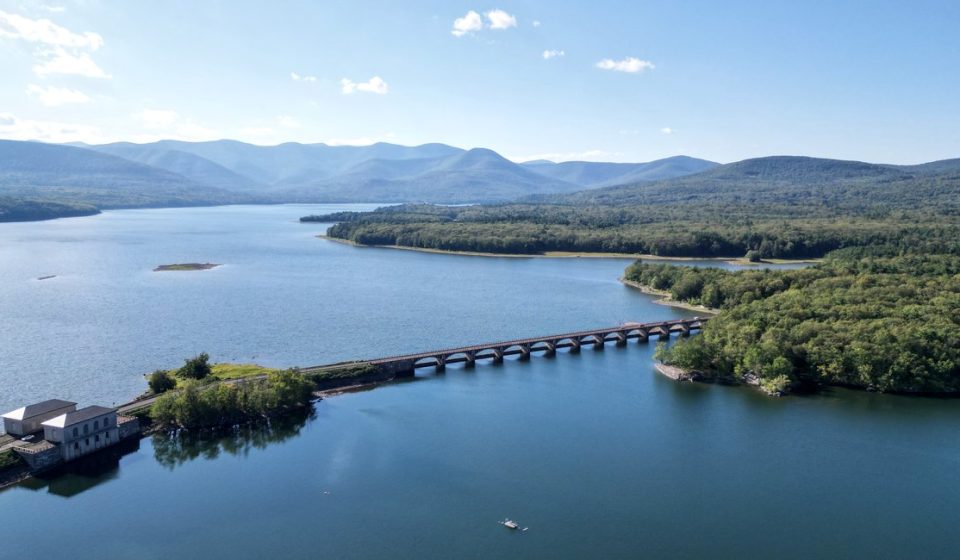
New York City has the largest unfiltered water system in the country. Most of the city’s drinking water comes from 19 reservoirs and three lakes in the northern part of the state surrounding the Hudson Valley. To protect this vast supply of drinking water, the city’s Department of Environmental Protection employed a strategy of purchasing properties surrounding the Catskill Mountain watersheds and implementing strict land use restrictions. The federal government has waived the filtration requirement for the city since federal regulations took effect 23 years ago.
The city filters part of its water. The Croton Filtration Plant, located in the Bronx, began operating in 2015. Up to 30 percent of the city’s water supply on any given day arrives through the plant from the Croton watershed, east of the Hudson River.
Douglas Auer, a DEP spokesman, said all of the city’s drinking water is treated with UV light and chlorine. The water is also tested for Cryptosporidium and Giardia, two pathogens that cause intestinal illness.
Although the agency does not regularly test for Legionella, Auer said a 2022 study by the agency found that Legionella levels are not high enough to pose a threat to public health.
Auer said an additional filtration plant would not help prevent Legionnaires’ disease outbreaks. And Davison, the Australian water systems expert, said there was not enough evidence to justify the high price of filtration to taxpayers.
But she said more testing and monitoring is needed at every stage of any municipality’s water supply: at natural sources such as reservoirs, where water enters a city and at the point where it enters a building’s plumbing.
“We need to refocus our efforts,” she said.
Lynn Schulman, chair of the city council’s health committee
Gerardo Romo / New York Council Media Unit
The New York State Department of Environmental Conservation estimates that a filtration plant would cost $8 billion to $10 billion to build and $1 million per day to maintain. Construction of the Croton plant cost $3.5 billion, more than three and a half times more than initial estimates.
But the Legionnaires’ Disease Prevention Alliance says the hefty price tag is worth it to combat the growing threat of Legionnaires’ disease.
In New York, the number of Legionnaires’ cases more than doubled in 2025, reaching a 10-year high with 657 reported cases, according to data from the city health department.
Last year’s spike was only partly fueled by an outbreak in central Harlem that sickened 118 people and killed seven. Even without the outbreak, the number of infections more than doubled from the 258 cases recorded in 2024.
The number of cases has also increased nationally over the past 20 years. The infection rate has almost quadrupled. In 2005, the CDC estimated that fewer than one in 100,000 Americans were diagnosed with Legionnaires’ disease. In 2025, this figure was close to three per 100,000 inhabitants.
Experts attribute the increase in cases to various factors. Climate change and rising temperatures allow legionella to thrive. Aging infrastructure is more difficult to clean and disinfect, making it more vulnerable to contamination. And an aging population, both in New York and nationally, is more likely to become seriously ill from Legionnaire’s disease.
Chantal Gomez, a spokeswoman for the Health Ministry, said 16 to 18 cases a year are linked to smaller clusters within buildings where people inhale mist from showerheads or faucets.
The vast majority of Legionnaires’ cases go uninvestigated because they are not linked to a larger outbreak or a shared water source.
For the Alliance for Legionnaires’ Disease Prevention, the increase in cases — and the fact that health officials don’t know the source of most infections — suggests that the cooling tower regulations aren’t working and that the city should pay more attention to drinking water.
Bowcock said the group hired a water scientist to collect more than 100 samples from bibs, faucets and outdoor fountains on the Upper East Side during this summer’s outbreak. Test results showed that about 20% of the samples had high levels of legionella, he said.
Cooling towers on a building in Manhattan.
Caroline Lewis
Bowcock told lawmakers in September that legionella in the water was…
Gn Health