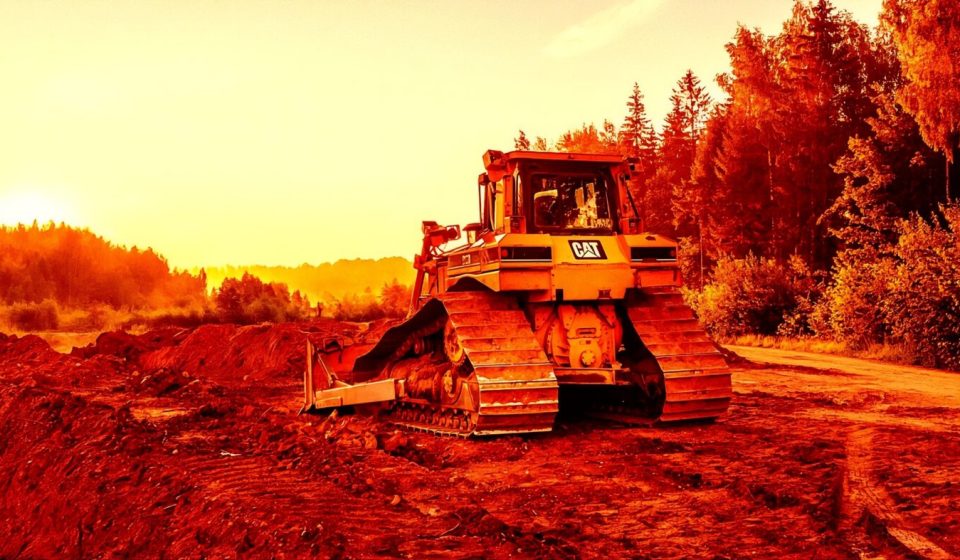
Google is accused of destroying nearly 500 football fields in the forest for a new data center project

Approximately 300 hectares of Finnish forest, comparable to 500 football fields, was cleared for Google’s data center expansion before the project’s environmental impact assessment procedures were completed. Clearing took place first; the environmental review was still ongoing.
The Finnish monitoring agency LVV examines whether Tuike Finland Oy, Google’s Finnish project company, failed to complete a legally required environmental impact assessment before beginning a permanent land use conversion, which reportedly exceeds 200 hectares. No legal conclusions have been reached; This is a regulatory investigation, not a verdict.
The clearing is part of a much larger commitment. Google announced at least 13 billion euros of Finnish investment in AI infrastructure until 2028, according to Reuters, covering data centers in Hamina, Kajaani, Muhos and Vaala. The company described it as its largest investment in Europe.
Both parties have adopted clear positions. Google told AFP that “tree felling activities were carried out in accordance with the requirements of the forestry law”, adding that ecological studies were carried out before work began and that areas of high environmental value were protected during forestry operations.
Hanna Halmeenpää, president of the Finnish Nature Conservation Association, disputes this formulation. Satellite images, she says, show that four areas identified as natural sites in the local plan have been bulldozed, potentially disrupting wildlife corridors and local bird species.
Halmeenpää told AFP: “In our opinion, operations at this construction site should be suspended until it is clarified whether the project complies with the law.” The association asked LVV to stop all activity on the site. No suspensions have been reported in the available coverage.
The main dispute lies in a sequencing problem that goes beyond this single site. AI infrastructure runs on physical land, concrete, electricity, and wood, and when large-scale projects move faster than environmental review processes, ecological costs arise before anyone has formally approved them.
LVV must now determine whether compliance with Finnish rules Forest law is sufficient when a separate, broader environmental assessment was still incomplete at the time of clearing. This distinction, between forestry permits and legal requirements for environmental impact assessment, constitutes the legal fault line that the investigation must resolve, and its outcome could set a precedent for how European regulators will treat the future development of large-scale data centers.
Gn bussni