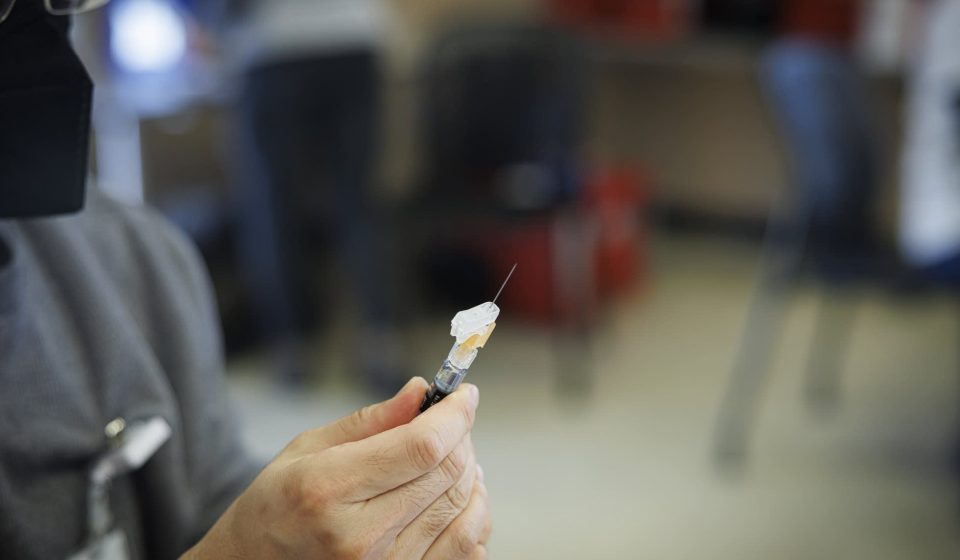

As respiratory virus season approaches, Minnesota clinics and pharmacies are offering updated COVID-19 and annual flu vaccines. But changing federal guidelines have left some people uncertain about who should get vaccinated and when.
The U.S. Food and Drug Administration approved four COVID-19 vaccines in late August that were updated to target the latest circulating variants. The U.S. Centers for Disease Control and Prevention, however, has not issued new federal recommendations on who should get vaccinated. Instead, the agency advises people to discuss COVID-19 vaccination with their healthcare provider.
Conversely, major medical groups, as well as health officials at Children’s Minnesota and the Minnesota Department of Health, continue to recommend vaccination for most people.
Health officials say vaccines are considered safe and remain the most effective tool for reducing the risk of severe illness and protecting people more vulnerable to respiratory viruses.
MPR News helps you cut through the noise and build common understanding. Raise your support for this public resource and keep trusted journalism available to all.
Here’s what Minnesotans should know about COVID-19 and flu vaccines this fall:
Who should get the COVID-19 vaccine?
The American Academy of Family Physicians recommends that all adults ages 19 and older receive an updated COVID-19 vaccine for the 2026-2027 season. Vaccination is especially encouraged for pregnant people, young children, adults 65 and older, and people at higher risk of serious illness.
The American Academy of Pediatrics recommends COVID-19 vaccination for all children ages 6 to 23 months.
Although many children who contract COVID-19 have mild illness, health officials warn that the virus can sometimes cause serious complications, including heart inflammation, respiratory complications and long COVID.
Who should get the flu vaccine?
The Minnesota Department of Health recommends an annual flu vaccine for everyone 6 months and older.
Adults 65 and older are encouraged to ask their health care provider about enhanced flu vaccine options, designed to produce a stronger immune response in people whose immune systems may not respond as strongly to standard vaccines.
When should you get vaccinated?
COVID-19 activity, including hospitalizations, remains relatively low nationally but has begun to increase, a trend commonly seen in late summer and early fall.
Health officials expect COVID-19, influenza and RSV to circulate this fall and winter, with respiratory virus activity typically increasing after the holidays.
“It’s actually a great time to get vaccinated before it’s circulating and before you see this increase,” said Kate Kelly, Children’s Vaccines program coordinator at the Minnesota Department of Health.
Kelly said updated COVID-19 vaccines are arriving at Minnesota clinics and pharmacies. She advises residents to call ahead to confirm availability and to consult their doctor or child’s pediatrician about which vaccines are appropriate.
Influenza follows a more predictable seasonal pattern than COVID-19, which can circulate throughout the year. Kelly recommends adults get a flu shot in October to extend protection until the peak of flu season, but she said it’s never too late to get vaccinated.
Minnesota health officials typically see flu cases peak in January and February, so Kelly suggests that people who weren’t vaccinated in October should still consider getting a flu shot in November or December.
The American Academy of Pediatrics and the American Academy of Family Physicians recommend that children ages 8 and younger who may need two doses of the flu vaccine get vaccinated as soon as the vaccine becomes available.
It takes about two to four weeks for the body to mount an immune response after vaccination, according to Dr. Gigi Chawla of Children’s Minnesota.
Chawla said vaccination helps protect individuals from disease while also protecting people in the community who are too young to be vaccinated or who have health conditions that prevent them from receiving vaccines.
She added that vaccination helps reduce the spread of respiratory viruses and said sick people should also stay home to avoid spreading the disease to others in the community.
Where can Minnesotans get a COVID-19 or flu vaccine?
Vaccines are readily available at pharmacies, health clinics and local health departments throughout Minnesota.
Pharmacies generally cannot vaccinate children younger than 3, so health officials advise parents of young children to consult their primary care provider about vaccinations.
Most insurance plans cover the full cost of recommended vaccines. For adults 19 and older who do not have insurance or whose insurance does not cover vaccines, there are clinics that serve uninsured and underinsured adults. For patients under 19 who do not have health insurance, the Children’s Vaccine Program provides free flu shots.
Gn Health