One strait blockage can hide another. While the war between the United States and Iran has intensified over the past ten days, once again leading to a de facto blockage of the Strait of Hormuz, navigation in the Bab el-Mandeb Strait also seems threatened. Yemen’s Houthi rebels, supported by Tehran, announced on Monday July 20 a “maritime embargo” against Saudi Arabia, the world’s leading exporter of crude oil.
Denouncing an “unjust siege” by Riyadh in Yemen “for nearly 12 years”, the military spokesperson of the Houthis, Yahya Saree, notably explained on X that the announced blockade is “based on the principle of an eye for an eye”, with immediate effect”. “We affirm the right of our people to respond to the blockade with a blockade,” the rebel communication also specifies. According to the latter, this is a response to the blockade imposed by Saudi Arabia on ports and airports controlled by the Houthis in Yemen.
Also readWar in the Middle East: does oil salvation come through the Saudi East-West pipeline?
The Saudi Ministry of Foreign Affairs quickly expressed “(its) strongest condemnation”, especially since this decision by the Yemeni rebels, if it managed to be implemented for at least several weeks, could have disastrous consequences at the regional level and for the world economy.
“A simultaneous blockade of Hormuz and Bab el-Mandeb would amount to imposing a real strategic siege on the Persian Gulf,” explains Andreas Krieg, security expert at King’s College London. “The Strait of Hormuz is the main export route for Gulf oil and liquefied natural gas (LNG), while Bab el-Mandeb connects the Red Sea and the Suez Canal route to Asian markets.”

The Houthis had significantly reduced traffic in the Red Sea and Suez Canal in October 2023 by attacking ships in the Bab el-Mandeb Strait. ©France 24
Since the start of the Israeli-American offensive in Iran at the end of February, Saudi Arabia has been transporting its black gold via the East-West oil pipeline, which crosses the Kingdom for 1,200 km. Sending its tankers from the port of Yanbu allows Riyadh to circumvent the blockage of Hormuz by using the Red Sea, then Bab el-Mandeb, to make its deliveries to its main customers – China, Japan and South Korea.
“Serious disruptions to container traffic between Asia and Europe”
The blocking of a new strait by the Houthis could therefore have immediate consequences for the Wahhabi monarchy: no less than around 2.5 million barrels of oil per day are in danger, according to a note published Monday by Rystad Energy, an independent energy research company.
“If a ceasefire does not materialize and the Hormuz Canal remains largely closed while the Houthi threat to shipping in the Red Sea intensifies, the risk of a sharp rise in oil prices would be considerable,” specifies in particular Jorge Leonsenior vice president and head of geopolitical analysis at Rystad Energy.
The de facto closure of Bab el-Mandeb would, therefore, quickly have both regional consequences and – combined with the blockade of Hormuz – an even stronger impact on the world economy. For Andreas Krieg, “the immediate consequences would be a rise in oil and LNG prices, a sharp increase in insurance and maritime freight costs, a reduction in the availability of tankers as well as serious disruptions in container traffic between Asia and Europe.”
Also readAfter the Strait of Hormuz, that of Bab el-Mandeb soon to be blocked by the Houthis?
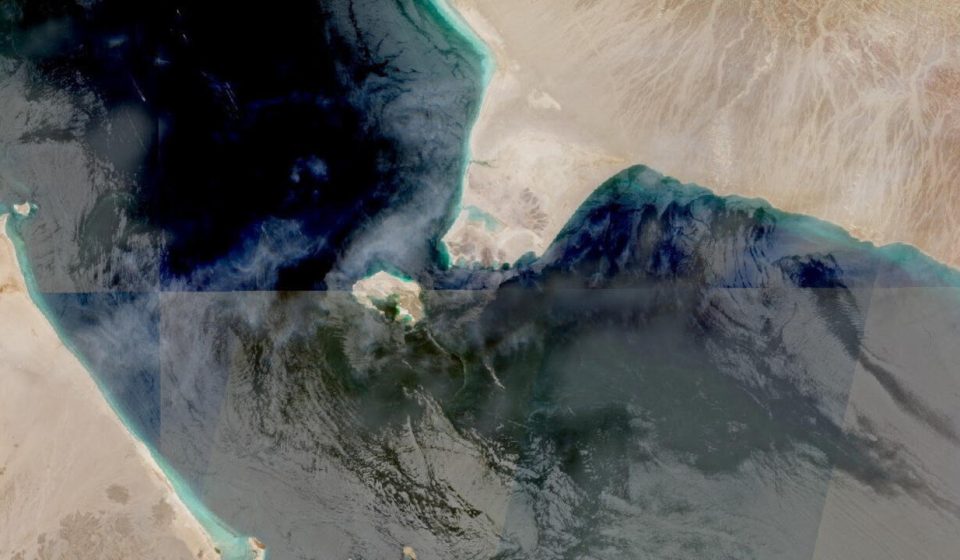
At the southern tip of the Arabian Peninsula, the Bab el-Mandeb Strait is the gateway to the Red Sea through which usually passes around 12% of world trade. A quarter of the world’s container trade passes through this 32 km wide strait, to and from the Suez Canal. Its disruption would make maritime journeys for carriers to Asia much longer – it would then be necessary to use the Suez Canal, the Mediterranean Sea, Gibraltar then bypass the entire African continent, i.e. 10 to 20 days of additional transport.
Given the cascading consequences that the simultaneous blocking of two straits could have, Saudi Arabia could react quickly to any Houthi threat in the Red Sea, as Andreas Krieg notes: “The reaction could be very rapid. Riyadh would initially strengthen its air defense systems, naval protection, intelligence sharing and would exert diplomatic pressure, in particular through Oman”.
The precedent of the Gaza war and disrupted maritime trade
To achieve their goals, the Yemeni rebels would not particularly need to block Bab el-Mandeb stricto sensu, according to the security expert at King’s College London: “The Houthis are probably not able to hermetically close Bab el-Mandeb to all ships, but they do not need to. Their goal is to make the crossing dangerous and expensive enough to push the big shipping companies to voluntarily change their routes.”
Also readWhy the US is targeting Iran’s Bandar Abbas port with naval drones
The Houthis are not their first attempt in this area: they had warned that ships with links to Israel would be targeted in the Red Sea a few weeks after October 7 and the start of the war in Gaza, at the end of 2023. More than 100 buildings in total were attacked by the Yemeni rebels until ceasefire with the United States in May 2025.
“They then demonstrated their ability to use anti-ship missiles, long-range drones, explosive boats and other asymmetric means against ships in the Red Sea,” explains Andreas Krieg. “The Houthis are capable of identifying vessels linked to Saudi Arabia, declaring exclusion zones, carrying out targeted strikes and creating a level of uncertainty sufficient to drive up insurance premiums and force shipowners to divert their vessels.”
For the expert, the Houthis’ strategy will probably be based on “one-off attacks” rather than an attempt at a permanent blockade: “And their attempted strikes can produce disproportionate commercial effects, because shipping companies and insurers react to risk and not only to successful attacks.”
Also readWhy is France banking on Oman in the Hormuz crisis?
During the war in Gaza, the world’s major shipowners ordered their crews to avoid the Red Sea and the Bab el-Mandeb Strait to avoid the danger posed by this waterway. A situation which had led to a significant increase in transport costs for containers using alternative routes.
This position of the Yemeni rebels – a first since the start of the war in Iran – is in any case “a clear reactivation” of the Axis of resistance with Tehran, as Andreas Krieg notes: “Iran provides the strategic concept, weapons technologies, intelligence, technical advisors and political orientation, while the Houthis retain a large autonomy in the choice of the timetable, the targets and the level of risk that they are prepared to assume.” And the expert concludes: “(With Bab el-Mandeb) it is a coordinated escalation between partners whose interests currently converge, rather than the execution of orders given by Iran to a simple expendable proxy.”