
SA Harris/Atmosphere 2023
A paper that questioned much central data linking carbon dioxide to rapid climate warming has been retracted due to “significant concerns,” including “unsupported conclusions” and “inaccuracies” in data interpretation.
The article, published in August 2023 in the journal MDPI Atmospherewas written by Stuart Harris, former professor of geography at the University of Calgary. It has 26,000 views and has been mentioned 869 times on social media platform X, according to Altmetric. The subject was also covered by the climate skeptic site The Daily Sceptic. The paper has been cited four times, according to Clarivate’s Web of Science.
“It’s an absolute disaster,” Marcus Sarofim, a climate scientist at Johns Hopkins University, told Retraction Watch. “I certainly don’t think this paper has any reason to be in the peer-reviewed literature.” He also pointed out that the document was submitted and accepted in less than a month, saying the short delay “is always a bad sign.”
Harris did not respond to several emails seeking comment.
John Kennedy, a climate scientist at the World Meteorological Organization at the time, blogged about the document shortly after its publication, pointing out a handful of its many errors.
“From afar it looks like an ordinary newspaper, but up close it’s chaos,” he wrote.
In one paragraph, Harris states that carbon dioxide is primarily measured at an observatory in Hawaii. “The increase in this gas is measured primarily at a single station atop Mount Kea on the island of Hawaii, and the increase parallels the change in air temperature at that station since about 1900 AD,” Harris wrote in the journal.
But the observatory is on Mauna Loa – not Mauna Kea – and only began measuring carbon dioxide in 1958.
“The claim that carbon dioxide is measured primarily at this single station is also completely false,” Kennedy wrote in 2023. More than 221 monitoring stations and numerous additional satellites currently track carbon dioxide emissions.
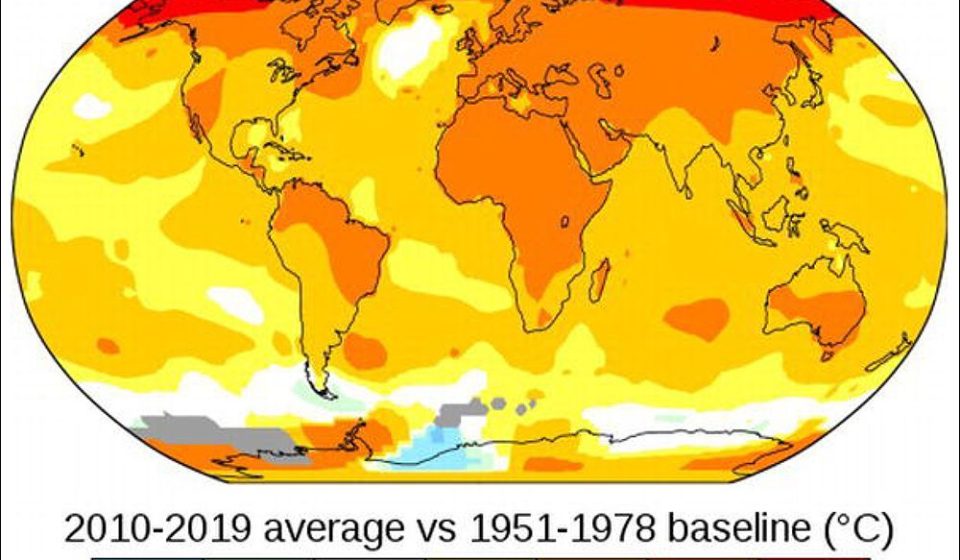
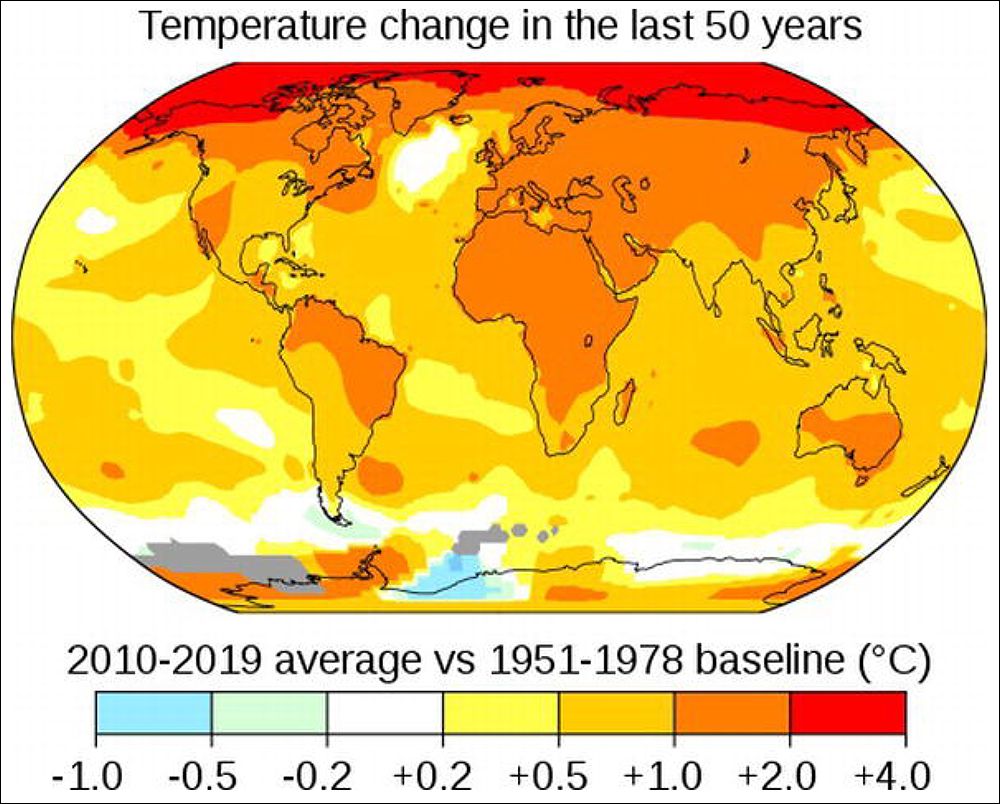
Harris also criticized the logic inherent in global heat maps, which illustrate how different parts of the Earth have warmed over a given period of time.
“An obvious problem arises when looking at the distribution map of climate change (mean annual air temperature) obtained by NASA from satellites,” Harris wrote. “The main areas of warming are in northern Canada and the Arctic, with less warming in the Sahara and the Australian outback! Eastern China and Germany show no obvious warming. Clearly, this does not correspond to the major industrial centers of the world!”
As Kennedy pointed out, the data is not taken from NASA satellites but from “weather stations, ships and buoys.”
Harris also attributed recent climate change to solar radiation, which is not uncommon among climate science deniers, Sarofim said. Although solar radiation certainly affects Earth’s climate, “believing that CO2 not being involved in climate change is like believing the Moon is made of green cheese.
In addition to misunderstandings and misrepresentations regarding climate research, the study also claims that Neanderthals went extinct only 3,200 years ago. (The actual number is closer to 40,000 years ago.)
An MDPI spokesperson told us the journal launched an investigation “following concerns raised after publication” but did not respond to questions about specific concerns or the origin of those concerns. They found “significant concerns,” “including insufficient evaluation of the relevant literature, unsupported conclusions, inaccuracies in the interpretation of the data presented, and issues related to the use and attribution of references,” according to the retraction notice. MDPI declined to provide details of the investigation, citing confidentiality.
Harris responded to the survey, but the newspaper determined that the responses “did not adequately resolve the issues.” The newspaper withdrew the article on September 16.
David Ho, a climate scientist at the University of Hawaii, responded to our request for comment on the paper by saying he was not interested in reading it. “I’m sorry, but I’d rather keep my brain cells,” he said.
Like the retractable watch? You can make a tax-deductible contribution to support our workFollow us on or Bluesky, like us on Facebookfollow us on LinkedIn, add us to your RSS readeror subscribe to our daily summary. If you find a retraction, it is not in our databaseyou can let us know here. For comments or feedback, email us at (email protected).
Related
Gn world