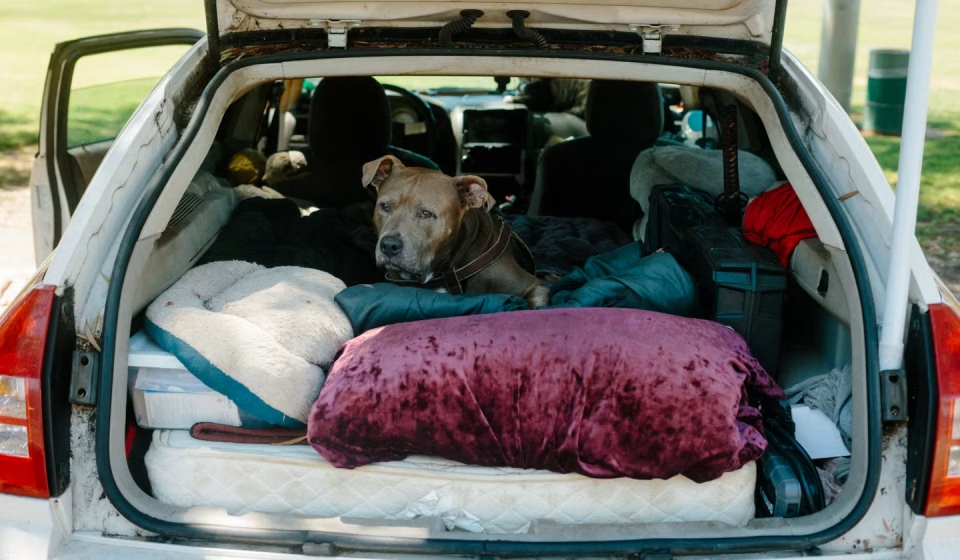
For more than four years, Tom Williamson has lived in his Dodge Magnum, a gray station wagon loaded to the brim. The life of this 51-year-old American changed in November 2021, while he was on sick leave following heart problems. His landlord terminated the lease on his apartment in Wenatchee, the small town in Washington state where he lived. This former construction worker found himself homeless, without the possibility of working: he got into his Dodge and headed for Los Angeles (California), where the climate is milder.
Since then, he has lived in the Venice district, regularly changing parking spaces. Each month, he receives 1,365 dollars (1,170 euros) in social security assistance for his disability – enough to pay for gasoline, his food, and that of his animals. But in an urban area where a studio costs at least $1,500, this is largely insufficient for accommodation – California is one of the most expensive states in the United States. “I applied to several programs for supported housing, but single men are the least prioritized. My only hope is to leave California. I’ll wait until I save $5,000 and then I’ll leave.”he explains.

Venice is far from being the only concentration point for these precarious inhabitants. In total, in Los Angeles County, between 15,000 and 20,000 people live in cars, vans or campers, parked under highway ramps, in parking lots or along streets, in the metropolis’s affluent neighborhoods as well as in its most inhospitable industrial zones. A situation which has no equivalent elsewhere in the United States. These residents thus constitute a significant portion of all unhoused people, whose number has exploded in ten years in the county, going from 45,000 people in 2015 to 73,000 in 2026, according to the Los Angeles Homeless Services Authority (Lahsa).
You have 80.65% of this article left to read. The rest is reserved for subscribers.