To be found in the show

Pineapples, mangoes, pomegranates, pistachios or passion fruit: in the south of France, farmers are experimenting with crops formerly associated with tropical regions. A development which illustrates the transformations of agriculture in the face of climate change.
In Gard, some 300 pineapple plants are currently being monitored by researchers. Their objective: to determine if these fruits can be grown in good conditions and find their place on the French market. Scientists measure their sugar content and acidity in particular. To be marketed, a pineapple must exceed 13% sugar. Those resulting from the experiment reach approximately 13.5% and can therefore be harvested.
The south of France has obviously not transformed into a tropical region. The risk of frost remains and weather conditions may still be difficult. But rising temperatures now allow certain species to find conditions favorable enough to be tested.
Diversify to adapt
These experiments increasingly directly concern farmers. On part of their land, some are testing new productions likely to gradually complement or replace traditional crops.
Because these are themselves weakened by climate change. Droughts, intense rains, hail, storms or floods can cause significant losses. In the Pyrénées-Orientales, the apricot industry has recorded losses of up to 90% in certain years.
For some operators, diversification therefore becomes an economic necessity. For others, it represents a new business opportunity, especially when demand exists for locally grown products.
An open-air laboratory
Since the 2010s, trials have multiplied in France. Citrus fruits, pomegranates, prickly pears, persimmons, kiwis, pistachios, mangoes, avocados, jujubes, passion fruit, dragon fruit, ginger or peanuts: many species are now being tested.
The phenomenon even goes far beyond the south of the country. Vanilla is grown in Brittany, sorghum in Loir-et-Cher and quinoa in Anjou.
This diversification can allow farms to reduce their dependence on a single production and better spread risks. But an exotic crop produced in France is not necessarily more ecological. Water consumption, energy requirements, yields, diseases, transport and market opportunities must also be taken into account.
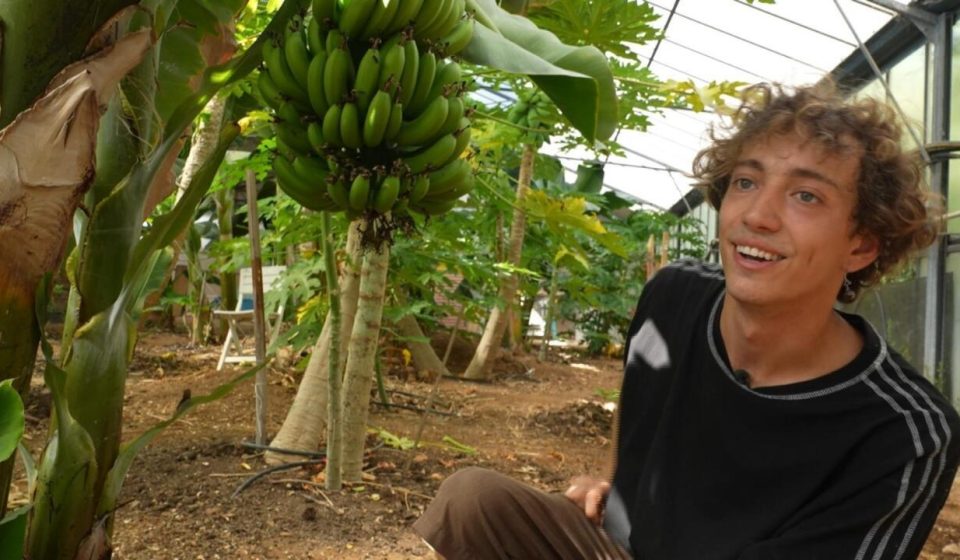
Price is also a limitation. A banana produced in the Pyrenees costs six times more than an imported banana. Breton vanilla also remains significantly more expensive than that produced in Madagascar.
Agriculture in full transformation
Reducing greenhouse gas emissions remains essential to limit global warming. But, for farmers, adaptation has now become an unavoidable reality.
Diversifying cultivated species, modifying production schedules and increasing outlets can be part of the answers.
And so-called “exotic” crops are ultimately not so foreign to French agricultural history. Tomatoes, potatoes and corn, now omnipresent on our plates, also come from the Americas. As early as the 19th century, pineapples were even grown in greenhouses in Versailles and Bordeaux.
As the climate changes, the boundaries of French agriculture are also shifting.