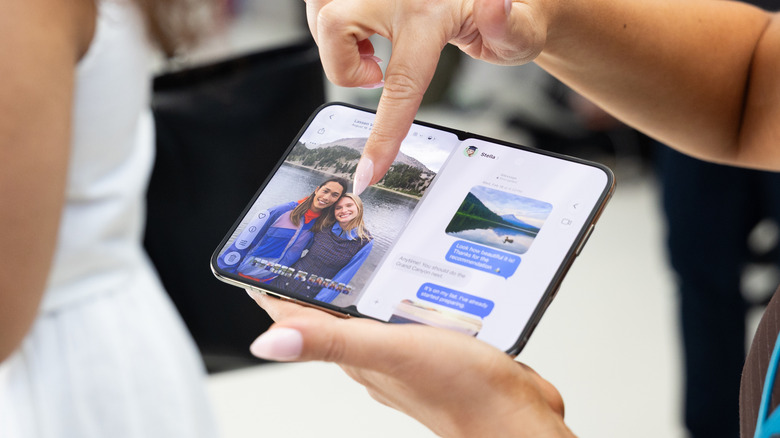

The iPhone Duo could replace your tablet, but there’s something to be said for having a separate device.

The iPhone Duo is expected to arrive on October 23, and from the looks of it, the new foldable has a lot of overlap with Apple’s smallest iPad, the iPad Mini. The Duo’s interface is very similar to that of the iPad, with a similar screen size and better hardware. However, whether the iPhone Duo can truly replace an iPad depends largely on what you need from such a device.
Ditching your tablet in favor of a foldable phone has both pros and cons, especially for more complex or time-consuming tasks. From what we’ve seen, the Duo manages to bridge the gap between the two technologies quite competently. In particular, a new iPad Mini should arrive soon and would bring technical specifications more comparable to those of the Duo. Since that day hasn’t arrived yet, for the purpose of this discussion, we’re going to compare the iPhone Duo with the newest seventh-generation iPad Mini model from 2024.
How the iPad Mini and Duo Compare
One of the biggest deciding factors between the Duo and the Mini is the big price difference. The iPad Mini starts at $600 for the 128GB model and goes up to $900 for 512GB, with cellular-equipped models costing $150 more. The Duo starts at $2,000 for the 256GB model and goes up to $3,200 for 2TB of storage. You could buy the new 256GB iPhone 18 Pro ($1,200), plus an iPad Mini, and it would still cost less than a Duo. With such a significant price difference, you need to be absolutely sure that the iPhone Duo interests you before purchasing it. Consider trying it at an Apple Store first to see how it feels.
In terms of specs, the Duo comes out on top in terms of processing power, boasting an A20 Pro chip versus the Mini’s A17 Pro, a 7-core GPU versus the iPad’s 5 cores, and 12GB of RAM versus eight. The Duo’s camera is also significantly better, with both a 48-megapixel main and ultra-wide lens, compared to the Mini’s 12-megapixel wide camera. However, this stat isn’t particularly compelling: If you decide to invest in an iPad over the Duo, you probably get a phone with a better camera.
The iPad Mini gains in screen size, with an 8.3-inch screen compared to the Duo’s 7.6-inch interior screen. However, both of the iPhone Duo’s displays are ProMotion displays that reach up to 120Hz, while the iPad Mini’s display is 60Hz.
Some may also prefer the capabilities of iPadOS: although the iPhone Duo’s software is different from a normal iPhone, it’s still not the same as iPadOS. At most, the Duo’s OS can support one app on each half of the interior screen, while the iPad offers much more robust multitasking. If you use the Apple Pencil a lot, the Duo’s limited compatibility is also a point to consider, as the phone will only support the USB-C version of the device, not the Pencil Pro. This support will also not be available at launch, but will arrive later in 2026.
Which device is best for you?
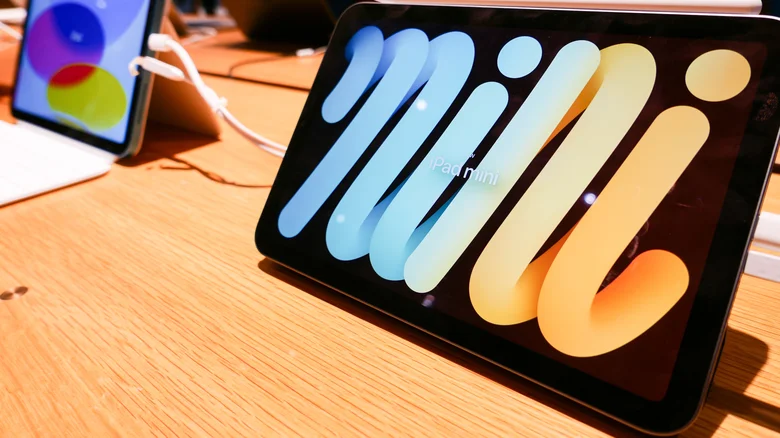
These tech specs paint a clear picture: the current iPad Mini model only has the edge in screen size, unique iPadOS capabilities, and better Pencil support. If multitasking on two screens is enough for you, you don’t use the Apple Pencil Pro and price isn’t an issue, in theory you should get the iPhone Duo. That being said, it’s worth considering that the true evolution of the Duo’s crease won’t become clear for a long time – it might be best to wait and see how it plays out.
However, a side-by-side comparison of specs doesn’t answer everything. Much of what determines which of these two is best for you depends on your preference for keeping your technologies separate. For some people, having an iPad is ideal for spending time on a project or book without the many distractions that often come with a phone. This also means you won’t drain your phone’s battery during long iPad sessions. Conversely, if you want to quickly switch between a typical phone view and an extended view, then close it just as quickly to make a phone call, a Duo is the way to go.
Gn tech