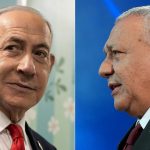
Israeli Prime Minister Netanyahu and the opposition leader met to discuss the formation of a unity government.

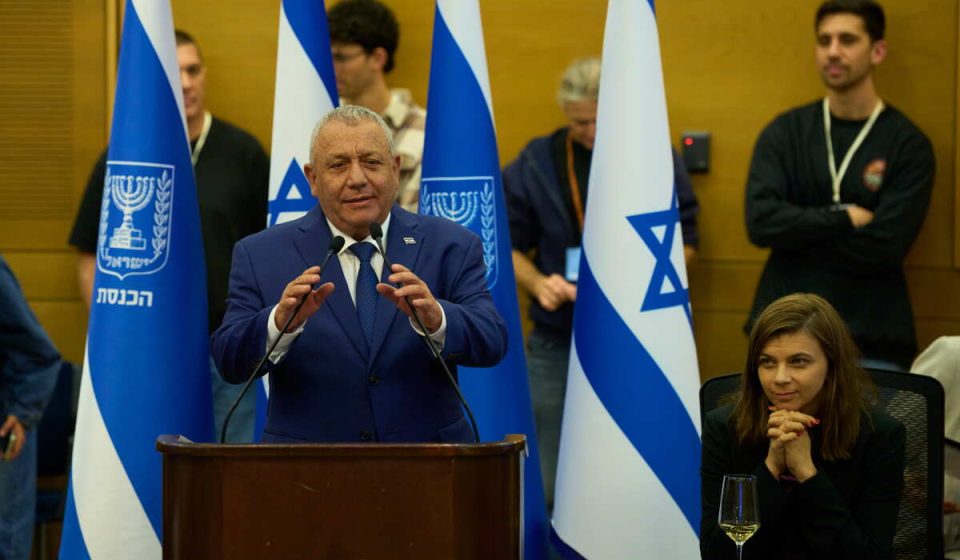
JERUSALEM (AP) — Israeli Prime Minister Benjamin Netanyahu and leader of the opposition Gadi Eizenkot met Sunday morning to discuss the formation of a unity government, three weeks after Israeli President loaded Eisenkot trying to form a government for the deeply divided country after inconclusive national elections.
The talks took on new urgency after Netanyahu announced Saturday evening that he was prepared for Eisenkot to become prime minister as part of a rotation deal as part of a possible unity deal.
A joint statement from their parties on Sunday afternoon said the meeting began with a security briefing and was then devoted to discussing “the formation of a government of national unity”, with “both sides seeking to iron out substantial differences between them”.
For months, Eisenkot has called Netanyahu, Israel’s longest-serving prime minister, unfit for office and a threat to Israel’s future. Netanyahu has led a relentless campaign against any partnership with Arab-led parties – of which historic gains during the elections of October 27, they became probable, but politically tense allies for the opposition bloc.
“The unity government is another name for driving out the Arabs,” said Tamar Hermann, who directs the Viterbi Center for Public Opinion and Policy Research at the Israel Democracy Institute in Jerusalem.
She added that although Israelis have expressed concern in opinion polls about the lack of unity in the country, those who voted for change would view a shared Netanyahu-Eisenkot government as a betrayal on Eisenkot’s part.
Yousef Jabareen, the leader of the Joint List, a coalition of three Arab parties, called for rejecting Netanyahu’s offer. “It is time to carry out the common will of the entire public – Jews and Arabs – and oust Netanyahu this week,” he said.
Yair Lapida leader of the Jewish-majority opposition parties who briefly served as prime minister in a coalition government formed in 2021 that ended Netanyahu’s 12-year rule, called the offer a scam.
However, Naftali Bennettwho also served as prime minister in the coalition government with Lapid, welcomed Netanyahu’s offer to let Eisenkot serve as prime minister first and said a unity government should be built around parties representing Israelis performing military or national service.
While Netanyahu’s Likud party garnered the largest number of votes in the country’s elections, the right-wing and ultra-Orthodox parties that have historically supported him failed to maintain their parliamentary majority and won fewer seats than his opponents in the 120-member Knesset.
Neither bloc secured the necessary 61-seat majority, leaving Eisenkot and Netanyahu without an easy post-election path to forming a government.
If no deal is reached by December 6, Eisenkot could ask the Israeli president for a two-week extension to have one last chance to reach an agreement. If that fails, Netanyahu could get the next opportunity – and new elections could be called if he fails too.
Parties supporting Eisenkot disagree over whether to include Arab-led or ultra-Orthodox parties in a possible coalition.
In addition, negotiations between the parties addressed some of the most sensitive issues of the election, including the obligation of military service for Ultra-Orthodox Jews and a state-led investigation into security failures surrounding the attacks carried out by Hamas on October 7, 2023.
The country is still in shock from this trauma and the more than three years of war that followed. in Gazaagainst Iran’s support Hezbollah militants in Lebanon and the war against Iranwhich Israel and the United States jointly attacked on February 28.
___
Associated Press writer Koral Saeed in Abu Snan, Israel, contributed to this report.
Gn world