Japan went from a rice shortage to a rice surplus in two years, due to drought, tourism and the United States.

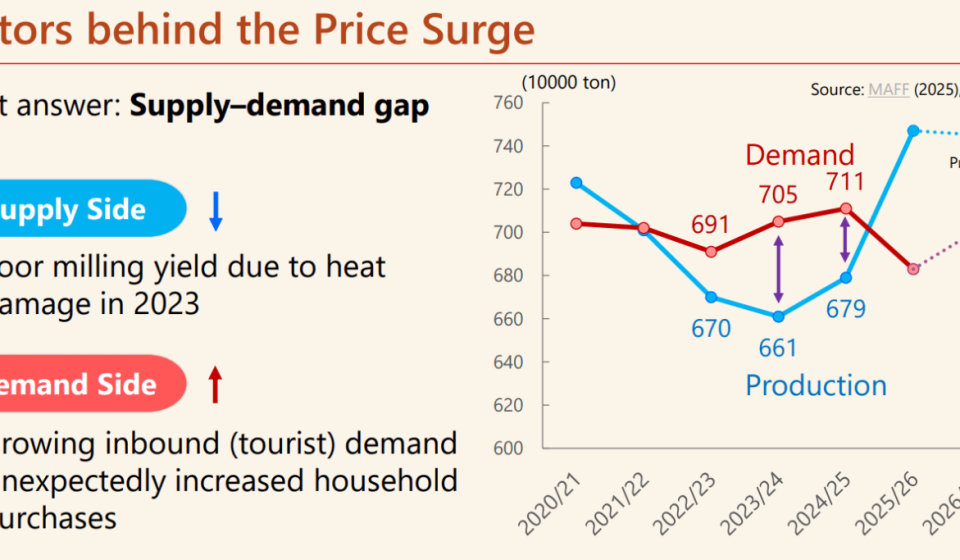
In 2023, extreme heat and drought damaged Japan’s rice crop, and a year later that damage grew into a national shortage so severe it forced a government minister to resign. By 2026, Japan had swung so far in the opposite direction that it was sitting on a record surplus, forcing the government to buy back rice from the market to prevent prices from collapsing further. It is still a wonder to those who study it: how on earth was Japan able to go from shortage to surplus in two years?
“All the experts are actually surprised by this fluctuation,” said Ryosuke Inoue, a visiting scholar at the CSIS Japan Chair in Washington, DC. Fortune. Inoue, an expert on Japanese agricultural policy, said he didn’t even see the scale of change coming. “The gap between supply and demand existed, but it’s not such a huge gap. It could happen, and it could also happen in the United States. But in the United States, the price fluctuation is not that high.”
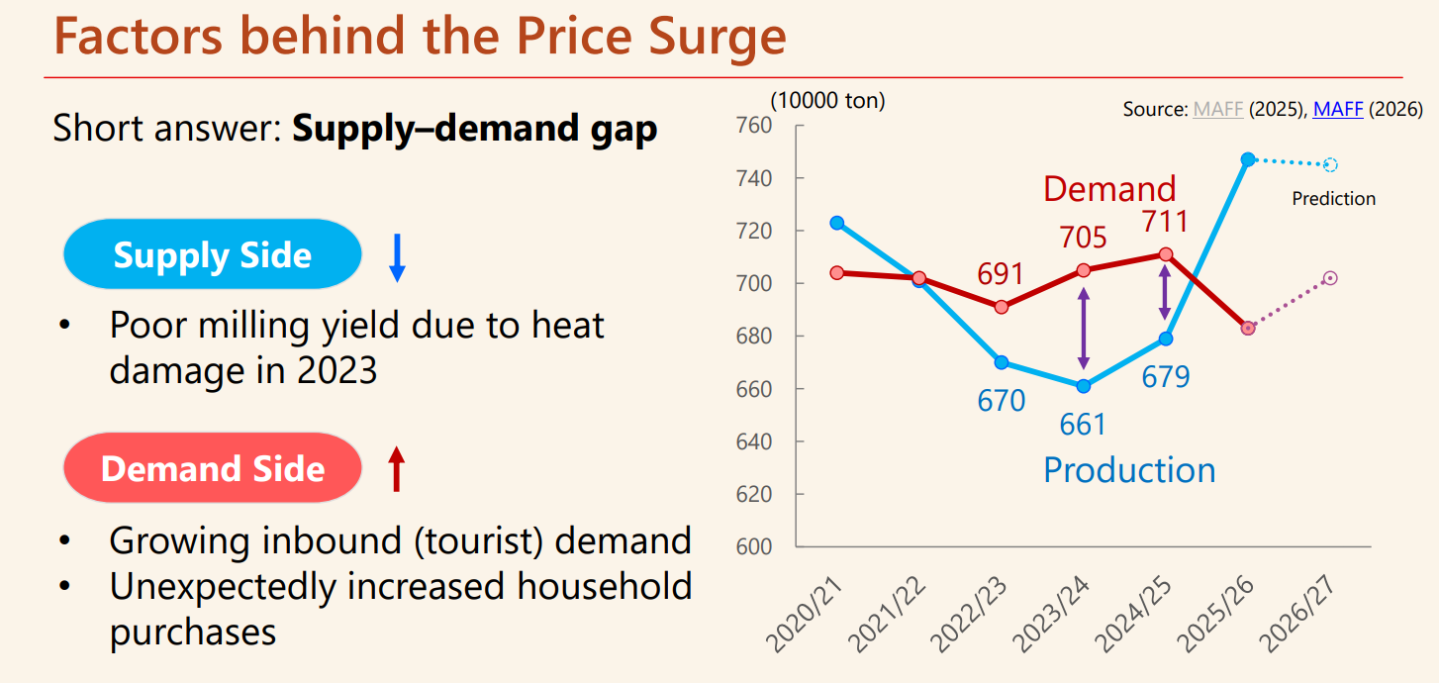
Let’s start with the shortage, which seems simple enough to understand. (The answer will be climate change, which, after all, was also partly the answer to the looming shortage of parmigiano and Moroccan sardines that we will inevitably experience.) The heat and drought of 2023 have damaged rice during the grain-filling phase, reducing the amount considered salable premium rice. Simultaneously, a boom in tourism and panic buying after an earthquake scare led to an increase in demand.
Ryosuke Inoue, visiting researcher at CSIS
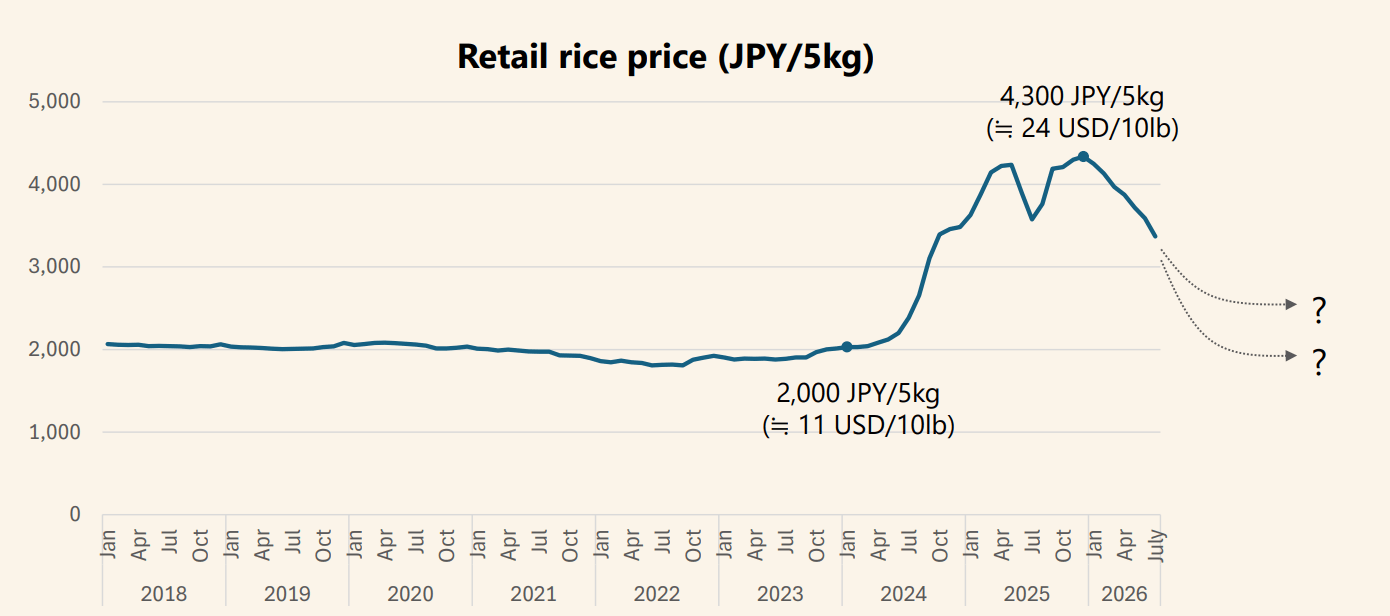
As a result, private stocks of rice fell from the normal range of about 2 million tons to about 1.5 million tons, and the resulting shortage caused a five-kilogram bag of rice to go from about 2,000 yen ($13) in early 2024 to a peak of 4,300 yen ($27) in 2025, according to Inoue data. That year, the government released its emergency rice reserves for the first time since the creation of the reserve system in 1995, which were normally reserved for natural disasters.
“There was controversy,” Inoue said, about how long the government had to wait. “People said the government should have distributed the rice much more quickly. »
What happened next is the part that really surprised the experts. Farmers, seeking higher prices, sharply increased their production. Supply has exceeded demand so much that private stocks have fallen from the 2024 low to 2.43 million tonnes by mid-2026, and the Agriculture Ministry now projects the surplus will rise even further by 2027. Prices have already fallen back towards 3,300 yen ($21) and, in Inoue’s estimate, could continue to slide towards levels of 2022 and 2023 or less. This month, the government decided to buy back 210,000 tonnes of rice simply to replenish the reserves it had depleted the previous year.
Supply Stock Shock
“Your instinct is correct,” Inoue replied when asked if Japan’s rice stocks were running low. He says this is not just due to the weather, but also because Japan’s rice distribution system is truly opaque, even to those who regulate it.
“Many distributors are trying to maximize their profits, and even the government does not know how the rice was distributed from farmers to final consumers,” Inoue said. As prices soared, he said, regulators did not understand the structure of their own rice market well enough to respond quickly.
Ryosuke Inoue, visiting researcher at CSIS
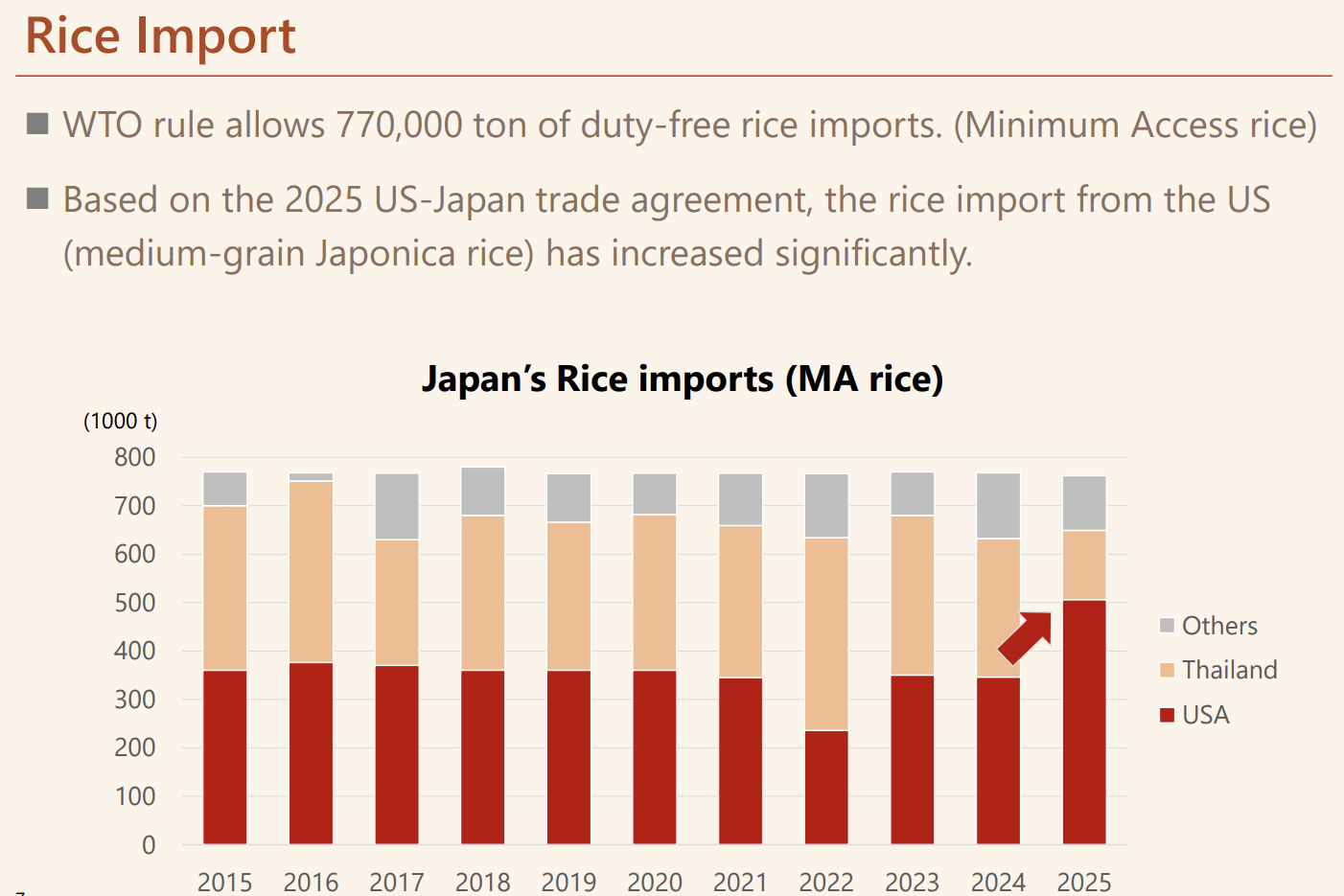
Japan produces almost all the rice it consumes and exports almost none. In June 2025, in the midst of the worst domestic shortage in decades, President Trump complained that Japan “won’t accept our rice, and yet they have a massive shortage of rice.” Japan already imported rice from the United States under a duty-free quota of 770,000 tonnes per year imposed by the WTO, and about half of that rice historically came from the United States. However, the shortage came just as rice became a hot spot in trade negotiations between the two countries.
That summer, a 2025 U.S.-Japan trade deal pushed Japan to increase its purchases of U.S. rice by 75 percent, and Inoue confirmed that increase was still working its way through the system. “This trend will continue in 2026 and beyond,” he said. A country whose entire domestic debate over the price of rice is about protecting its own farmers has ended up relying more on U.S. imports, exactly when its own shortage made that leverage politically inevitable.
Ryosuke Inoue, visiting researcher at CSIS
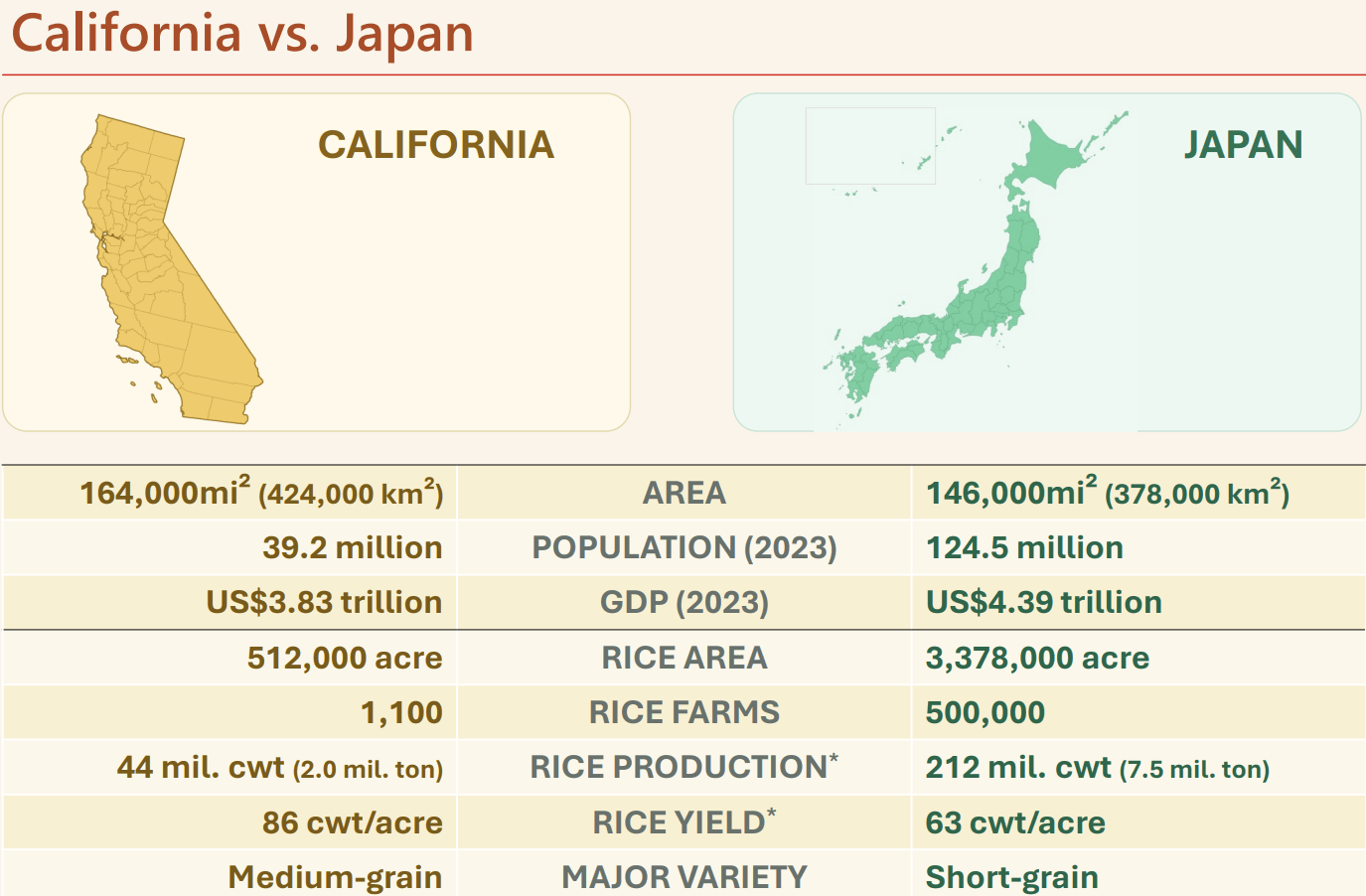
But wait, there’s more. Japan’s rice farms employ almost entirely an aging workforce. The average Japanese rice farmer is 67.7 years old and only 1.2% are under 30 years old. Compare Japan to California, for example, which is one of the largest rice-producing regions in the United States. The state has only about 1,100 rice farms working on about 512,000 acres, while Japan has some 500,000 rice farms spread across 3.4 million acres, meaning the average Japanese rice farm is only a small fraction of its acreage size. Californian counterpart.
Inoue said the dwindling number of farmers isn’t as much of a problem as what happens to the land they leave behind. “The problem is how to take ownership of the land they have cultivated,” he said, given that much of Japan’s rice cultivation takes place in mountainous terrain that is unattractive to new operators. Once abandoned, he says, these lands are extremely difficult to bring back into production.
Inoue has proposed a solution modeled on the U.S. Price Loss Coverage program, which would pay farmers only when prices fall below a level covering their production costs, which he sets at around ¥2,800 ($18) per five kilograms. Japan tried a similar policy once before, in 2011, but abandoned it following a change in government before prices had moved enough to trigger it. “I think it’s time,” Inoue said. He argued that letting the market operate freely with a safety net rather than production caps would serve farmers and consumers better than the boom and bust cycle of the current system.
Ryosuke Inoue, visiting researcher at CSIS
Climate change means that the shocks that challenge this system will not go away. This year’s drought in western Japan, which some meteorologists liken to the worst drought the country has seen in more than 30 years, is already linked to falling yields according to official data.
Inoue said summer temperatures in Japan have climbed well above their long-term trend line from 2023 to 2025, pushing farmers toward heat-tolerant rice varieties whose adoption rate has been steadily increasing, although it remains less than 20% of total plantings.
Gn bussni