
A year ago, Meta was struggling to convince Silicon Valley that it could stay in the AI race. It now offers one of the hottest products in the industry.
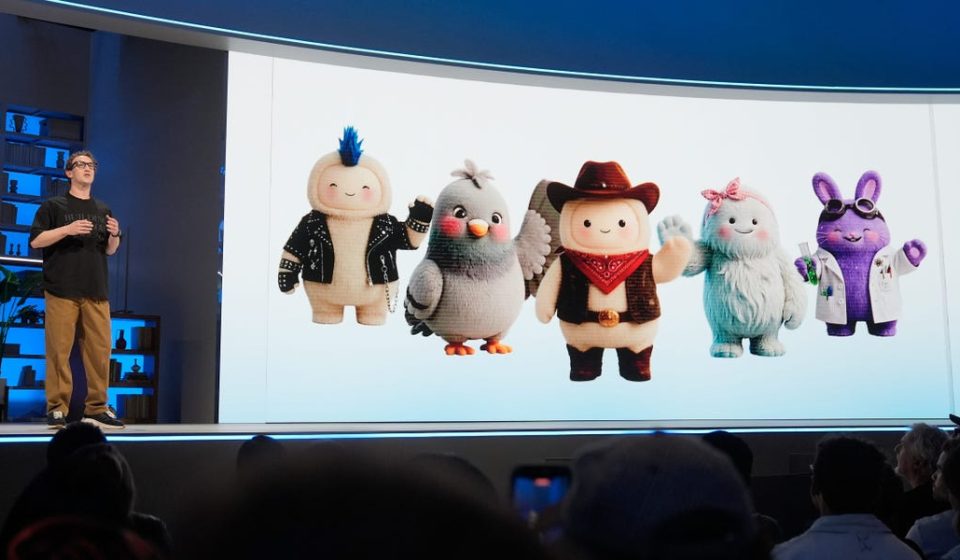
Muse, Meta’s new AI personal assistant, has risen to the top of the App Store and become a victory for CEO Mark Zuckerberg’s massive AI spending. This week’s Meta’s Connect conference was all about the app, which 29-year-old AI chief Alexandr Wang, who has been posting racy Muse mascot memes all week, called a “banger.”
Getting there took months of painstaking work, a team led by former GitHub CEO Nat Friedman, and thousands of employees brought in from Meta to teach Agent how to get things done, employees told Business Insider.
Meta has also recruited top AI agents through acquisitions, including the executives of Dreamer, an AI agent startup.
Whether Meta can maintain Muse’s momentum is another question. Competitors like Instinct are thriving, and OpenAI is widely expected to launch a rival. Privacy concerns have also arisen, as Muse requires broad access to user accounts to function. Meta employees are still reeling from a year of mass layoffs, employee surveillance and low morale.
For now, at least, Muse’s success — and a more than 20% increase in Meta’s stock price since its launch — has become a morale booster, employees said. This also proves that Meta remains firmly in the AI race after being seen as lagging behind a year ago.
“Muse is busy working for millions of people thanks to the hard work of many people at Meta – and we keep cooking,” a Meta spokesperson said.
Nat Friedman strives to make Muse a success
Muse’s success was far from inevitable.
Since September 2025, Friedman, who leads the Products and Applied Research team of the Superintelligence Unit, has been working hard on Muse, then named “Hatch”.
As recently as two weeks before Muse launched this month, the chatbot was struggling to speak good English, said a person directly familiar with the matter — and it was a huge relief when it finally started scoring well on consistency tests.
Earlier this year, some of Meta’s top AI employees were also worried about Muse, one employee told Business Insider. They had tried it and found that it performed poorly – it looked like a simple chatbot, but with a worse underlying AI model and extra steps, this person added.
Friedman’s team ultimately succeeded. Tens of thousands of Meta employees tested Muse for months, coming up with a series of use cases for the agent that became key to the effort.
That data helped Friedman’s team improve Muse’s ability to do things like book meetings and cancel plane tickets: the grunt work of getting better at increasingly complex tasks, or “scaling,” as Silicon Valley calls it.
The team trained Muse to be considerate so as not to overshare, such as telling people someone couldn’t attend a meeting because they were hungover, the person familiar said. Meta also focused on ensuring that it could seamlessly interact with the Internet using tools it had not used before.
“Our researchers have done a lot of work teaching officers how to choose the right tool for a job,” Wang told Connect this week.
Friedman’s role was crucial. Zuckerberg recruited the executive last year as part of a deal to acquire a stake in his venture capital fund, NFDG. Last year, Friedman and Wang wrote a memo describing a “superintelligent personal sidekick” who would act as a trusted friend and advisor.
Friedman is resolutely technical and practical. Internally, the executive is opinionated and proud of the company, chafing with other teams in Meta’s sprawling operations, one of the employees said. Meta’s head of communications, Andy Stone, recently dubbed him “Nat the Truth Teller” after he mocked a Muse security report written by “dummies.”
It also moves quickly. His simple personal website sets out his philosophy in typically blunt terms: “slow is wrong” and “it’s important to do things fast,” he says. Friedman pushed Meta’s AI team to abandon slow internal tools in favor of faster external tools, such as Vercel.
When independent AI agent OpenClaw took the tech world by storm this winter, Friedman acted quickly. The free desktop-based tool was popular with developers, but confusing for everyday users. Friedman aimed to create a much more accessible version from scratch.
He released a two-page internal memo titled “The Claw is Law,” praising the product, and also purchased hundreds of Mac Minis for Meta’s superintelligence team to run the agent.
Although Muse is now user-friendly, making all of this happen took “months of blood, sweat and tears,” the person familiar said.
Although it took “an insane amount of time,” it’s now something that “anyone’s grandmother can use,” Wang later posted.
Meta goes on an AI hiring spree
Meta has also embarked on a recruiting spree for agentic AI researchers and engineers. She hired David Singleton and Hugo Barra, the co-founders of Dreamer, a startup that helps people create their own agents, as well as the rest of their team.
Singleton has been working on Muse since he started at Meta in March, helping design the core technology that allows the app to store sensitive information securely, he posted on X.
The efforts worked. Although the arrival of the viral AI agent Instinct initially overshadowed Meta, Muse took off by leveraging Meta’s huge built-in audience across its apps, including among people who had never used AI agents before.
Meta wasn’t the only one hiring. OpenAI hired OpenClaw creator Pete Steinberger in a coup earlier this year. Meta was particularly worried about being overshadowed by a major competitor, the person familiar with the matter said, and the team was shocked by the months that passed without such a participant.
More to come after Muse
Wall Street is cheering for Muse, seeing it as a way for Meta to become more than just an advertising company. Zuckerberg told Alex Heath’s sources earlier this month that he wants people to shop and save money on Muse, which Meta plans to make money on by taking a small cut of each transaction.
“We are seeing the Meta bull case playing out more and more,” Lloyd Walmsley, an analyst at Mizuho Americas, wrote in a note.
Users praised Muse’s ease of setup. Hadi Javeed, co-founder of healthcare startup RevelAi, said his father saw an ad for Muse in his Facebook feed and downloaded it, quickly using it to buy a new pair of shoes.
“They completely removed all the system requirements,” Javeed said.
At the same time, Javeed, like many others, has raised data privacy concerns regarding Muse. By design, an app like Muse creates a new order of security and privacy risks, like the app buying things without the user’s permission. Privacy and trust remain major obstacles to broader adoption of Muse, Bank of America analysts wrote.
Zuckerberg said the company delayed the launch of Muse due to security and product liability concerns. He and Friedman also personally contacted Signal creator Moxie Marlinspike to help co-design Muse’s security architecture, Zuckerberg told Heath.
For now, Meta is at its highest. The company has hinted that much more is coming as it works on a new AI model, Watermelon. It indicates that the model has already caught up with OpenAI. Wang says Meta has other ideas “just as important” as Muse.
“The kitchen is heating up,” he posted on X.
Do you have any advice? Contact Meta journalist Charles Rollet securely on Signal at charlesrollet.12 or +1-628-282-2811. Use a personal email address and a non-work device; here is our guide sharing information securely.
Additional reporting by Pranav Dixit.
Gn bussni