“We’ve learned a lot over the last 10 years about the risks and benefits, new drugs have entered the market, and that has led us to look back at the data,” Pier said. “This is a difficult review process, and it takes time to ensure we get the highest quality recommendations. »
Hormone therapy replaces declining estrogen levels and, for some patients, adds progesterone or a related hormone. Treatments come in the form of pills, patches, sprays, gels and vaginal rings, delivering hormones into the bloodstream to relieve menopausal symptoms.
One of the oldest medications, Premarin, contains estrogen derived from the urine of pregnant horses. Newer treatments often use estradiol, a form of estrogen made from plant materials.
Menopause usually occurs around age 50, when menstruation stops permanently, but symptoms can appear years earlier and persist years later. Surgery, chemotherapy or radiotherapy can also trigger earlier menopause.
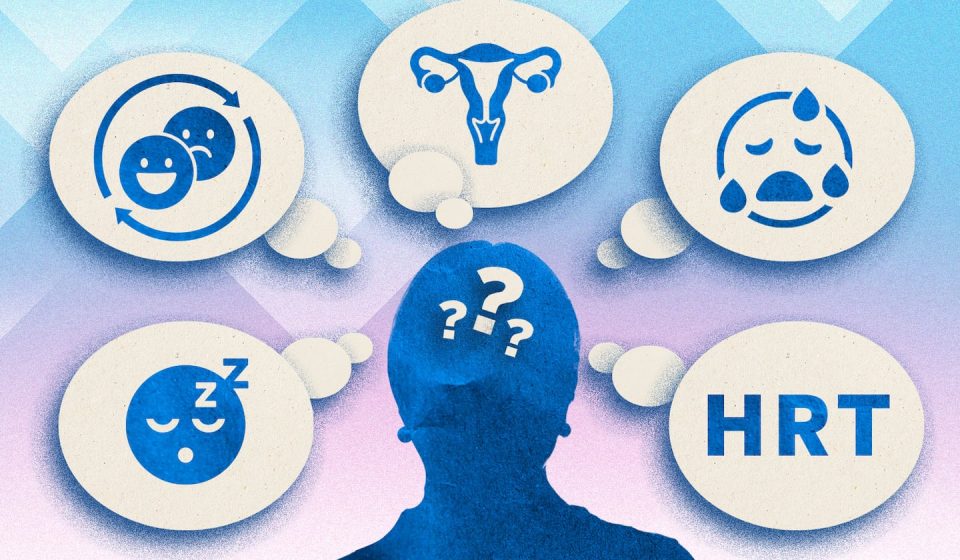
ACOG says half or almost all postmenopausal women experience symptoms such as hot flashes, mood swings, night sweats, irregular periods, brain fog, and physical or skin changes. Between 16 and 66 percent report sleep problems, and more than a third of perimenopausal and postmenopausal women worldwide report symptoms of depression.
The federal government this month announced steps to expand menopause treatment options, including efforts to remove the FDA’s blanket warnings about hormone therapies and approve generic versions of Premarin, an estrogen drug, and the first generic hormone therapy patch, Climara Pro. The FDA also approved a new non-hormonal drug for hot flashes, while federal health officials are promoting vaginal estrogen treatment and expanding breast cancer screening initiatives.
Is hormone therapy safe?
Yes, and for most women this should often be the first option.
“It’s not really new, but it’s more formal,” said Dr. Deborah Susan Kwolek, a primary care physician who directs the general women’s health and sex and gender medicine program and is a board-certified practitioner with the Menopause Society. “We have ways to treat these symptoms.”
She noted that ACOG and the American College of Physicians now consider hormone therapy a first-line treatment. It gives doctors “permission not to be afraid to prescribe”.
This fear dates back to the early 2000s, when a Women’s Health Initiative study linked hormone therapy to higher risks of stroke and breast cancer. Pier said the new analyses, which break down risks by age, show that the risks associated with HRT are higher in women over 60.
For women under 60, or within 10 years of their first menopausal symptoms, he said, the risk is “exceptionally low.” This timing is the central message.
“That’s where we can really guide our patients,” he said.
What if you can’t take hormones?
Doctors say antidepressants like SSRIs and SNRIs are generally recommended for women who cannot or do not want to take hormonal medications.
The new guidelines also add a new FDA-approved option of non-hormonal medications called neurokinin receptor antagonists that target hot flashes in the brain.
For mood symptoms, guidelines conditionally recommend cognitive behavioral therapy. Kwolek said herbal supplements don’t have enough evidence to be recommended.
Women with complicated histories, such as breast cancer survivors or those with bleeding disorders, should discuss this with their doctor early, Pier said. Guidelines state that tamoxifen may interact with some antidepressants. He also noted that some non-hormonal medications relieve hot flashes and sleep problems, but not vaginal dryness or irritation.
If your doctor is dismissive, Kwolek suggests looking for a clinician with the Menopause Society’s “MSCP” designation. There aren’t enough, she said, but the Menopause Society website has a directory.
What about the estrogen shortage?
Patients still feel it.
Kwolek said estrogen patches remain in short supply and she expects the situation to “get worse before it gets better.” Most estrogen products are generic, and she doesn’t see a big financial incentive for manufacturers to get into the business.
His advice is not to do without it. Many women may switch to pills, sprays, or vaginal forms for a while, and return to the patch when it is available.
What about testosterone/peptides?
Testosterone has become a social media favorite and Kwolek said patients have been asking for it. She sometimes prescribes it but doesn’t insist.
“The data is not convincing,” she said. It may boost sexual desire in some women, but she said the evidence for other claims, like muscle building, is weak. There is also no FDA-approved testosterone product for women, so prescriptions rely on off-label use and additional paperwork.
Pier said more and more patients are trying it without consulting a doctor.
“We’re seeing patients who are coming in with misinformation or who have gone to facilities providing testosterone or other hormones off-label, and we need to combat that with data,” he said.
Kwolek said more women are also asking about peptides, which have become trendy among postmenopausal women. Often marketed for sleep, weight loss, libido and longevity, these treatments have not been approved by the FDA for menopause.
“If I give you a prescription, I’m confident it will help you,” she said. “If I recommend a supplement, I don’t know if it will help or harm you.”
What about perimenopause?
Perimenopause, the years of irregular periods and changing symptoms before menopause, is not the focus of these guidelines. Kwolek, who sees many perimenopausal patients, said the term has become fashionable.
She said hormones are only part of the picture for women in their 40s and 50s who typically arrive at the hospital exhausted, cranky and sleeping poorly. Often, they are also caring for children and aging parents, working, and looking for quick answers or solutions.
“Twenty years ago, people didn’t come to me and say: I was suffering from perimenopause,” she said. “You might get aches and pains from playing too much tennis, or your kids are keeping you from sleeping, or your parents are sick. The sandwich generation of the ’40s and ’50s is stretched.”
Heavy periods can also cause iron deficiency and fatigue. For some perimenopausal patients, she prescribes contraception to manage symptoms.
Sarah Rahal can be contacted at sarah.rahal@globe.com. Follow her on @SarahRahal_ or Instagram @sarah.rahal.
Gn Health