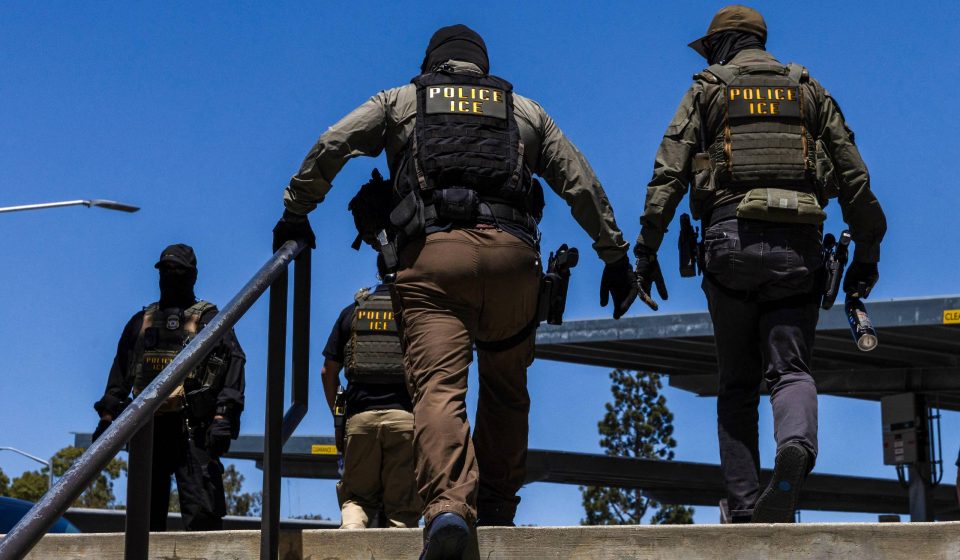

Gov. Gavin Newsom signed a series of 21 bills Tuesday aimed at increasing oversight of federal immigration detention and curbing what he called the “Orwellian” tactics of the Trump administration’s approach to immigration enforcement.
The enactment of these new laws comes as immigration-related arrests have reached new levels, with nearly 50,000 arrests nationwide in July. California ranks third in the number of such apprehensions, and U.S. Immigration and Customs Enforcement recently increased detention capacity in the state as part of President Donald Trump’s push for “mass deportations.”
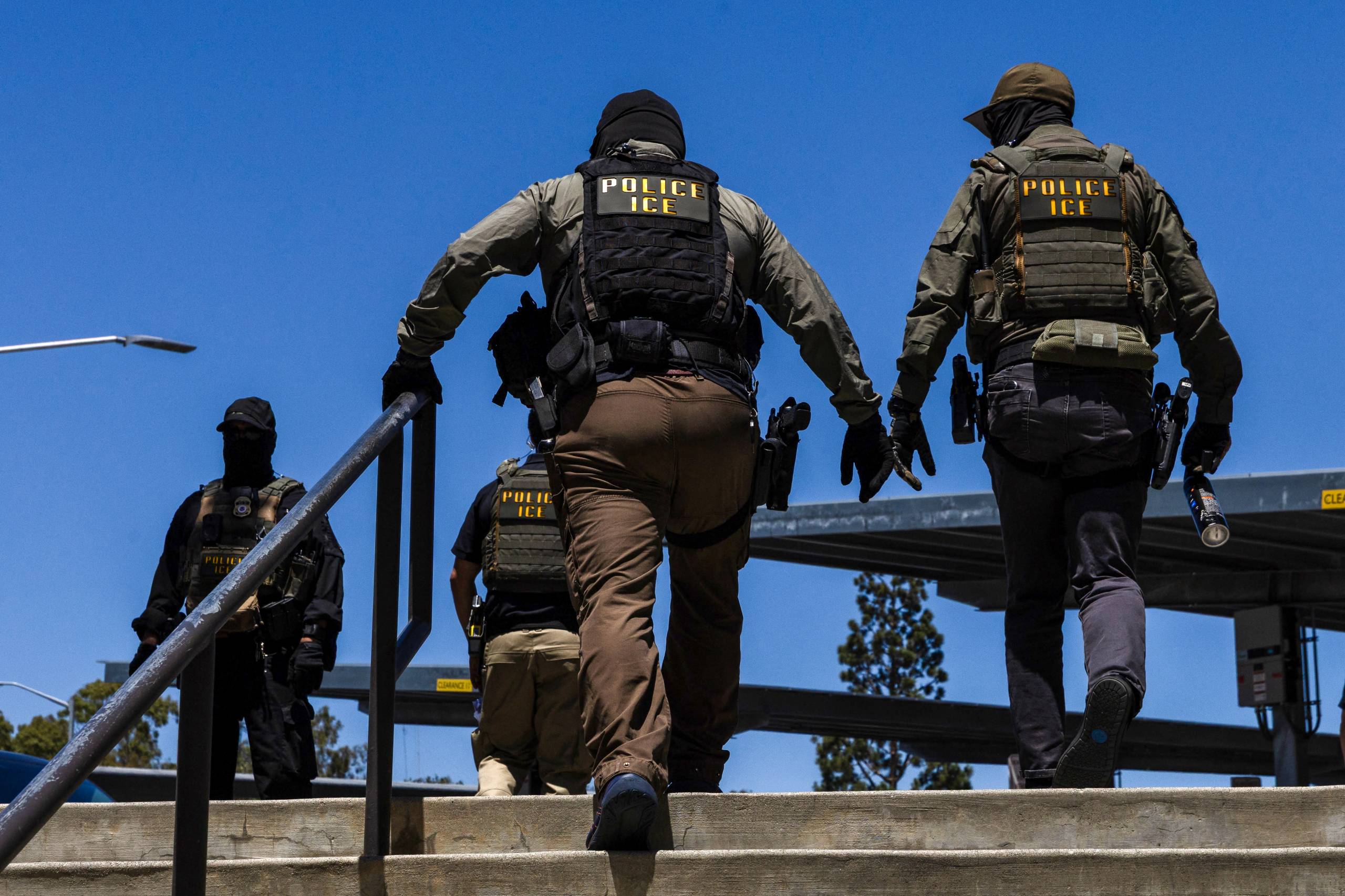
These wide-ranging laws, authored by Democrats across the state, included measures to restrict law enforcement’s use of electroshock gloves, masks and flash grenades, allow individuals to sue federal officials in state courts for rights violations, and require local agencies to release recordings of 911 calls from ICE facilities.
Several bills aimed to expand state power to enforce health and safety standards in immigration detention, restrict the construction of new detention centers, and tax private detention centers.
In his signing statement, Newsom noted that the underlying authority for immigration enforcement rests with the federal government. But he insisted that California facilities are subject to state standards and oversight.
“Trump put his political interests ahead of the health, safety and livelihoods of American families,” Newsom said. “California is taking steps to strengthen transparency, accountability and oversight of immigration enforcement in our state. This is about stepping up where the federal government has failed our communities.”
As the number of people who died in ICE custody reached a two-decade high last year and continues to rise, legal watchdogs are sounding the alarm about conditions in California’s eight immigrant prisons.
One of the new laws, SB 942, authored by Central Valley Sen. Ana Caballero, creates a bill of rights for people held in all forms of civil detention in California, including immigration detention. It establishes minimum standards for medical care, food, water, sanitation, religious practice, contact with family and access to legal advice. And it gives the state attorney general new powers to enforce those standards.
Hamid Yazdan Panah, co-director of Immigrant Defense Advocates, called it “a first of its kind.”
Todd Benson, executive director of the multifaith community organization Faith in Action East Bay, credited the efforts of his members and others, who met with lawmakers and wrote letters to the governor, for the bills’ passage.
“We have all seen examples of the brutality of ICE agents. It goes against our religious values,” he said. “We believe that all human beings have dignity and should be treated with dignity and respect. »
He said increased ICE arrests are needlessly separating families and traumatizing California children, and that inhumane detention conditions appear to be a “deliberate effort to get people to self-deport.”
A bill from San Francisco Rep. Matt Haney will impose a 25 percent tax on the gross revenue of for-profit companies that operate immigrant detention centers — and put the money in a state fund to support immigration services.
Masih Fouladi, executive director of the California Immigrant Policy Center, called it a victory for accountability.
“No one should profit from tearing families apart,” Fouladi said. “Private detention companies make hundreds of millions of dollars every year in California by separating parents from their children and locking up our neighbors in inhumane conditions. AB 1633 makes them pay for the trauma and suffering they inflict.”
He urged the governor to also sign a companion bill, AB 2465, that would prohibit private detention contractors from receiving state grants or loans.
The decision to stop the use of electric shock gloves came as ICE last month awarded a nearly $17 million contract to purchase 6,000 pairs. California sheriffs and other law enforcement groups have opposed the ban, which they view as a “less lethal” de-escalation tool.
San Francisco Sen. Scott Wiener celebrated the signing of his bill banning law enforcement officers from wearing masks, as well as another, dubbed the “No Kings Act,” to allow people to sue in state courts over allegations that immigration agents violated their civil rights.
He said it was necessary because of cases across the country where immigration agents have violently removed people from their cars and homes, and shot immigrants and U.S. citizens.
“ICE and Border Patrol have terrorized California communities with impunity. It ends today,” Wiener said. “When federal agents act illegally, they should be held accountable just like any other offender.”
Wiener’s office said he expects a few people to file lawsuits soon under the new law, which takes effect immediately and applies to incidents dating back to March 2025.
At the same time, legal analysts expect the Trump administration to challenge a number of new laws in court. Kevin Johnson, professor emeritus at UC Davis Law School, told The Associated Press that courts will likely rule that the state cannot prohibit federal agents from wearing anti-shock gloves or face coverings.
“The state has very limited, if any, power to dictate to the federal government how its agents are armed,” he said.
A few measures passed by lawmakers were not among the 21 bills signed. They included a bill — which Newsom vetoed Sunday night — that would have bolstered a pipeline of new immigration lawyers to work in rural California.
Also unsigned were bills to cap at 35% the mark-up that private facilities can charge inmates for commissary items, and one prohibiting private detention contractors from receiving state subsidies.
Newsom has until midnight on September 30 to act on the remaining bills on his desk in his final year as California governor.
Gn usa