
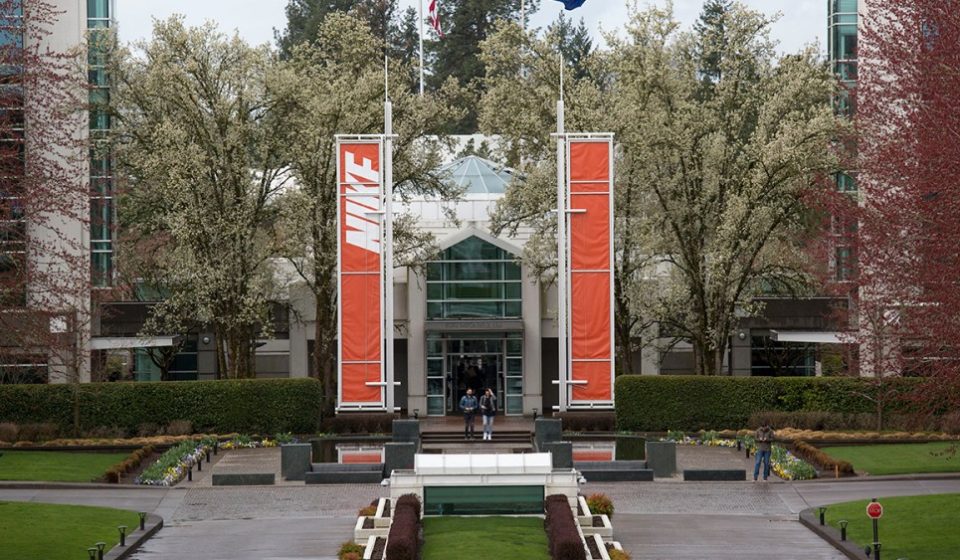

Nike Inc. filed its expanded quarterly report, which resulted in both negative and positive reviews from Wall Street.
A major negative was the removal of regional same-store sales information.
“When companies refuse to disclose their information, it is never a good sign,” concludes Laurent Vasilescu, analyst at BNP Paribas.
The BNP analyst said Nike has provided offsets in one form or another on a quarterly basis since fiscal 2011, and now instead provides year-over-year in-store sales. He said the change reduces transparency around whether physical store growth is driven by like-for-like sales or is due to “simple unit expansion.”
And he noted that last year, Nike also made another disclosure when it stopped breaking down customer accounts by region.
The analyst added that the lack of disclosure of regional component store sales follows Nike’s plan to divide four regions into three – Americas, EMEA (Europe, Middle East and Africa), and Greater China and Asia Pacific – as everyone tries to determine when China will recover.
Previously, Greater China was a region in its own right, while Asia-Pacific and Latin America were a single group. Today, North America and Latin America unite to form the Americas. The change is expected to be completed in fiscal year 2028.
“Although this change is already known, we believe it is unfairly carried out under the guise of restructuring… and (to) give investors less transparency in the disaggregation of sales in China,” concluded the BNP analyst.
Vasilescu’s problem is that Nike has long received a premium multiple for its solid information. On Tuesday, the BNP analyst reiterated his “multi-year underperform” rating for Nike shares. Worse still, he thinks Nike’s stock price could potentially fall as low as $19 per share. The stock is currently trading in the $34.00 range on the Big Board.
Simeon Siegel of Guggenheim Securities noted that the quarterly regulatory filing contained other nuggets of information that could potentially be more positive than the forward-looking guidance provided last Thursday during the first-quarter earnings report.
Siegel said Monday that footwear units in North America continued to grow in the first quarter, although the sector still benefited from higher discounts. Footwear units grew 2 percent, which the Guggenheim analyst said was the fifth consecutive quarter of year-over-year growth. Average selling price (ASP) for North America decreased 1 percent due to channel mix and higher discounts which were partially offset by product mix and strategic pricing.
Another positive noted by Siegel is that EBIT (earnings before interest and taxes) in North American dollars increased by 3.2 percent, while margins increased by 20 basis points. “We believe this represents the first time margins and dollars have shifted to growth since (the fourth quarter of 2024), excluding tariff refunds,” he noted. Siegel also estimated that an approximately $69 million year-over-year increase in demand creation likely reflects World Cup-related investments that took place in the region during the quarter. And while there are some concerns about product surpluses, the quarterly report said inventories in North America fell 1 percent after rising over the past two years.
Overseas, footwear units in EMEA declined 5 percent. Footwear ASPs declined 6% in the quarter, driven by channel mix and higher discounts. The first quarter represented EMEA’s first decline in wholesale sales in a year, with direct-to-consumer sales falling even further, but gross margin still increased by an “impressive” 150 basis points year-over-year, representing the biggest expansion since the first quarter of 2025.
For Asia Pacific and Latin America, footwear units remained flat during the quarter, while ASPs decreased 1%, primarily due to higher discounts and channel mix which were partially offset by product mix and strategic pricing. And for Greater China, footwear units declined 26 percent, representing the ninth consecutive quarter of year-over-year declines. However, Greater China footwear ASPs remained flat for the quarter, primarily due to lower discounts which were primarily offset by channel mix.
In general, Wall Street knows that Nike’s turnaround will take at least another 12 to 18 months. We expect to learn more when Nike holds its investor day on November 16-17.
Nike’s decline has continued for several years, primarily attributed to a decline in wholesale and a focus on direct-to-consumer sales in June 2020 under previous management. New CEO Elliott Hill, who joined Swoosh in October 2024, has embarked on a turnaround plan that has so far seen great success with Nike Running. But the recovery has taken much longer than expected, in part because of unrest in EMEA and Greater China. And the Swoosh’s 78% stock decline also cost it a spot in the prestigious S&P 100 index, although the company is still part of the broader S&P 500 index.
Gn bussni