
Federal Reserve officials expressed confidence in October that further interest rate hikes would be necessary to stem inflation, although they decided to wait while they gathered more information, according to minutes of the meeting released Wednesday.
Policymakers have placed artificial intelligence at the heart of their discussions, saying that the demand associated with the technology would be “a significant source of inflation risk.”
More broadly, officials said “inflationary pressures in the economy were widespread” and would warrant action, with “some” policymakers advocating a quarter-percentage-point hike at the meeting. Some participants even raised the possibility that a larger increase would be needed at the next political meeting in December.
The meeting summary states that “almost all participants judged that, given their baseline outlook for inflation and the labor market, further measures to raise the target range for the federal funds rate… would likely be appropriate, in order to ensure a timely return of inflation to the 2 percent target.”
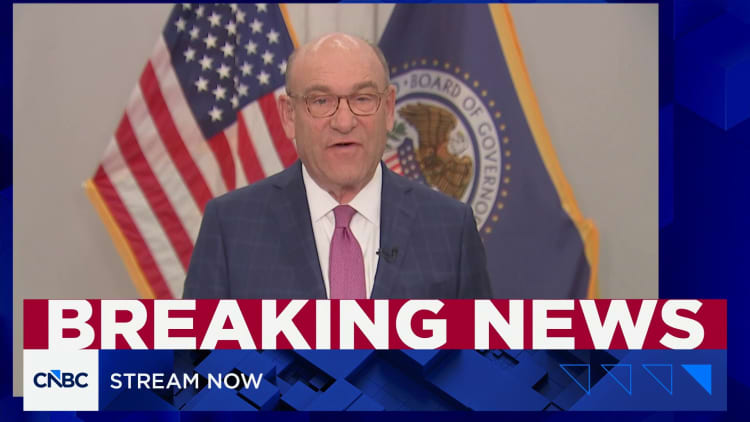
In an interview with CNBC on Wednesday, Fed Governor Christopher Waller reiterated his belief that the Federal Open Market Committee should consider a half-point hike in December.
AI Concern
Officials at the meeting expressed a high level of concern about AI, both as a source of inflation and financial instability.
Fed staffers who briefed participants noted “that off-balance sheet leasing commitments and circular financing arrangements among AI-related companies could magnify losses if returns on AI investments were to be disappointing.”
“Most participants observed that AI debt had grown rapidly and that much of this growth had occurred through complex and opaque financing structures,” the minutes said. “A few participants noted that AI-related exposures are increasingly concentrated among a small number of companies.”
Officials said they still expected inflation to fall sharply in 2027 and beyond as the impact of current shocks fades.
Ultimately, the FOMC voted 10-2 to keep its benchmark overnight borrowing rate in a range between 3.75% and 4%. Gov. Lisa Cook and Cleveland Fed President Beth Hammack have spoken in favor of a quarter-point increase.
Those who voted to remain “highlighted the benefits of accumulating additional information, which would help determine the appropriate policy direction to ensure a rapid return of inflation to the Committee’s 2% target.”
Since the meeting, inflation data has shown that the pace of price increases remains well above target.
The consumer price index in October rose 0.4% for all items and 0.3% for the core which excludes food and energy. Both figures were 0.1 percentage points higher than expected.
While expressing concern about continued inflation, most Fed officials who have spoken publicly have advocated a patient approach.
A potential “shock” for the markets
However, Waller said Wednesday that the Fed may have to “shock” markets by approving a half-point hike in December. He is the only central banker to publicly espouse this belief, although St. Louis Fed President Alberto Musalem has said he expects a one-percentage-point hike by spring 2027. As governor, Waller is a lifelong FOMC constituent; Musalem will not vote until 2028.
Chicago Fed President Austan Goolsbee said on CNBC on Friday that the central bank risks losing credibility if it doesn’t act.
At the heart of policymakers’ concerns is whether rising prices linked to the war in Iran and tariffs imposed by President Donald Trump, in many cases temporary events that would not lead to a response, would instead become more entrenched.
Markets are fully pricing in a quarter-percentage-point hike at the Dec. 8-9 meeting, which includes slim odds of a half-point hike, according to CME Group’s FedWatch indicator. Futures traders also assess a high probability of two additional increases in 2027.
Gn headline