
An OpenAI engineer was arrested on suspicion of hiding an audio recording device in an executive conference room at the company’s San Francisco headquarters, federal prosecutors announced Tuesday.
Abdulrahman Alfozan, 35, a Saudi national, was arrested Friday and charged with using or attempting to use a device to intercept oral communications. He made his first appearance in federal court Tuesday and remains in custody.
An unattended bag found at the company’s offices contained Alfozan’s wallet and identification, as well as a recording device, according to the U.S. Attorney’s Office in San Francisco.
Alfozan has worked as an engineer at OpenAI since July 2025, prosecutors said.
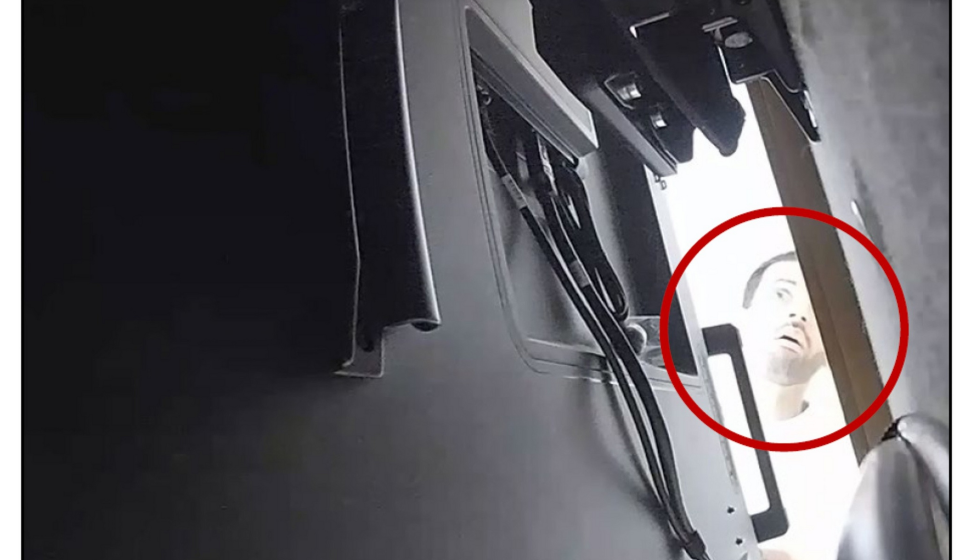
OpenAI staff found the device on September 30. It was plugged into a USB port on the back of a television in an executive conference room and had been concealed in toilet paper, the complaint states. The company determined that it was installed around September 28 and that its contents were encrypted.
Surveillance footage shows Alfozan near the room on several occasions before the discovery, although he was not allowed to enter the room or attend any meetings there, prosecutors said. Meetings in the room frequently involved confidential technical, commercial and strategic information, including proprietary research, product plans and government commitments, according to the complaint.

Before installing the device, Alfozan used a productivity tool to ask questions about OpenAI’s building addresses, meeting rooms, room capacity and calendars, as well as the locations of management meetings and outside partners, the complaint alleges.
A chatbot account linked to Alfozan’s spouse, who shared credentials with his own account, submitted prompts between September 24 and 30 regarding the construction, installation, masking and remote access of a recording device, prosecutors said. The requests included how to “create a continuous audio recorder” and “encrypt the SD card,” prosecutors said. On September 27 and 28, the account asked about the specific device later found, including its unique MAC address.
On Oct. 5, according to the complaint, Alfozan entered the conference room and appeared to be looking behind the television. The same day, he allegedly left a bag unattended in another room. Security personnel who opened it found his wallet and ID card, as well as a second recording device similar to the first.
“For us, this is a matter of national security,” U.S. Attorney Craig Missakian said in a statement.

FBI Director Kash Patel said protecting America’s AI innovation is among the bureau’s highest counterintelligence priorities. Scott Schelble, special agent in charge of the FBI’s San Francisco field office, said the agency is committed to protecting sensitive research and proprietary technology.
If convicted, Alfozan faces up to five years in prison and a $250,000 fine, followed by three years of supervised release.
The case is being prosecuted by the National Security, Cybercrime and Special Prosecution Section of the U.S. Attorney’s Office for the Northern District of California.
OpenAI said on (opens in a new tab) that after discovering the device, employees used the company’s AI models to determine what it was and where it came from, and took the matter to the FBI. The company thanked officers and prosecutors who “acted quickly to make an arrest.”
According to OpenAI, its surveillance countermeasures technical team found the device during a search of a conference room.
OpenAI described the device as sophisticated and designed to evade detection, saying it had advanced encryption, audio surveillance capabilities and a data transfer mechanism intended to avoid surveillance. The company said investigators used its models to analyze forensic images from the device’s storage and assess changes in the underlying data.
The company said it had evidence that Alfozan intended to place other recording devices in sensitive spaces to secretly record the meetings.
According to OpenAI, Alfozan was a member of the product team. The company said it coordinated the timing of his firing with the FBI to avoid disrupting the investigation, and he was fired Friday, the day of his arrest. Between September 30 and then, OpenAI said, it gradually restricted his access to systems and spaces, then suspended his physical and network access, placed him on leave, and secured his company-provided equipment.
A YouTube video last month featured him as OpenAI’s only Saudi employee.
“Honestly, this year has felt like five years elsewhere,” he said in response to a question about his experience.
“The idea of AI is that it handles things that one might not want to do, so that they can focus on tasks or hobbies that they enjoy more or work that they enjoy and let it do the tedious tasks,” Alfozan said later in the video.
A LinkedIn profile that matches Alfozan’s name lists his OpenAI role as engineering lead on the company’s AI agent platform.
Before joining OpenAI, he was a founding engineer at Nash, an AI infrastructure company for logistics, from 2022 to August 2025, according to the LinkedIn profile. From 2017 to 2022, he was a senior systems engineer at Meta. His previous experience, according to the profile, includes a stint as a systems engineer at Reach Labs, a wireless energy startup in Y Combinator’s summer 2015 batch, and internships at Microsoft, SAP in Berlin, and Akamai Technologies.
He holds a master’s degree in data science from UC Berkeley, the LinkedIn profile says.
A man sitting in the passenger seat of a car at Alfozan’s Millbrae home said the family did not want to talk to reporters.
OpenAI said it has no indication that Alfozan improperly accessed or took model weights, source code or customer data and has not seen any activity compromising the security of its products or customer information. The company said it would continue to support the FBI investigation.
OpenAI said it considers the protection of its technology, data and people “a matter of national importance” and called the case an example of how AI can counter sophisticated security threats.
A detention hearing before U.S. Judge Alex G. Tse is scheduled for October 19.
Gn bussni