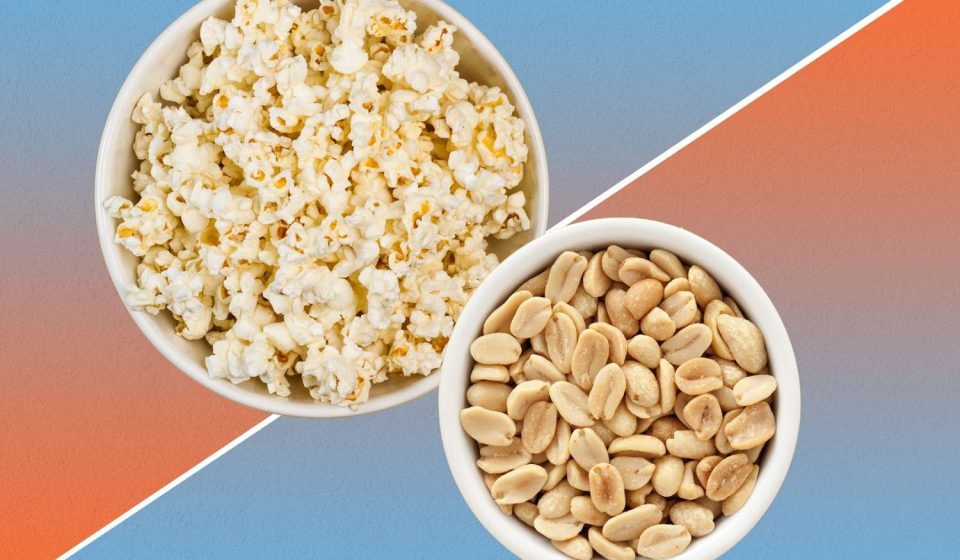
- Peanuts are low in carbs and high in protein, fiber and healthy fats.
- Popcorn is a whole grain with fiber and a low-calorie, high-volume serving.
- Pair peanuts or popcorn with protein-rich foods for a more balanced, blood sugar-friendly snack.
A satisfying snack is essential for maintaining blood sugar levels between meals. If you’re managing your diabetes or just trying to maintain healthy blood sugar levels, your snacking habits can help. Peanuts and popcorn are two quick and popular options, and both have their own nutritional benefits. Peanuts contain protein and healthy fats with a relatively low carb count, and popcorn is a solid source of fiber. So, which is best for blood sugar? Dietitians explain how each snack affects your blood sugar and how to create a more balanced snack.
How Peanuts Affect Blood Sugar
Peanuts are a source of plant-based protein, fiber, and heart-healthy unsaturated fats. About ¼ cup of dry-roasted peanuts provides about 176 calories, 7 grams of protein, 8 grams of carbohydrates, 2.5 grams of fiber and 13 grams of fat. Since they are relatively low in carbohydrates, they are unlikely to cause a significant rise in blood sugar when eaten alone. Their protein, fats, and fiber not only support stable blood sugar levels, but also contribute to a feeling of fullness, which can make them a satisfying option when hunger strikes between meals.
Another thing to keep in mind is that peanuts are relatively high in calories. Their combination of fat, protein, and fiber makes them satisfying, but it’s easy to eat several handfuls without realizing how much you’ve eaten. If a small handful doesn’t satisfy you, try pairing peanuts with a food that adds bulk and other nutrients, such as an apple, berries, whole-grain crackers, or sliced vegetables. The added protein and fiber these additions provide can promote better blood sugar balance.
How Popcorn Affects Blood Sugar
About 3 cups of air-popped popcorn provides about 110 calories, 3.5 grams of protein, 22 grams of carbohydrates, 4 grams of fiber and 1 gram of fat. Popcorn has more than twice as many carbohydrates per serving as peanuts. When you eat these carbohydrates, your digestive system breaks them down into glucose, which enters your bloodstream. This is a normal process that provides your body with energy, but it also means that popcorn has the ability to increase your blood sugar. That said, the fiber contained in popcorn helps modify its impact on blood sugar levels.
One of the benefits of popcorn is that it is a high-volume snack, meaning the portions are quite large compared to the calories it provides. This can make it a beneficial addition to a satisfying snack, especially when paired with protein sources like Greek yogurt. Popcorn is also a whole grain, meaning it contains all three parts of the grain: the bran, germ, and endosperm. Whole grains retain more nutrients, such as minerals, vitamins and fiber, than their refined counterparts.
How you prepare the popcorn is also important. “Preparation makes a huge difference in blood sugar control,” says Theresa Link, RD. Some varieties of popcorn contain high amounts of saturated fat and sodium from added butter and salt. “Plus, sweet varieties like caramel corn and kettle corn add more sugar, which can negate any blood sugar benefits,” Link shares.
Peanuts or popcorn: which is better for blood sugar?
As a snack in its own right, peanuts may have a slight edge over popcorn when it comes to blood sugar benefits. “Peanuts will cause a slower rise in blood sugar compared to popcorn because they contain a better balance of fiber, protein, and fat,” advises Lainey Younkin, MS, RD.
But ultimately, peanuts and popcorn can fit into a blood sugar-friendly diet. The best choice is one that satisfies your hunger, provides the nutrients you need, and matches your preferences and health goals. Popcorn also has many nutritional qualities that make it a blood sugar-friendly option. It’s a whole grain that provides fiber, and 3 cups is a satisfying serving for a relatively low-calorie snack. If you prefer popcorn, simply pair it with a protein-rich snack or mix peanuts with popcorn for better blood sugar maintenance, Younkin adds.
Seasoned peanuts can be high in added sugars and sodium. When shopping, look for peanuts with little or no added sugar and choose low-sodium options (140 milligrams or less per serving). For popcorn, try opting for varieties that are lighter in butter. Movie theater popcorn and some flavored popcorn products may contain significantly more calories, saturated fat, added sugars and sodium.
Other Tips for Blood Sugar-Friendly Snacking
- Choose fiber-rich carbs. Fiber slows the digestion of carbohydrates, making it a key nutrient to focus on for blood sugar. Incorporate fiber-rich foods such as whole grains, beans, fruits, seeds and nuts into your meals and snacks.
- Be intentional with portion sizes. Try serving popcorn in a bowl rather than eating it straight from the bag. This allows you to be more aware of portion sizes and makes it easier to pair with other nutrient-dense foods that support blood sugar balance.
- Use your own blood sugar patterns as a guide. If you’re monitoring your blood sugar, look for trends in how different snacks affect your blood sugar rather than drawing conclusions from a single reading. If you take insulin or medications that can cause hypoglycemia, work with your health care providers to determine the ideal timing of snacks and carbohydrate intake for your needs.
Our expert opinion
Both peanuts and popcorn can be part of a healthy, blood sugar-friendly diet, but they offer different nutritional profiles. Peanuts are naturally low in carbohydrates and provide protein, fiber and unsaturated fats, making them less likely to cause a significant spike in blood sugar. Popcorn is a whole-grain source of carbohydrates and fiber, and you can eat a generous portion for a snack. If your priority is to minimize your immediate blood sugar response, peanuts may be the best choice. Whatever you choose, focus on thoughtfully pairing your snacks to find what works for your individual blood sugar habits.
Gn Health