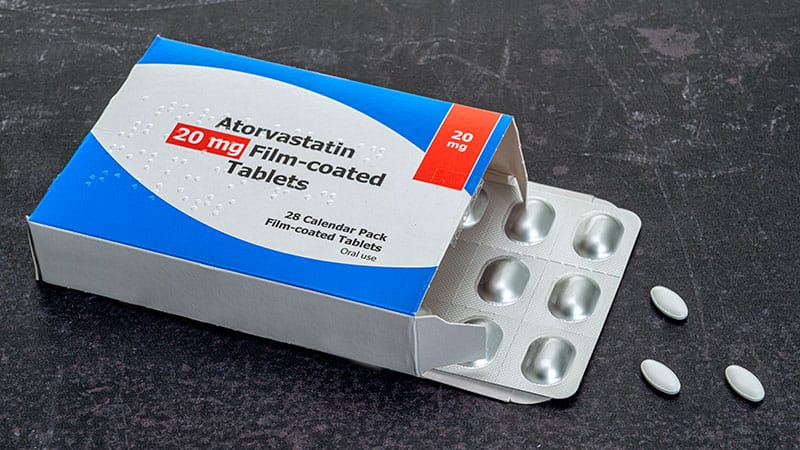

The list of possible side effects attributed to statins is long: muscle pain, memory problems, depression, sleep problems, diabetes and liver damage. However, a meta-analysis carried out by the Cholesterol Treatment Trialists (CTT) collaboration in The Lancet calls into question many of these associations. At the same time, the study confirmed that some effects can indeed occur on muscles, liver and glucose metabolism. What matters, however, is their magnitude – and it is usually significantly lower than public criticism of these drugs suggests.
Surprisingly few confirmed side effects
The new meta-analysis includes 19 randomized, double-blind, placebo-controlled trials involving 123,940 participants with a median follow-up period of 4.5 years. In addition, the authors evaluated four trials involving 30,724 participants in which more intensive statin treatment was compared with less intensive statin treatment.
They looked at 66 adverse events listed in the package inserts for atorvastatin, fluvastatin, pravastatin, rosuvastatin and simvastatin. Besides the known effects on muscle function and glucose metabolism, only four of the 66 events remained statistically significant after adjusting for various confounding factors:
- High transaminase levels
- Other liver function test values
- Change in urine composition
- Edema
Elevated transaminase levels occurred at a rate of 0.30% per year with statins and 0.22% per year with placebo. The relative risk (RR) was 1.41. Other abnormal liver function test values were observed in 0.25% of cases per year with statins compared to 0.20% of cases per year with placebo. Changes in urine composition were observed in 0.21% of cases per year with statins compared to 0.18% of cases per year with placebo, and edema was observed in 1.38% of cases per year with statins compared to 1.31% of cases per year with placebo.
For the remaining 62 endpoints, there was no significant evidence of harm after statistical adjustment for potential confounders.
Memory and cognition
Among the most frequently expressed concerns on social media is the fear of impaired memory and cognitive functions. At first glance, this concern seems biologically plausible, given that cholesterol is essential for neuronal membranes and myelin. However, cholesterol metabolism in the brain functions largely independently of peripheral low-density lipoprotein (LDL) metabolism.
Clinically, there is no convincing evidence of harm. Recent CTT analysis showed no robust association between statin treatment and cognitive impairment.
Another recent meta-analysis included 42 randomized trials involving 150,405 participants. For all lipid-lowering treatments, the RR for neurocognitive events was 0.99 (95% CI, 0.88-1.12). For statins alone, the RR was 0.94 (95% CI, 0.72-1.25). No relevant negative effects were found in five cognitive domains specifically examined, namely attention, processing speed, executive function, working memory and recall.
Depression and sleep disorders
Depression and sleep problems are also often attributed to statins. However, both conditions occur frequently in the age group of patients who typically receive statins. So what matters is not that they occur during treatment, but that they are more frequent than without statins.
The new CTT meta-analysis found no evidence to support this hypothesis. Neither depression nor sleep problems were significantly more common among statin users than among those taking a placebo. In the case of depression, the observational data even pointed in the opposite direction.
A 2025 meta-analysis included 15 studies from 10 countries with 5,403,692 participants. Statin users had a lower risk of depression, with an overall odds ratio of 0.84 (95% CI, 0.74-0.96). However, the heterogeneity of the data was considerable. Therefore, no antidepressant effects can be inferred from these primarily observational studies. However, they do not suggest a significant depressive effect.
Muscle pain
The situation is more nuanced when it comes to muscle pain. There is indeed a causal effect here, but the absolute magnitude is small.
The CTT collaboration analyzed individual data from 19 placebo-controlled trials involving 123,940 participants. During a median follow-up of 4.3 years, 16,835 of 62,028 statin patients (27.1%) reported muscle pain or muscle weakness. In the placebo group, this figure was 16,446 out of 61,912 participants (26.6%). The RR was 1.03 (95% CI, 1.01-1.06).
The difference was mainly concentrated during the first year of treatment. During this period, statins increased the RR by 7% (RR: 1.07; 95% CI, 1.04-1.10). In absolute terms, this corresponds to 11 additional muscle events per 1,000 person-years. After the first year, no significant excess was detectable (RR, 0.99; 95% CI, 0.96-1.02).
The authors’ calculation is particularly revealing: out of 15 muscle complaints reported by patients during the first year of statin treatment, statistically, only one was actually attributable to the drug. In randomized trials, more than 90% of muscle pain reported by patients prescribed statins was therefore, mathematically speaking, not attributable to the statin.
When placebos give rise to almost as many complaints
The SAMSON study demonstrated how difficult the question of causality can be. The study included 60 patients who had previously stopped statins due to side effects. They underwent 12 one-month phases: four with 20 mg of atorvastatin, four with a placebo and four without any medication. A total of 49 patients completed the entire study program.
Participants rated the intensity of their symptoms daily via an app on this scale:
- 1 = no or few symptoms
- 100 = maximum imaginable intensity of symptoms
The average symptom score was 8.0 points during the medication-free months. It increased by up to 16.3 points during periods when participants took atorvastatin, but it increased almost as much, up to 15.4 points, during the placebo treatment. There was no significant difference between atorvastatin and placebo (P. = 0.39). In other words, approximately 90% of the additional symptom burden observed with atorvastatin, compared to that observed during drug-free months, was also observed with placebo.
The larger StatinWISE study showed similar results. Of 200 patients who discontinued a statin due to muscle symptoms or intended to do so, 151 were included in the primary analysis. The difference in muscle symptom scores between atorvastatin and placebo was only -0.11 points on a 0 to 10-point scale (95% CI, -0.36 to 0.14; P. = 0.40). Due to intolerable muscle symptoms, 9% stopped treatment during the statin period and 7% stopped treatment during the placebo period.
After the research team reported the results of each study, 74 of 113 patients (65.5%) reported that they had already restarted statin therapy or intended to do so. After 15 months, 58 out of 113 patients (51.3%) were actually prescribed a statin again.
Why statins can affect muscles
There is a biological explanation for why a small proportion of muscle symptoms are actually caused by statins. Statins inhibit 3-hydroxy-3-methylglutaryl coenzyme A reductase, thereby blocking the mevalonate pathway. This not only reduces cholesterol synthesis, but also affects isoprenoid synthesis, protein prenylation, and coenzyme Q10 formation.
Discussions include changes in mitochondrial energy production, intracellular calcium homeostasis, and various signaling pathways in muscle cells. Mechanistic studies also highlight possible effects on mitochondrial enzyme complexes and calcium ATPases.
However, clinical data puts these mechanisms into perspective: if 27.1% of patients on statins and 26.6% of patients on placebo report muscular symptoms, the impact on the mevalonate pathway cannot explain the majority of the complaints observed.
The same goes for coenzyme Q10. A decrease in its levels is biologically plausible. However, this does not mean that Q10 deficiency is the most common cause of statin-associated muscle pain.
Diabetes
The evidence is clearer regarding glucose metabolism. Statins increase the risk of newly diagnosed diabetes and their effect is dose-dependent.
The CTT collaboration analyzed 19 placebo-controlled trials involving 123,940 participants, as well as four dose intensity studies involving 30,724 participants. Among patients on low- or moderate-intensity statins, 2,420 of 39,179 developed new diabetes, compared with 2,214 of 39,266 in the placebo group. Annual rates were 1.3% versus 1.2%, corresponding to an RR of 1.10 (95% CI, 1.04-1.16).
With high-intensity statin therapy, the relative effect was greater: 1,221 of 9,935 patients on high-intensity statin therapy received a new diagnosis of diabetes, compared with 905 of 9,859 patients on placebo. Annual event rates were 4.8% versus 3.5%, with an RR of 1.36 (95% CI, 1.25-1.48). The metabolic change itself was minor. Among non-diabetic participants, mean glucose levels increased by only 0.04 mmol/L under low- or moderate-intensity statin therapy. A1c levels increased by an average of 0.06 percentage points and by 0.08 percentage points under high-intensity treatment.
Of note, approximately 62% of newly diagnosed diabetes cases occurred in patients whose baseline blood sugar levels were already in the top quartile. This suggests that the slight increase in blood glucose becomes clinically apparent mainly in patients whose baseline values are already close to the diagnostic threshold. For patients at high cardiovascular risk, however, the benefit-risk balance remains favorable.
Liver enzymes
The liver is also an obvious target organ for side effects. This is where statins exert much of their effect: by inhibiting cholesterol synthesis, they increase the expression of hepatic LDL receptors, resulting in more LDL being removed from the blood.
It is well documented that laboratory values change. In the flow Lancet analysis, 783 patients on statins showed an increase…
Gn Health