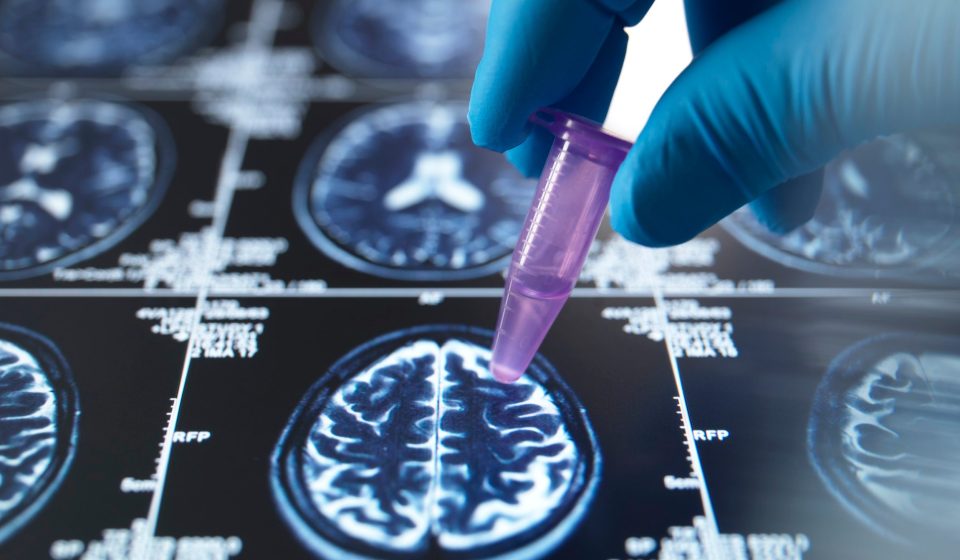
Researchers hope that delivering stem cells directly to the brain will stimulate the body’s repair mechanisms, potentially encouraging existing neural stem cells to become more active.
The phase one trial involved six Alzheimer’s patients, who received either 2 million or 5 million cells. All had signs of amyloid accumulation and underwent 12-month follow-up evaluations.
Five of six patients showed cognitive improvements 12 weeks after treatment, measured on the Alzheimer’s Disease Rating Scale, a standard test of memory and thinking.
Brain scans taken at 12 weeks also suggested a 23.6 percent reduction in amyloid, while levels of phosphorylated tau, another protein associated with Alzheimer’s disease, remained reduced at the end of the year.
Researchers also reported improvements in other biological markers associated with nerve cell damage.
Dr Duma suggested that the decline in improvement over the following year might reflect the fact that patients had only received one injection.
No adverse events were recorded in the six patients during the trial, but experts cautioned that the results remain very preliminary.
Without a placebo group, it is impossible to determine whether the changes were caused by the treatment, and there is no evidence that the injections regenerated brain cells or slowed the progression of Alzheimer’s disease.
Dr. Duma acknowledged that researchers don’t yet understand precisely how the treatment might work.
“We have no idea how this actually works,” he told delegates, suggesting that several possible biological mechanisms were being studied.
“It’s an exciting start”
The U.S. Food and Drug Administration has granted the program Fast Track Designation, intended to support the development of treatments for serious diseases with unmet medical need.
A larger phase two trial has received regulatory approval and will examine whether repeat treatment produces longer-lasting benefits.
Patients will receive injections every two months for a year, followed by four months of monitoring. The approach represents a striking departure from the first generation of Alzheimer’s treatments, which worked by clearing amyloid plaques from the brain.
Scientists are increasingly studying whether fighting inflammation, tau tangles and other forms of brain damage could provide additional benefits.
But while stem cell therapy offers the potential to treat multiple disease processes at once, larger controlled trials will be needed to determine whether it can provide meaningful improvements for patients.
Dr Katharina Cosker, Head of Research Programs at Alzheimer’s Research UK, said: “The first human trial of a potential stem cell treatment has delivered very encouraging initial results.
“Not only does it appear safe in patients, but researchers have also reported promising changes in biomarkers linked to Alzheimer’s disease. This is an exciting start, but there is still much to learn.”
“Moving to phase 2 is an important step. The next step is to determine whether these initial results translate into meaningful and lasting benefits for patients.
“Not long ago, changing the course of Alzheimer’s disease seemed impossible. Today, more than 150 experimental treatments are being tested in more than 190 trials worldwide. The pace of progress is accelerating, and with each new discovery, we move closer to a future where a cure could become a reality.”
Gn Health