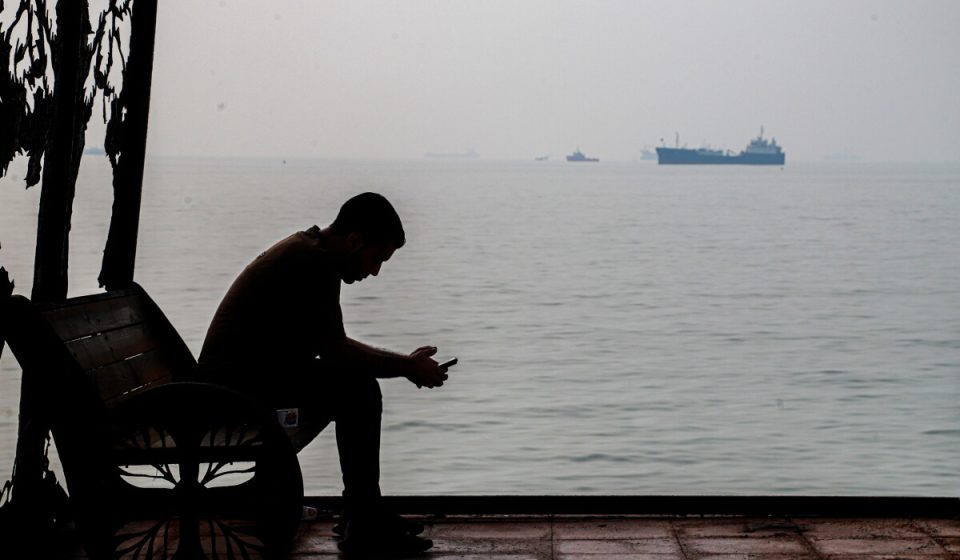

TEL AVIV, Israel (AP) — Seven oil tankers caught fire or were damaged in the accident. Strait of Hormuz overnight after being hit by Iran or striking naval mines, Tehran said on Thursday, a markedly high number as tensions rise over concerns about a return to total war.
With a few days before a closing elections in Israel in which Prime Minister Benjamin Netanyahu could lose power, and ahead of next month’s U.S. midterm elections, in which war-related high prices have angered voters, there are fears that U.S.-Israeli attacks on Iran could resume.
“Netanyahu wants to attack Iran, that’s not even a question,” Danny Citrinowicz, a researcher at the Israel Institute for National Security Studies and a former Iran specialist in the Israeli military and intelligence services, told the Associated Press.
He accused Israel of rushing into a new round with Iran without revamping its strategy. A clear victory for Netanyahu in the Oct. 27 election means an attack is almost guaranteed, he said.
The main opposition candidates will likely focus first on domestic issues, but Citrinowicz said he believes the region is on a path to “another kinetic escalation.”
Iran again threatens to attack US bases in the region
Iranian state television reported the allegations about the latest attacks on ships, which the AP could not independently confirm. The report cited the Revolutionary Guard Corps Navy, which has again threatened to strike U.S. military bases in the region if the United States continues to help guide commercial ships through the strait.
The report does not mention victims. Iran still claims control of the waterway, a central lever in any negotiation with the United States over war.
October saw the highest number of attacks on commercial shipping since March in the first weeks of the war, according to a British military observer, the United Kingdom Maritime Trade Operations. The UKMTO did not report the latest attacks, but noted a new reluctance on the part of some senders to report incidents.
Oil producers have found ways to keep crude flowingexperts say, but at an increasing cost.
Oil tankers continue to pass through the Strait of Hormuz despite attacks
Tankers continue to transport oil across the strait under US military protection despite the recent surge in attacks, according to maritime data and analytics firm Lloyd’s List Intelligence.
Tanker operators willing to risk the journey shuttled oil from Gulf producers across the strait at night, with their tracking systems and cell phones turned off, using a U.S.-protected route near the coast of Oman. These tankers transfer oil to other tankers waiting in the Gulf of Oman for shipment to customers in Asia.
These “active Gulf operators show little sign of withdrawal” despite 28 attacks on ships in October, the highest since the start of the war, Lloyd’s said during an online webinar on Thursday.
The so-called “dark shuttle” overseen by U.S. Central Command helped keep oil shipments from the Gulf at roughly prewar levels, but at high costs in time, money, and lives. Spot charter rates for tankers have reached hundreds of thousands of dollars per day, while ship-to-ship transfers can take several days.
Iran says it is open to diplomacy but also to self-defense
Iranian Foreign Minister Abbas Araghchi said on Wednesday that wary Tehran remained open to diplomacy but was ready to defend itself.
Iran has warned that it has learned important military lessons from the war that began with the US and Israeli attacks on February 28. In recent days, Tehran has indicated it may expand its targets to include infrastructure such as submarine cables and data centers.
The United States, for its part, is sending more military assets to the region, including a third aircraft carrier and thousands of troops, to join the largest force of American warships and aircraft in the Middle East in decades.
Meanwhile, mediators are trying to bring Washington and Tehran back to formal negotiations.
Iran continues to promote its latest proposal that would end the war and fully open the strait within a week if the United States meets several conditions. These conditions, which include an end to the US blockade of Iranian ports, echo those the deal that collapsed days after the two sides signed it in June.
In late September, US President Donald Trump rejected the seven-day proposal, but both sides acknowledged that indirect talks were continuing.
The stakes are even higher if all-out war resumes
A return to full fighting would again endanger civilians across the region and complicate global deliveries of oil, natural gas and related products like fertilizer from the region and likely lead to another spike in prices.
The head of Iran’s Supreme National Security Council, Mohsen Rezaei, acknowledged this week that the Islamic Republic would suffer from a prolonged US blockade. But economic pain and strategic collapse are not the same thing, he added, according to Iran’s official IRNA news agency.
Today, the conflict landscape has widened with the recent surge in fighting between Yemen’s Iran-backed Houthis and Saudi Arabia. The Saudi kingdom supports a coalition of forces with Yemen’s internationally recognized government that is fighting rebels.
THE Repeated deadly Houthi attacks Attacks on airports and other facilities in Saudi Arabia have put pressure on close ally the United States, which has requested military aid.
The escalation also threatens a crucial shipping corridor, Bab el-Mandeb, at the southern end of the Red Sea.
Gn world