
The pain returns every month, sometimes persisting after the period ends. Even when treatment provides relief, it may not go away. For many women living with endometriosis, this cycle continues for years.
Scientists looking for a way to relieve this pain turned to an unexpected drug: niclosamide, used to kill intestinal parasites called tapeworms.
In a new study published in Advanced healthcare materialsa version of the drug attached to a specially designed carrier reduced endometriosis-associated growths and pain-related sensitivity in mice.
Previous research had given hints that niclosamide might help. But the researchers faced a challenge: how could they transmit it to cells involved in maintaining the disease?
Endometriosis occurs when tissue similar to the lining of the uterus grows outside of it.
Affecting around one in 10 women of childbearing age, it can cause inflammation, severe pelvic pain, painful periods and fertility problems.
Current treatments include hormonal therapies and surgery, but symptoms can return and there is currently no cure.
“Endometriosis is a chronic disease,” Kanako Hayashi, a professor studying reproductive biology at Washington State University in the United States, told ScienceAlert.
“Patients have suffered from symptoms (such as chronic pelvic pain) for several decades.”
Hayashi and his colleagues are studying how immune cells contribute to this persistent disease. Previous research has linked endometriosis to changes in immune function, although it is not yet clear whether these changes cause the disease or result from it.
The researchers focused on immune cells called macrophages. Previous research discussed in Communications Biology suggests that these cells may release inflammatory signals and growth factors that support abnormal tissue growth, called lesions.
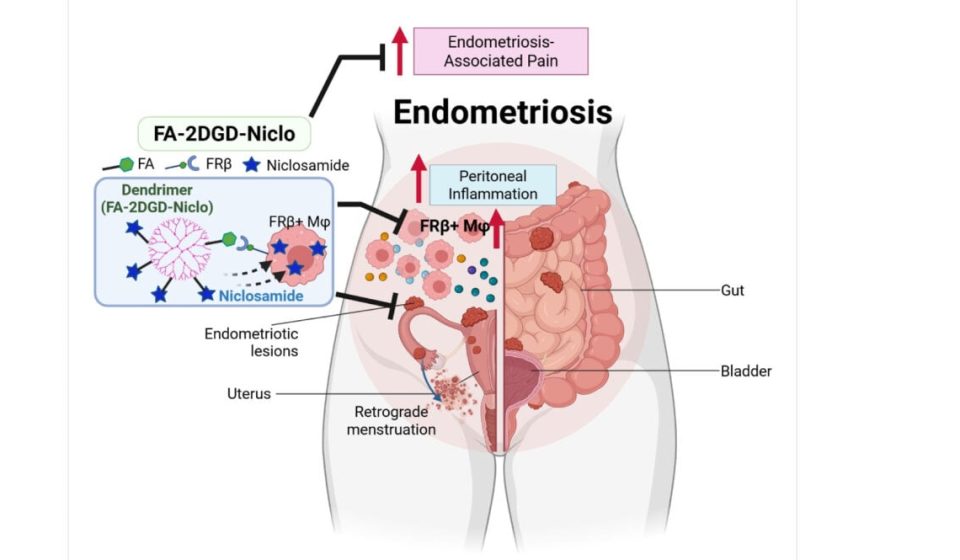
Previous studies had identified a particular group of macrophages elevated in endometriosis lesions in humans and mice. These cells carry a surface protein called folate receptor beta, or FRβ, which is a potential target for drug delivery.
This protein constituted a potential target. A carrier capable of binding to it could guide niclosamide into these macrophages.
Researchers at Washington State University, the University of Michigan and the University of Florida have designed a small, branched molecular structure called a dendrimer. They attached folic acid, which binds to FRβ, and linked niclosamide to the carrier via a chemical connection designed to release the drug inside cells.
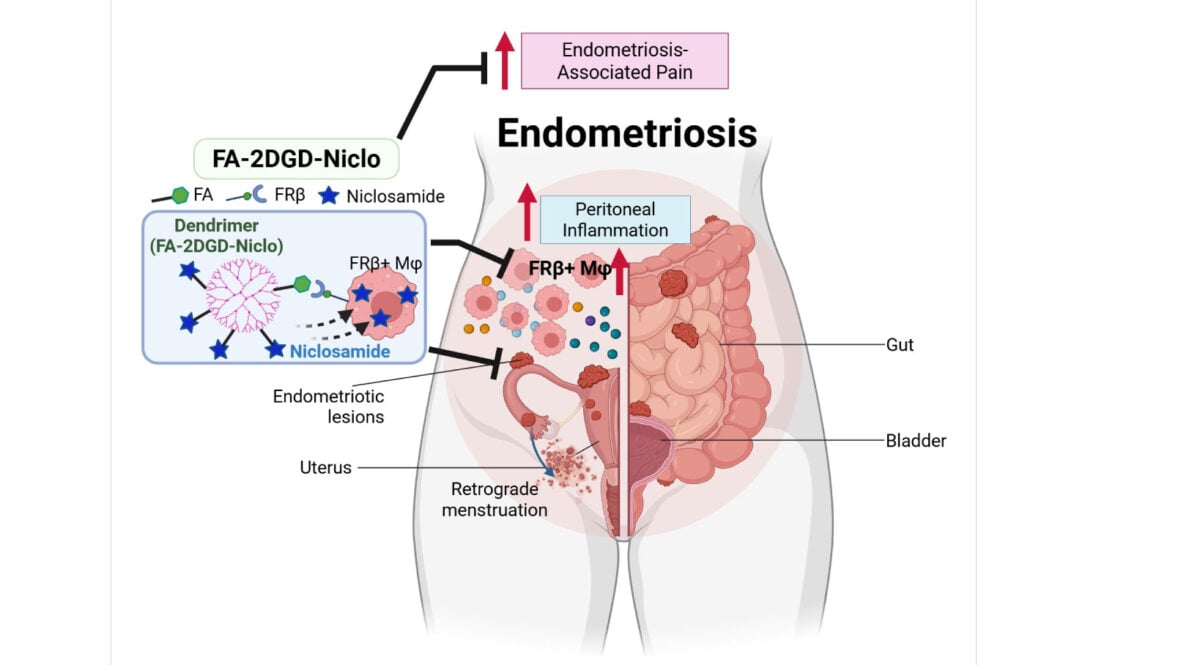
The goal was to improve the water solubility of the drug while directing it to specific cells.
Niclosamide dissolves poorly in water and reaches the bloodstream relatively poorly when swallowed. Although previous research in mice has shown promising effects against endometriosis, these properties complicate its development as a long-term treatment.
Hayashi explains that taking medication daily to treat a chronic illness can be difficult to maintain and raises concerns about potential side effects. The new carrier is intended to deliver niclosamide to targeted cells while limiting adverse effects elsewhere.
To study the macrophage target, the researchers analyzed 10 previously published human cell datasets as well as newly collected cells from fluid samples from the abdominal cavities of four patients.
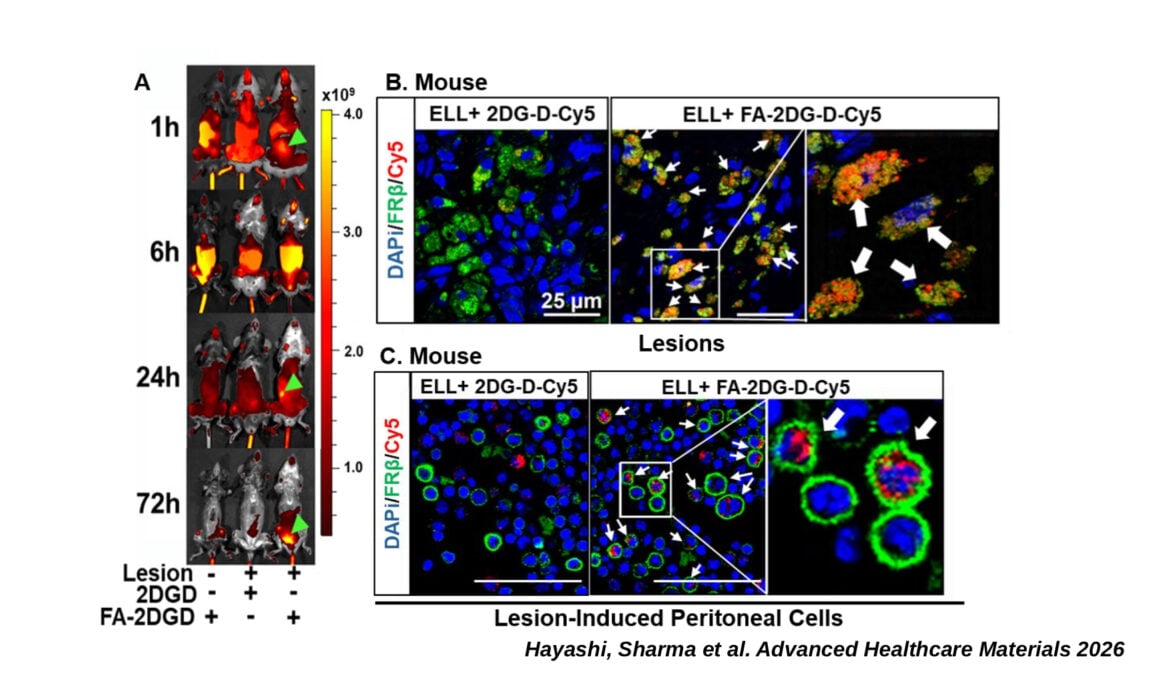
The experimental treatment itself was tested on mice. The researchers induced endometriosis-like lesions by injecting uterine lining tissue from donor mice into the animals’ abdominal cavities.
Seven days later, they gave the animals a treatment injection. The checks were received by the carrier alone; other groups received the niclosamide-related carrier at two different doses.
Two weeks after treatment, mice receiving the drug had fewer and smaller lesions than controls. Four of eight mice in the lowest dose group and five of eight mice in the highest dose group had no detectable lesions during this assessment.
The team also applied pressure to the animals’ abdomens and hind legs using fine filaments, measuring their withdrawal reactions. Both doses attenuated the increased pain-related sensitivity.
These measurements show improved responses in mice. They cannot determine how much pain relief a person with endometriosis would experience.
The treatment groups evaluated at this point were small, with eight mice each, and follow-up only extended to two weeks after administration. The study did not establish long-term benefits, safety of repeat treatment, or effectiveness in humans.
“Our study is still in the preclinical stage,” explains Hayashi.
She explains that several steps remain to be taken before the team can obtain authorization to conduct clinical trials. “It’s still a long way from being commercialized.”
Since publication, patients have contacted the team asking to join or be listed for future trials. Hayashi says people with endometriosis desperately need new treatments.
Several authors, including Hayashi and Anjali Sharma, disclose pending patents and inventions covering dendrimer technology.
The research was published in Advanced healthcare materials.
Gn Health