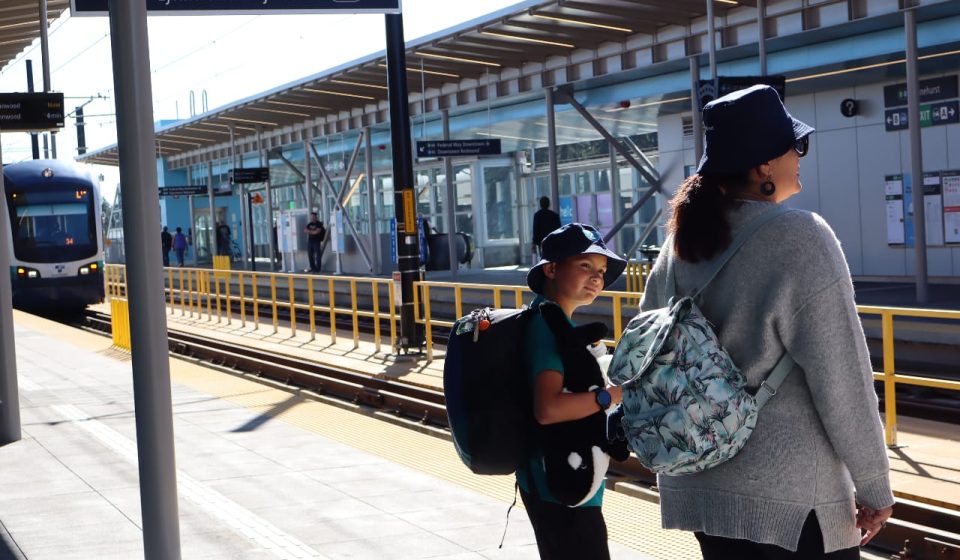

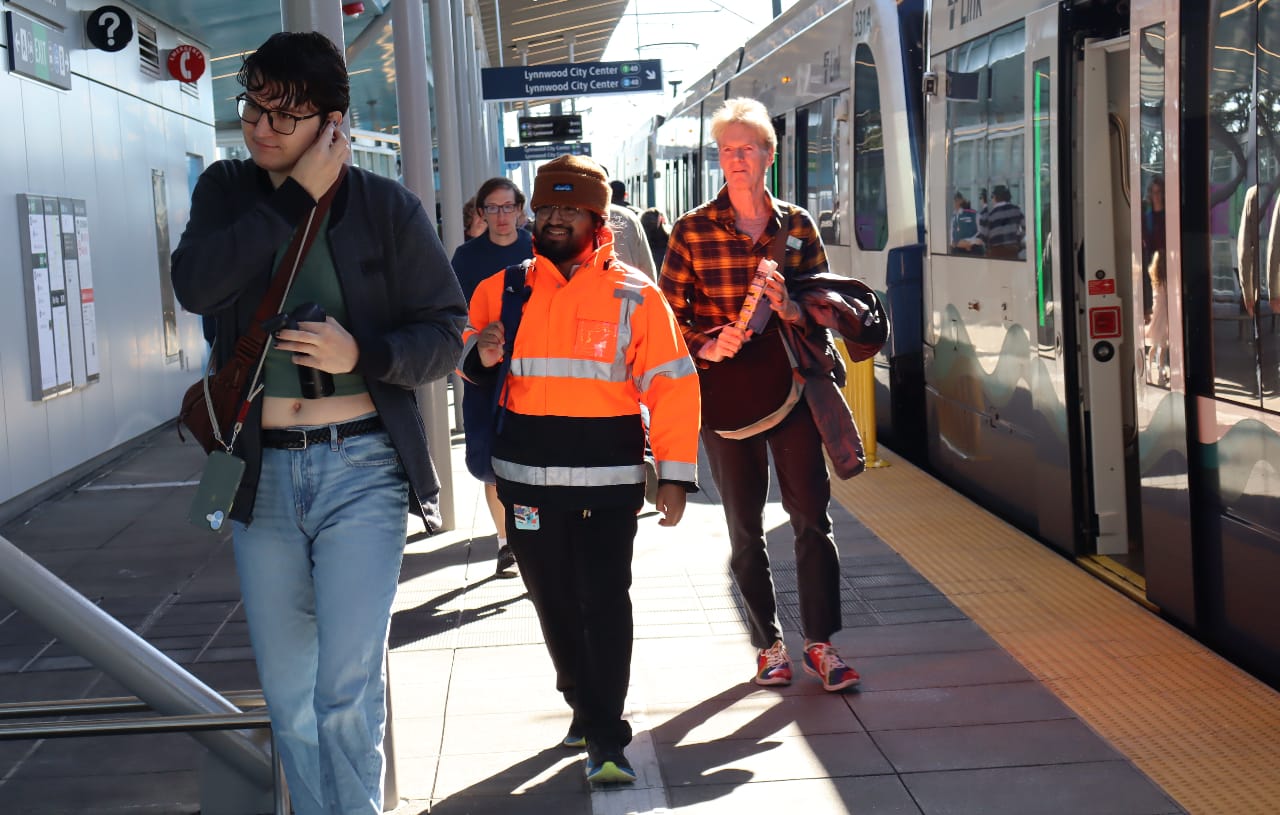
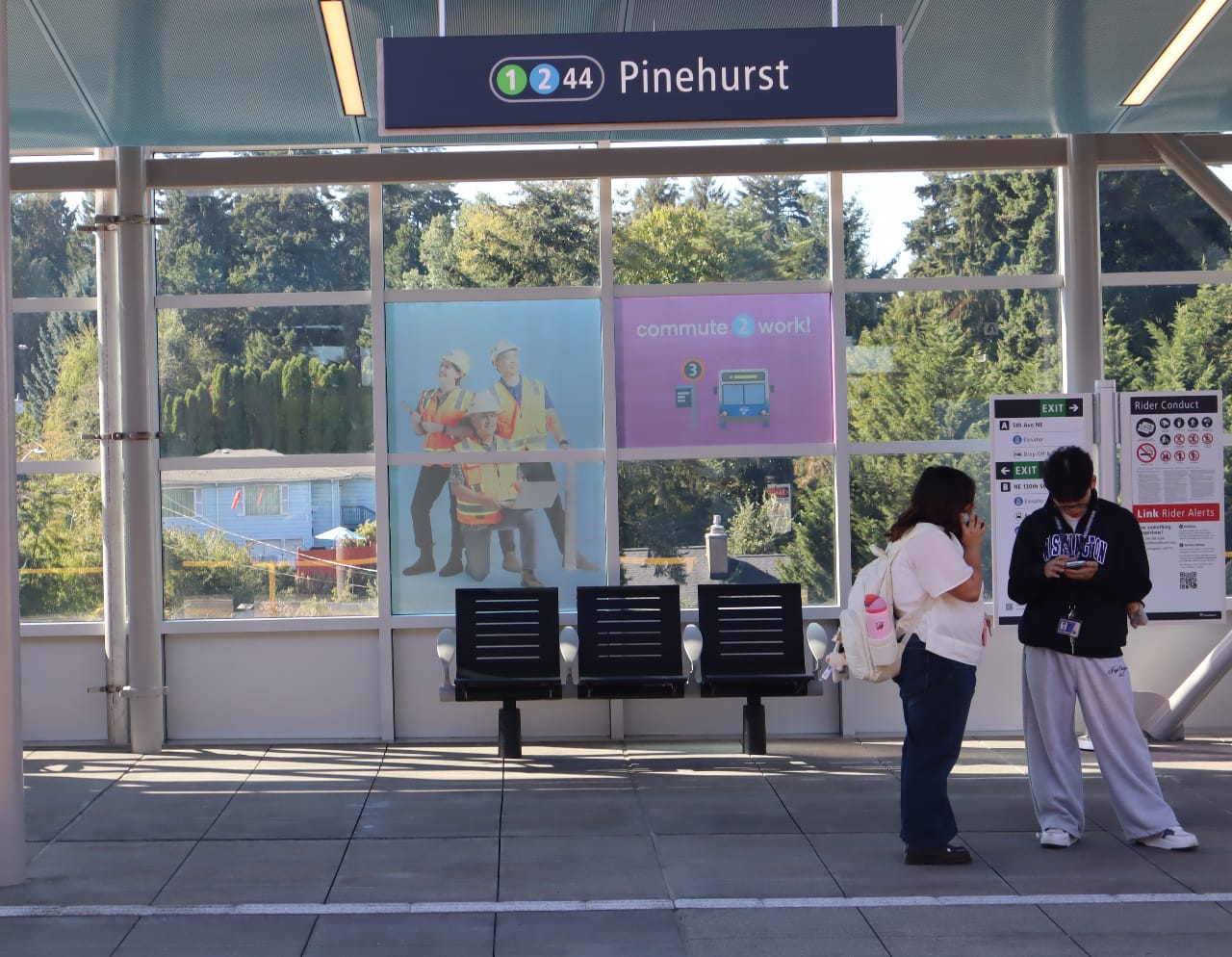
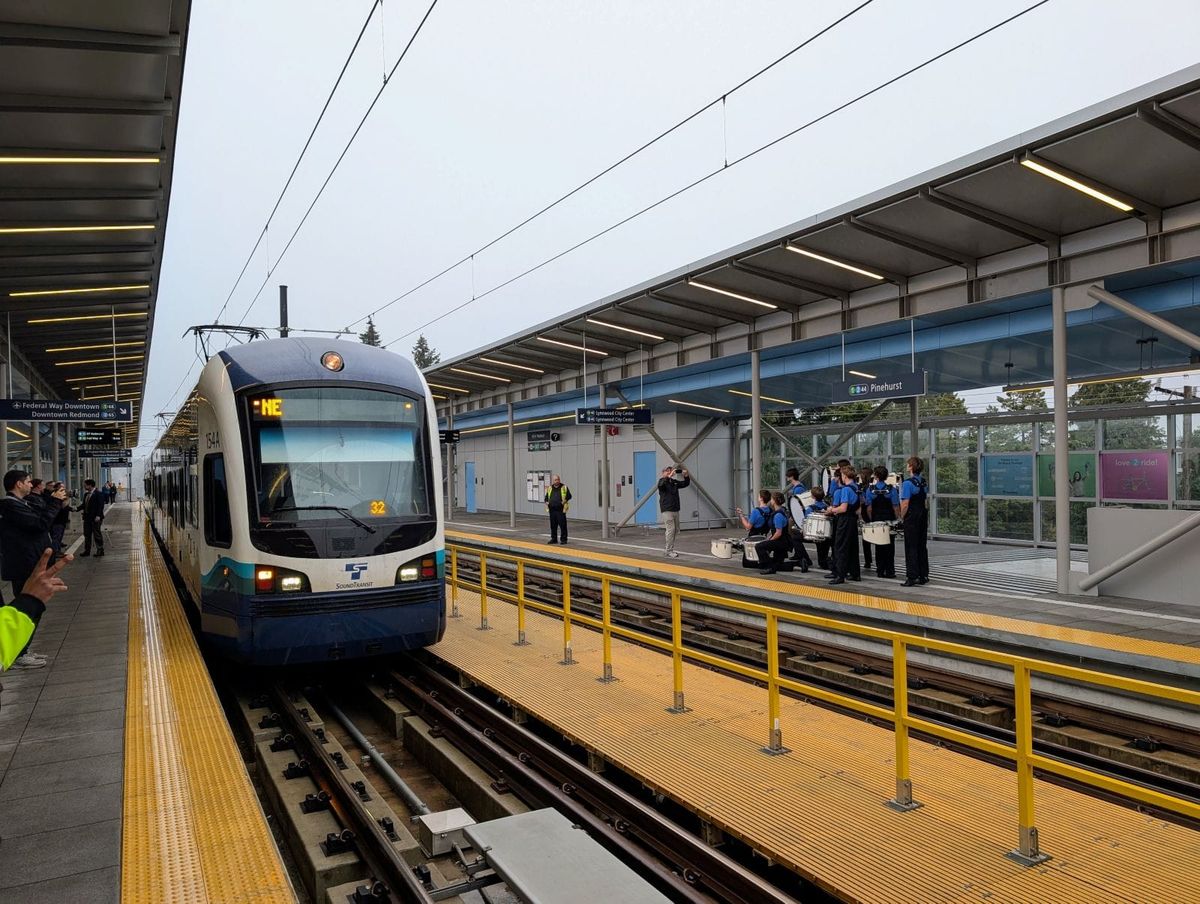
What had been billed as a “small community event” turned into a big party Wednesday as hundreds of transit fans converged on Sound Transit’s new light rail station north of Seattle to celebrate its grand opening. The Pinehurst station, perched on I-5 near NE 130th Street, is the agency’s first infill station, a stop added along an existing line.
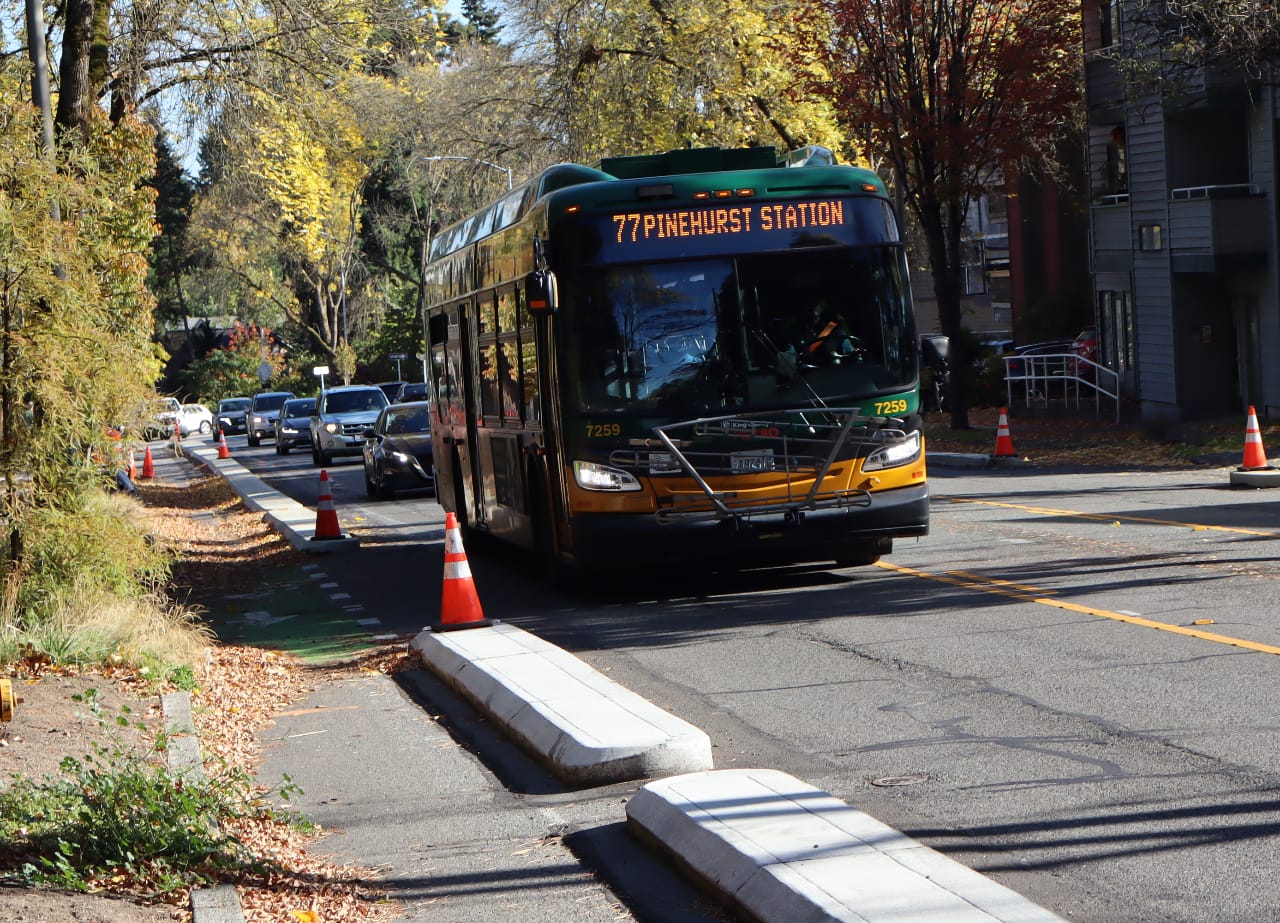
“It was a joyous occasion with people walking, biking and rolling to experience their new mobility option, including many arriving on the new King County Metro Route 77, which provides a direct and convenient connection to the station,” Sound Transit CEO Dow Constantine said the next day at a board committee meeting.
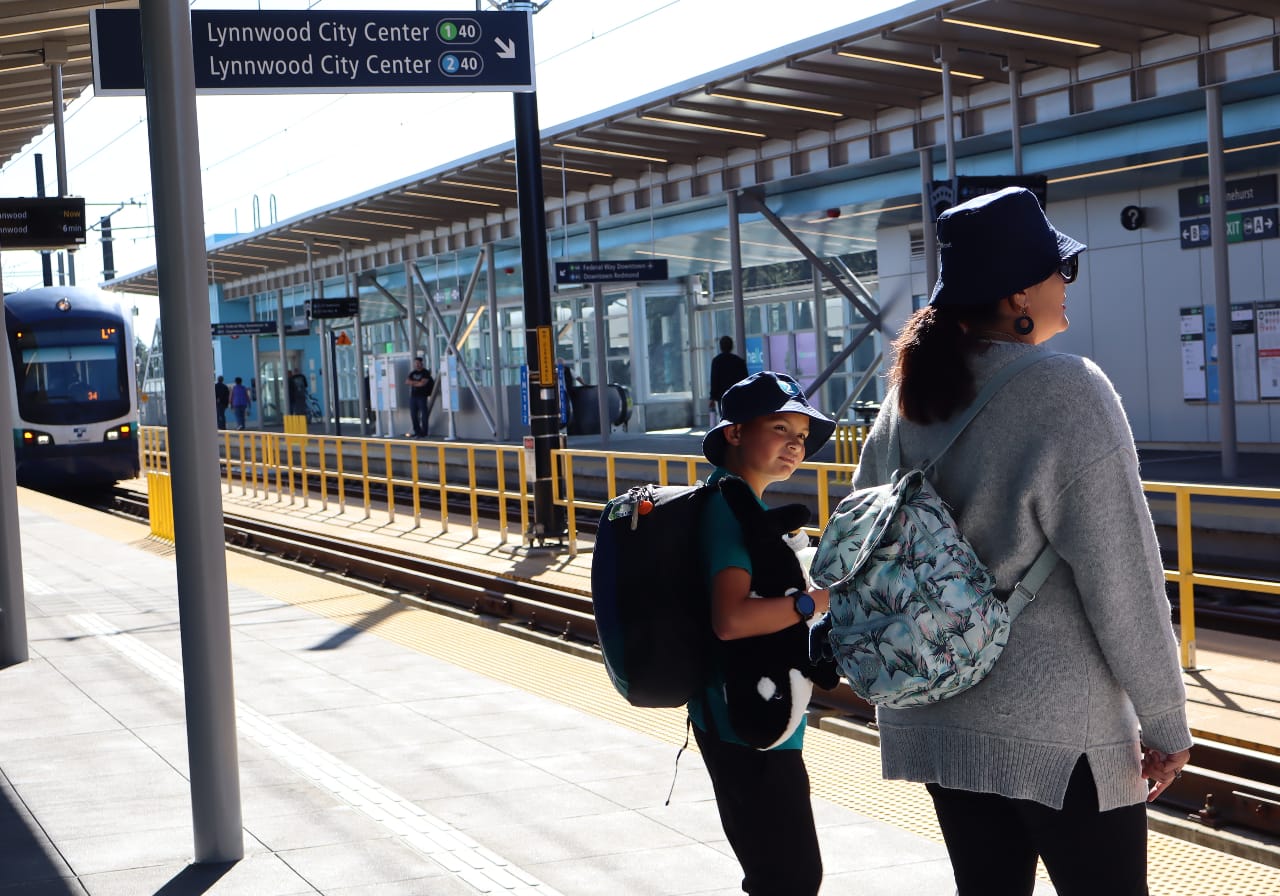
Sound Transit had undeniably treated the Pinehurst station opening as a low-key affair, following full line openings where the agency had gone all out. Unlike previous large light rail openings, the start of service took place on a weekday, fulfilling the agency’s promise to open the station in the third quarter of the year. A ribbon-cutting ceremony took place the evening before, separating elected officials celebrating the station from crowds of passengers visiting it.
Only one food truck was available to feed hundreds of people, in a station fairly isolated from other restaurants, and Pinehurst’s Sound Transit pop-up store selling custom goods began to run out of stock fairly quickly.
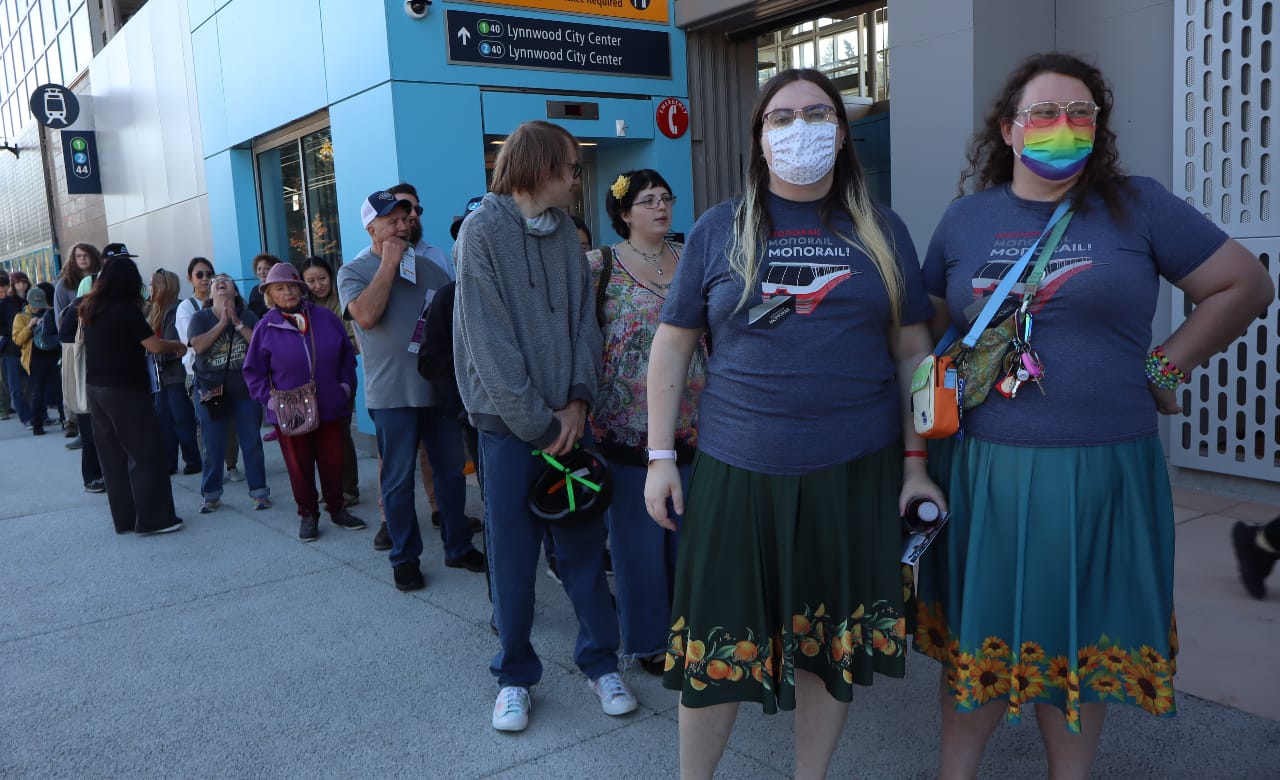
But none of that seemed to faze the transit enthusiasts who converged by the hundreds on Station Square, many standing in an epic line that stretched all the way to 130th Street for a chance to win a Boop collectible. (Don’t know Boop? You’re missing something.)
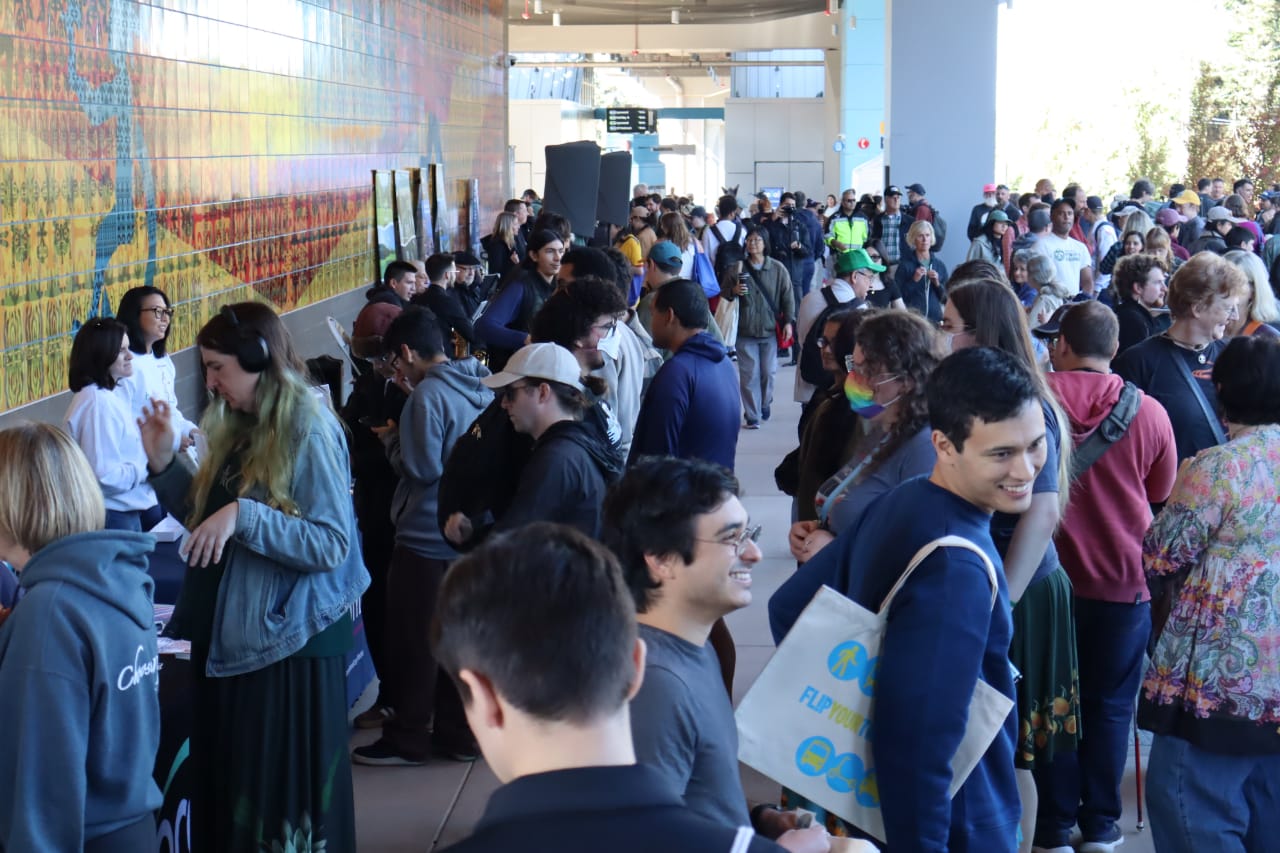
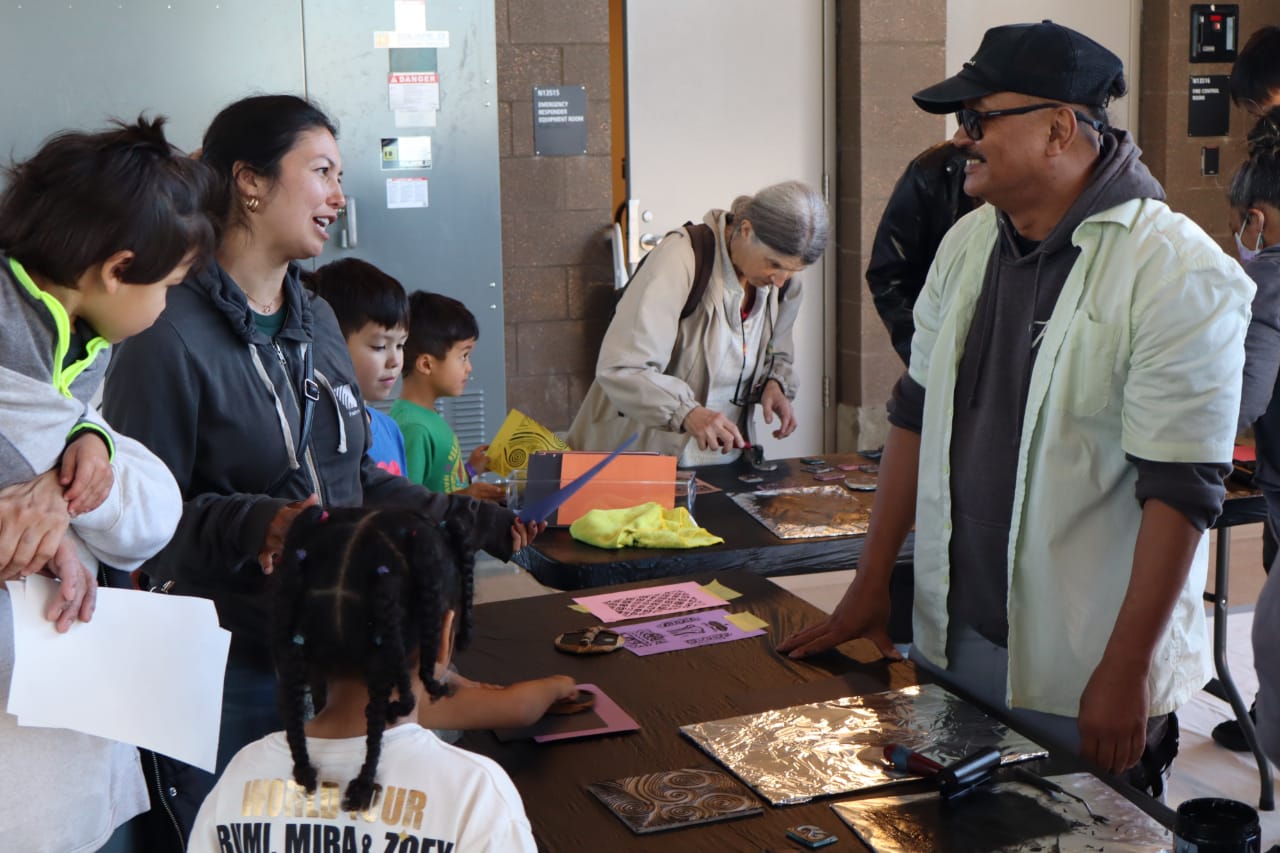
Other attendees listened to live music or participated in art-making activities with Romson Bustillo, the same artist who created the artwork adorning Pinehurst Station – porcelain enamel paintings that wrap around the side of the building to its main entrance on 130th. Bustillo’s booth was popular with children who could make their own art projects to take home as souvenirs.
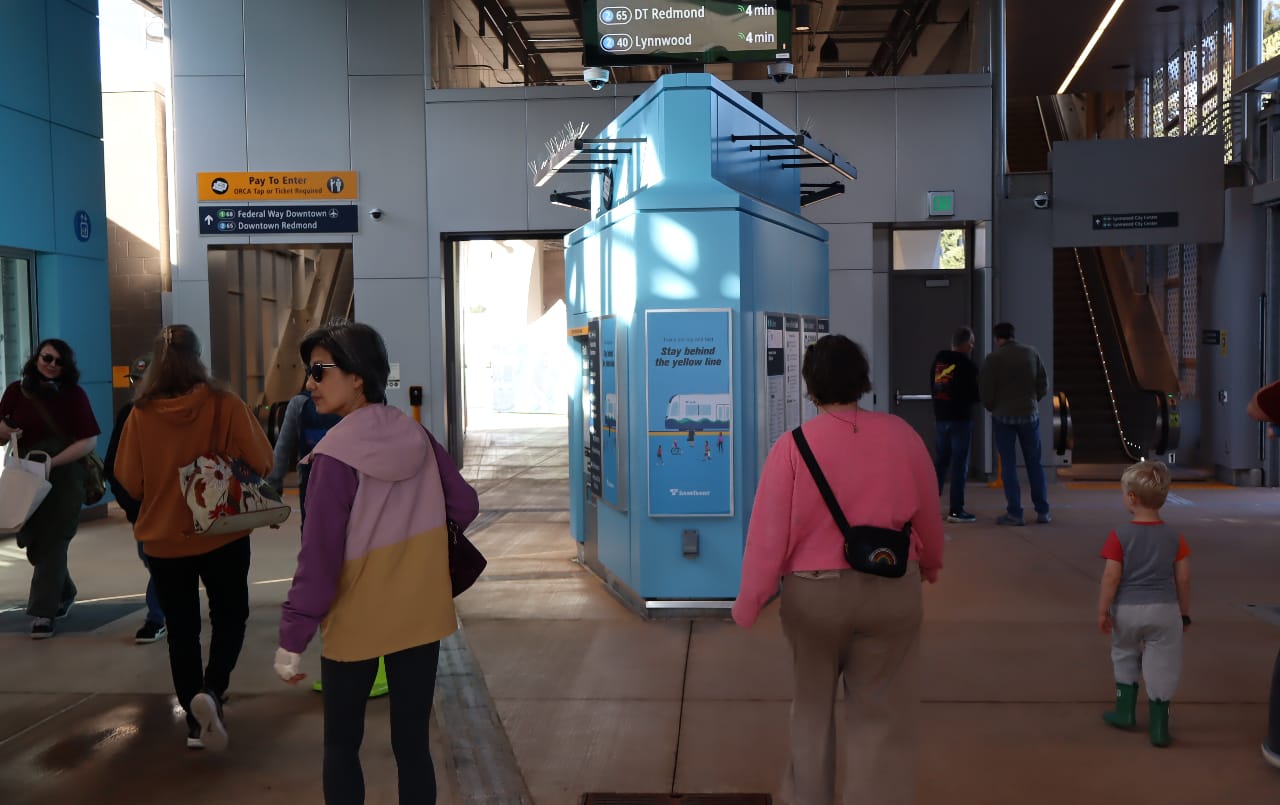
But most of those who stopped were there to check out the station itself, which was initially not scheduled to open until 2031, and moved in order to take advantage of the opportunity to do work simultaneously with the wider Lynnwood Link extension. Although this line ultimately beat Pinehurst by more than two years, the ability to do work before that happened ultimately saved riders headaches in addition to being cheaper for Sound Transit.
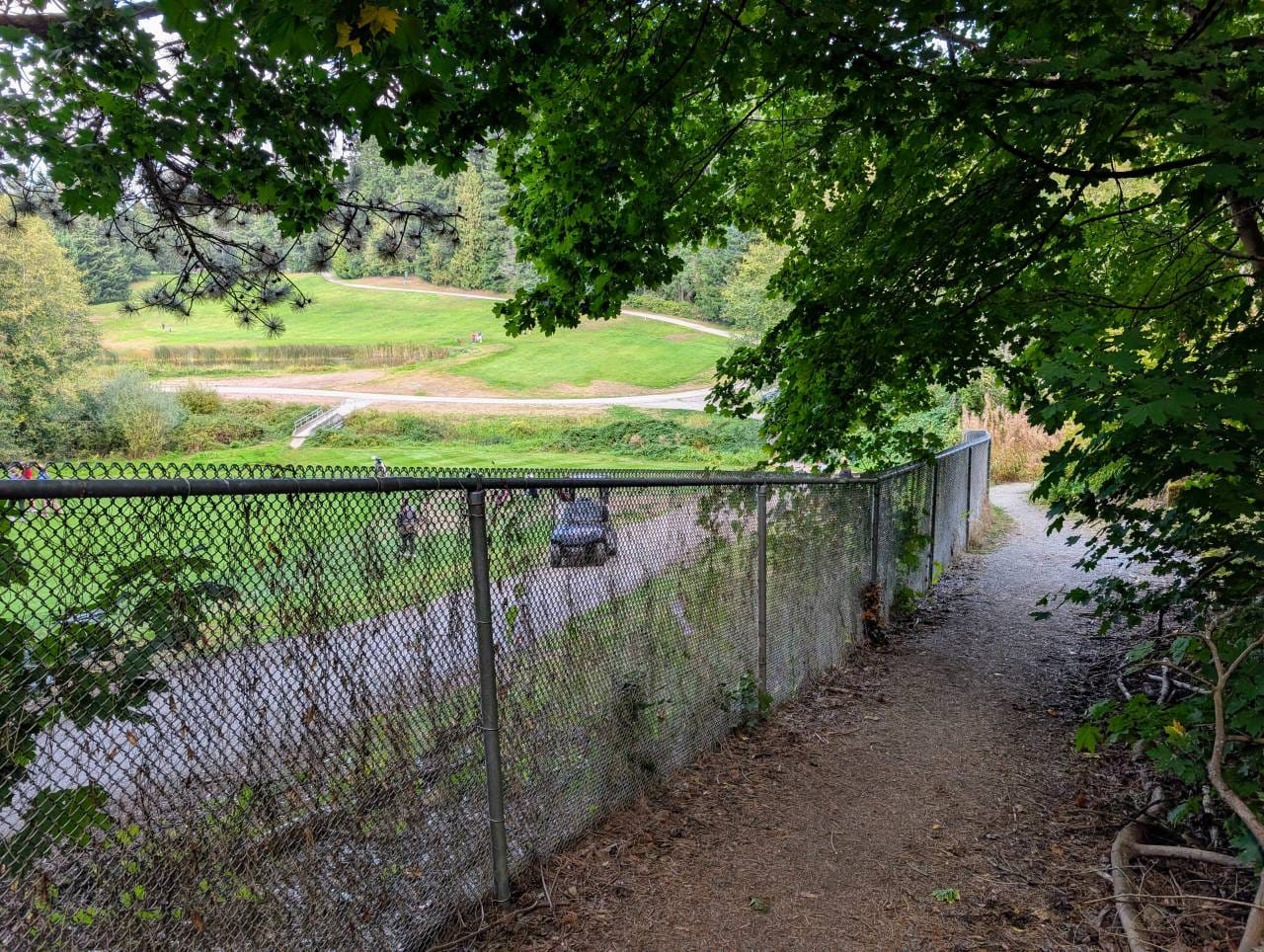
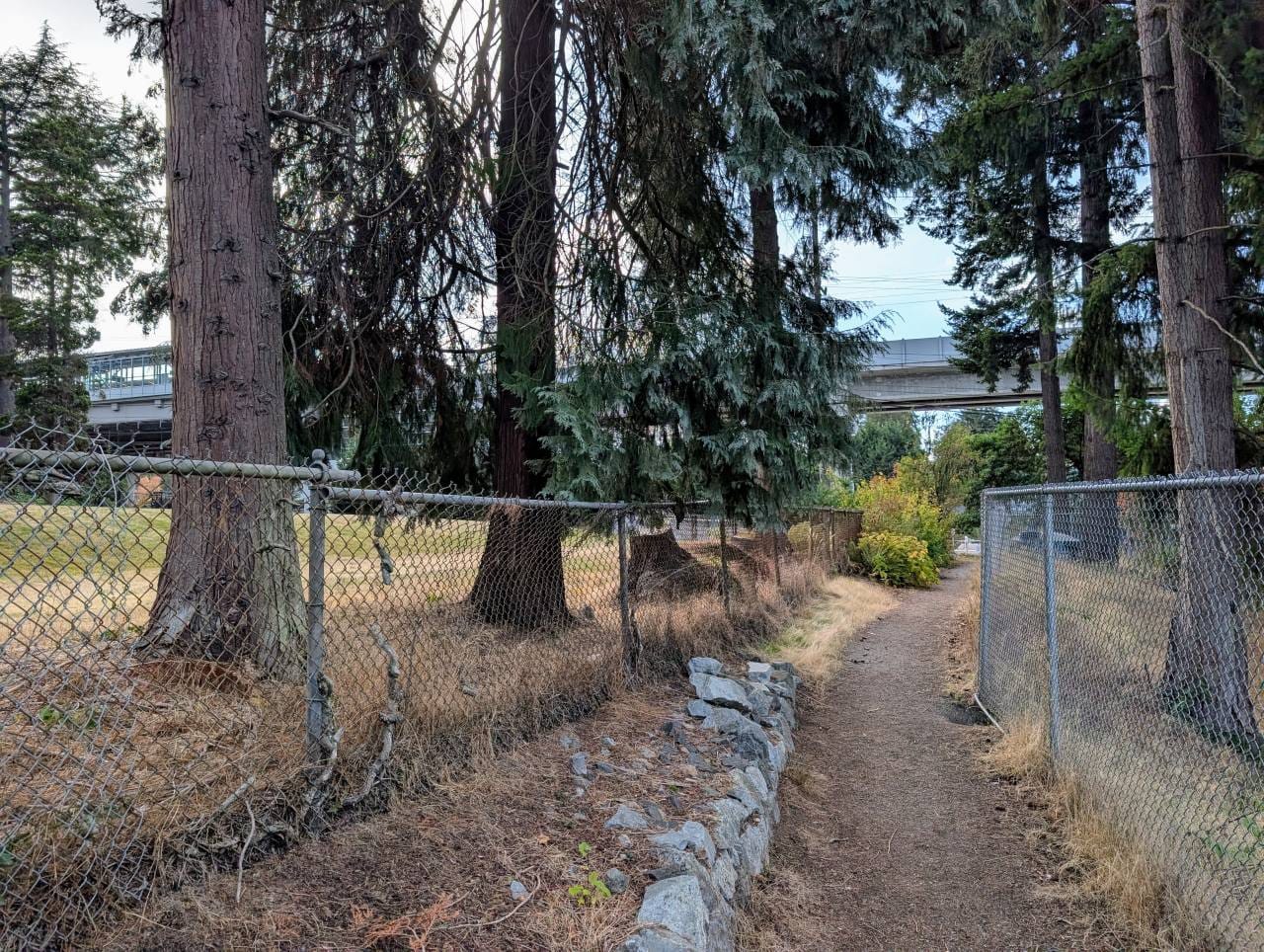
As the Sound Transit festival wound down, a group of about 50 people joined The Urbanist’s walking tour of the neighborhood. The tour took the Jackson Park Perimeter Trail to explore the fenced edge of the golf course, before turning south on 15th Avenue NE to visit the brand new business district. The tour returned to the station via NE 125th Street to use the new protected bike path and the roundabout intersection with Roosevelt Way.
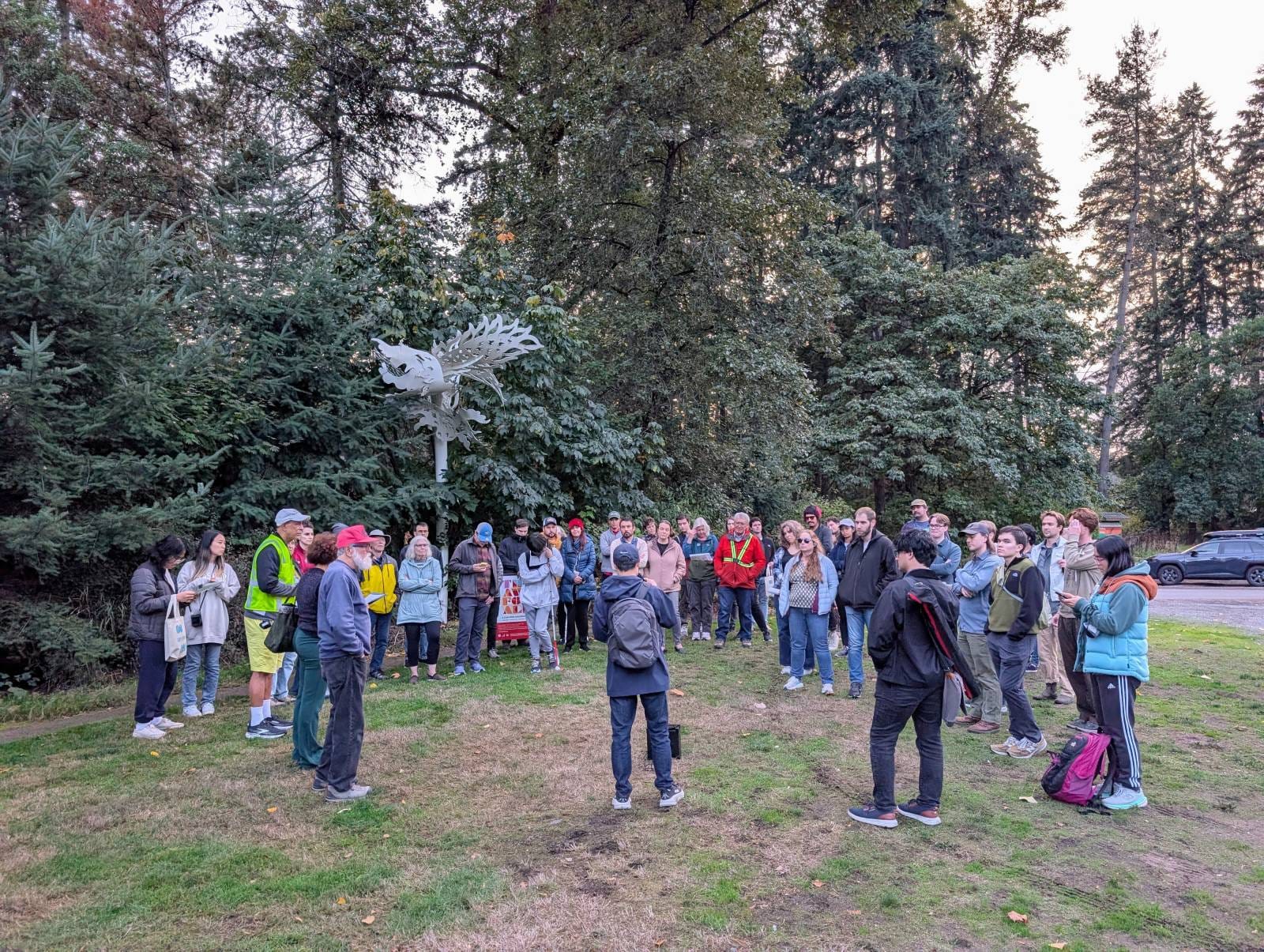
Along the way, EcoCity Action’s James Wu and Shirley Leung spoke to attendees about their group’s campaign to reinvent the Jackson Park Golf Course. A central idea: allowing people to walk around the 160-acre park and enjoy it more, for example by adding picnic areas, soccer fields or basketball courts. Some have even proposed housing, although that is not part of the current campaign due to obstacles such as zoning and restrictions on reuse of park land.
Pinehurst organizer Renee Staton told the story of local advocacy that forced the station to adopt agency plans and accelerate its timeline. Staton said most of her neighbors support the city’s plan to increase Pinehurst’s single-family zone to allow for more housing, and she is pushing to move up the timeline ahead of delayed changes to the comprehensive plan.
Pinehurst has drawn attention for its price tag — $240 million, compared to an initial 2020 estimate of $144 million — and its adjacent land use, mostly single-family homes, I-5 and a large city-owned golf course. One-term Sammamish City Council member (and radio host) John Curley called the station a “total waste of money” and said its construction was “criminal.”
On the low end, Pinehurst is expected to see about 1,100 daily riders, with that number rising to 4,200 as Sound Transit fully builds out its light rail network and the City of Seattle hopefully brings additional residential density to surrounding blocks.
Although Seattle city planners would certainly like to see Pinehurst integrated into a high-rise neighborhood, that is not what exists between Northgate and South Shoreline today. When the argument around increasing density comes up so often, lack of infrastructure is cited as a reason to move backwards, and yet when infrastructure comes first, it becomes a waste of money.
When it comes to costs, there is no denying that the resort is expensive. But as an infill station along an elevated line, $240 million is a bargain compared to other Sound Transit projects, only slightly more than the $214 million Graham Street infill station in Rainier Valley. The Boeing Access Road elevated station in Tukwila, so expensive it failed to fit into Sound Transit’s new ST3 plan after adjustments were made to account for a $34.5 billion shortfall, is expected to cost as much as $475 million.
One of Pinehurst’s biggest value-adds currently comes from its ability to serve as a bus transfer point, easier for Metro to access from neighborhoods like Lake City and Bitter Lake than Shoreline South or Northgate. NE 130th Street, being redesigned by the Seattle Department of Transportation to feature protected bike lanes connecting directly to the train station, is much improved from its state just a few years ago.
Haters will hate, but finally allowing riders access to Pinehurst Station in 2026, years ahead of schedule, is a major victory for public transportation in Puget Sound. And the crowds who gathered on Wednesday to celebrate this day are proof.
Pinehurst Station springs into action, while Upzones lags behind
Pinehurst Station opened today as a new light rail stop between Northgate and South Shoreline. While a new intercity bus and street improvements preceded the station, the neighborhood’s urban areas are gridlocked by legal challenges and stunted housing and business growth in the neighborhood.
Gn bussni