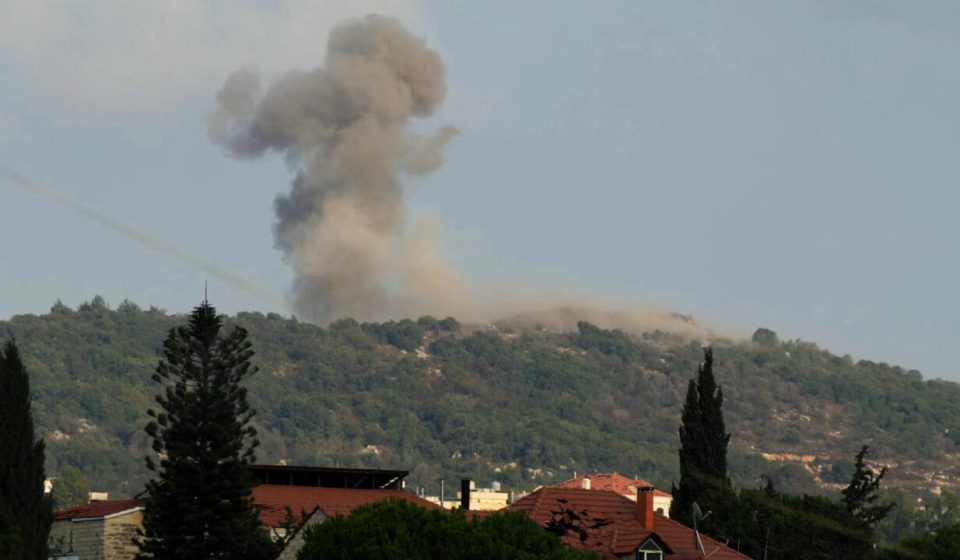

A strategic victory for Israel in Lebanon? The Israeli army announced on Friday September 4 that it had taken control of the Ali Taher ridge, in the south of the country, sheltering tunnels where Hezbollah fighters were holed up.
The pro-Iranian group did not confirm the loss of this position located around ten km from the border with Israel, around which violence had been concentrated for weeks.
Israel had already taken control of another strategic position in southern Lebanon at the end of May, the medieval Beaufort Fortress which is close to the ridge.
Also readLebanon: why Israel wants to take Ali Taher, the hill at the heart of the confrontation with Hezbollah
The Islamist movement Hezbollah dragged Lebanon into the regional war in solidarity with Iran in March, but violence has decreased in intensity since the agreement between Iran and the United States in June, alongside an agreement between Lebanon and Israel.
During the negotiations between Lebanon and Israel, the United States, sponsor of the talks, proposed that the Lebanese army take control of the Ali Taher ridge, but Hezbollah refused, a source close to the participants told AFP.
Israeli Defense Minister Israel Katz said Friday that “the capture of the Ali Taher Ridge marks the completion of control (by Israel, editor’s note) of the security zone in southern Lebanon.”
The ridge overlooking the town of Nabatiyé and surrounding villages lies on the edge of the Israeli-occupied area in the south.
According to military expert Riad Kahwaji, under this ridge there is “a network of tunnels” which “connects the surrounding villages”.
Bridge to Hezbollah stronghold
The Israeli military claimed that this “strategic underground network” included “command centers and weapons storage rooms” and was built over “more than two decades.”
Riad Kahwaji, who heads the Inegma center, underlines the strategic position of this ridge which controls access to Iqlim al-Touffah, a region further from the border considered to be a Hezbollah stronghold, as well as the west of the Bekaa plain, a region in the east of the country.
“Controlling this ridge would give the Israelis easy access to these two regions,” he explains.
In an interview with journalists including AFP in August, Hezbollah spokesperson Youssef al-Zein refused to specify the number of Hezbollah fighters entrenched in this position but denied the presence of Iranian advisers or fighters, as reported by media.
He claimed that Israeli Prime Minister Benjamin Netanyahu was “exaggerating” the importance of this position “for electoral purposes”.
The Ali Taher Ridge lies north of the Litani River, which marks the boundary of areas where Hezbollah agreed to disarm after the previous war with Israel, which ended in November 2024.
During the last war which broke out in March, Israeli aerial bombardments left more than 4,300 dead, according to Lebanese authorities.
With AFP