The reality of Trump’s comments on the Iranian nuclear attacks in Los Angeles and San Diego

President Donald Trump says a lot of weird, even hateful, things. But pointing out that he would allow Iran to bomb Los Angeles and San Diego is not one of them.
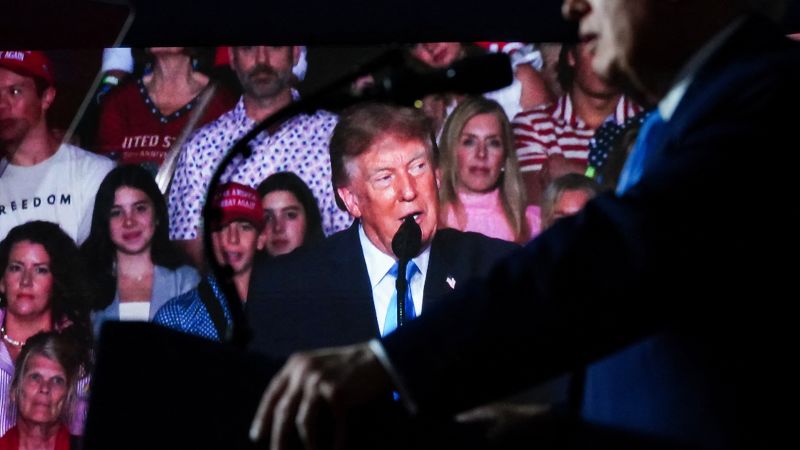
At a rally in Nebraska Monday night, Trump “sneaked” into a controversy that drew criticism, some in the media and even a Republican congressional candidate, accusing him of rhetorically conceding major population centers on the West Coast to America’s archenemy. And you could be forgiven for reading the president’s comments that way.
But context and recent history make clear that Trump’s crime lies less in his indifference to the plight of Californians than in his deepening inconsistency.
Which, let’s be clear, remains a major problem for the most powerful man in the world.
First, let’s recap what Trump said.
“They can take a city,” he said of Iran. “Let them take out – let them – let them take out Los Angeles. Let them take out San Diego. It’s – it’s a very small price to pay.”
It wouldn’t be totally it is out of character for this to be another Trumpian verbal excess, given his recent past. This is a president who has repeatedly talked about withholding disaster aid from states that vote against his party, and he has shown some indifference toward blue states. His Energy Department recently admitted in court that it canceled clean energy subsidies “based solely on the political identity of the subsidy recipient’s state.”
The road to the 2026 midterm elections begins now
Independent Sen. Bernie Sanders of Vermont accused Trump of saying the small price to pay was “the annihilation of two great American cities.” Democratic Sen. Chris Murphy of Connecticut called it “such a sick and evil thing to say.” Even Republican congressional candidate Jim Desmond, who serves on the San Diego County Board of Supervisors, said Trump had “discarded America’s cities as an acceptable price of war.” Desmond “vehemently” disagreed with this proposition.
But that’s clearly not what Trump was trying to say.
On the one hand, just before the quote above, he was talking about other the costs of the war in Iran – apparently referring to the price of gas – being that “small price to pay”.
“And again, remember – with the word – it’s just contrived, it’s a little elevated,” Trump said. “It’s a small price to pay to keep the world and our country safe.”
(You can watch Trump’s full speech here.)
Trump didn’t do it at first say he was referring to gas prices, mind you (although he said it later). But that is precisely how he has long talked about it – as a “small price to pay” for preventing a nuclear Iran:
-
He said March 8 on Truth Social that “short-term oil prices… are a very small price to pay for the United States and the world, security and peace.”
-
On March 16, he called high gas prices “a very small thing compared to allowing them to have” nuclear weapons.
-
On May 5, he called high gas prices “a very small price to pay for getting rid of nuclear weapons.”
-
He even said it in another appearance Monday – in an interview with a local Nebraska TV station: “I say it with pride: a relatively small price to pay to keep nuclear weapons out of the hands of a crazy nation. »
Furthermore, three days ago, Trump made a very similar argument to the one he made about Los Angeles and San Diego – with the exception of Mobile, Alabama, at a rally there.
“But remember oil: you pay a price, but hey, it’s a small price compared to what it would be if these crazy people were allowed to have a nuclear weapon and use it in Mobile, Alabama,” Trump said. “Okay, that’s not going to happen.”
At his Nebraska rally, Trump essentially took this talking point and made it much more unintelligible.
He went from talking about Kamala Harris and the election to wanting total victory in Iran to talking about high gas prices (but without actually saying “gas prices”). When he made the comment about Iran bombing Los Angeles and San Diego, he used a very unfortunate sentence construction that sounded a lot like he would “let them” – Tehran, that is – bomb both blue state cities.
And then he came back to gas prices – but again, in an extremely confusing way.
“But it’s going to end very soon, and it’s going to end one way or another, and your gasoline and everything else…” Trump said, before jumping off on a tangent about Venezuela.
It was so confusing that not only did the Republican candidate for Congress seem to interpret it in the worst way; many people in the crowd too. In fact, the ugliest thing about this whole episode is that people acclaimed when Trump announced the destruction of Los Angeles and San Diego. This seems to say something about the movement that Trump has cultivated.
But even if he wasn’t advocating that, his wording highlights a growing problem.
A president is someone you count on to be authoritative and clear, especially when speaking about issues of the utmost importance like nuclear war. But Trump’s rhetoric is often quite the opposite.
Watch any recent interview that has a published transcript. Some of Trump’s responses in his Time magazine interview last week, for example, are virtually impenetrable. (Just do a word search for “unintelligible” if you want some examples.) It often feels like he’s engaging in a long period of free association.
Trump has been talking like this for a long time, to some extent. And by describing his meandering soliloquies as “weaving,” he tried to make it seem intentional, allowing his followers to believe it was his secret rhetorical genius.
But the “weaving” is becoming increasingly difficult to follow – with potentially harmful consequences too.
Gn headline