
President Donald Trump said Saturday he rejected an Iranian proposal to reopen the Strait of Hormuz, after Iranian officials indicated shipping through the critical waterway could resume within days if a deal is reached.
“I rejected their deal. They want to make a deal where they open the strait immediately because they’re losing a lot,” Trump told reporters as he boarded Marine One on the White House lawn, after indirect talks between the two countries on the sidelines of the United Nations General Assembly this week in New York.
“What they wanted was to immediately open the Strait of Hormuz, you know why? Because they are dying. You know why they are dying? Because they have no money coming in because they get their money from the Strait of Hormuz,” he continued. “They outdid themselves. They said, ‘Let’s shut it down and cause a problem in the world.’ And I came in and we set up the largest blockade ever in military history.
The Wall Street Journal first reported that Trump rejected Iran’s offer to restore a ceasefire and reopen the Strait of Hormuz.
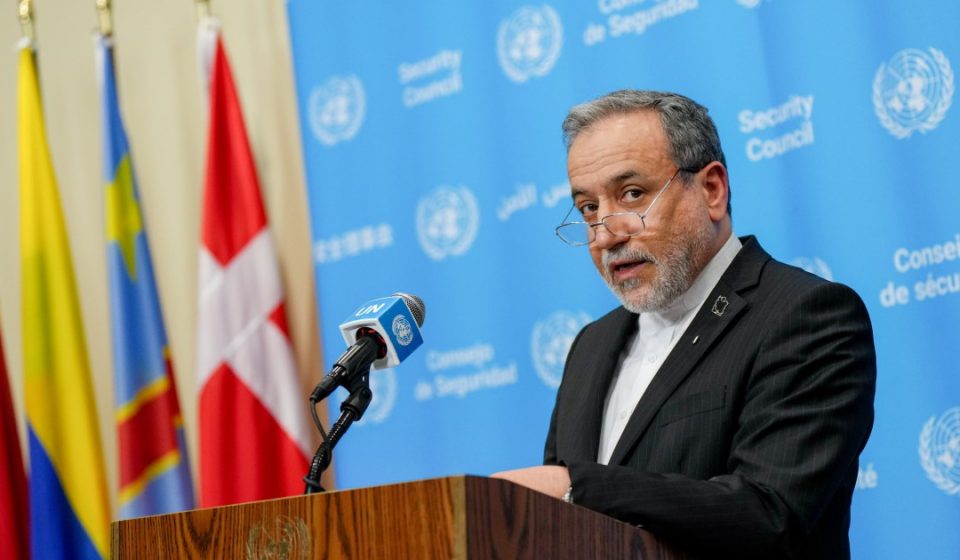
Iranian Foreign Minister Abbas Araghchi said Friday that the choice “rests with the United States.”
“If the necessary conditions are met, the strait can be reopened and normal maritime passage restored within seven days,” Araghchi told reporters.
He said a “concrete seven-day plan” for reopening the strait had been transmitted to the United States through Qatar and was ready to begin “as soon as the United States accepts this plan.”
00:48
Iran offers new proposal to reopen Strait of Hormuz
00:0000:00
Araghchi said the actions required of the United States in the Iranian proposal were commitments already agreed to in the June memorandum of understanding between the two countries that outlined plans for a temporary ceasefire. This agreement, signed in June, collapsed a few days after new strikes.
One of the conditions of the plan is that the United States agree to a maritime transit route through the Strait of Hormuz, agreed by Iran and Oman, Araghchi had said on Thursday.
A U.S. official said Friday that the Trump administration was having positive and constructive discussions through mediators, but was in no rush to reach an agreement.
“The United States is in a very strong position with control of the Strait of Hormuz, so we are in no hurry,” the American official said. “Over the past 48 hours, nearly 40 million barrels of oil have passed through the strait.”
Earlier this week, Trump said he was still considering whether to “annihilate” Iran or make a deal. On Saturday morning, he posted an image of the Strait of Hormuz titled “Trump Strait” on Truth Social.
In an interview with Al Jazeera on Saturday, Iranian President Massoud Pezeshkian said that resolving the Hormuz issue “is possible through negotiation and not through the use of force”, but warned that his country did not have “confidence” in talks with Washington.
Trump has repeatedly said the goal of the attack on Iran was to prevent the development of a nuclear weapon. Shortly after the war began, Iran blocked the Strait of Hormuz, a key waterway through which about 20 percent of the world’s oil flowed before the conflict, sending shockwaves through the global economy.
Pezeshkian suggested Thursday that his government was ready to reach a deal with the United States to end the war before Americans go to the polls next November.
“We don’t want this to happen in the midterm elections,” Pezeshkian said during a brief meeting with NBC News and other news outlets, two days after Trump said he believed the Iranian regime would not reach an agreement to resolve the conflict before the election.
“I think we’ll come to an agreement right after the election, because it makes no sense why they wouldn’t,” Trump said. “They are waiting to see how I perform in the midterm elections.”
Polls give Democrats an advantage heading into the November midterm elections. The latest NBC News Decision Desk poll found that 31% of respondents approved of Trump’s handling of the Iran war, while 69% disapproved.
The United States announced this week that it would impose sanctions on any global company doing business with Iranian airlines, with the aim of grounding Iran’s entire civilian fleet worldwide.
Iraq said Saturday it was engaging with the United States in an effort to restore humanitarian flights to and from Iran, after Iranian airlines were barred from neighboring countries in response to sanctions.
Efforts are underway to “obtain exemptions from these measures for certain Iraqi airports” to allow “the resumption of flights for humanitarian reasons, such as medical treatment, education, religious pilgrimages and the interests of civilians,” the Iraqi Prime Minister’s office said.
Iran’s Tasnim news agency reported that flights were also halted to Oman, Georgia and Azerbaijan.
Gn usa