
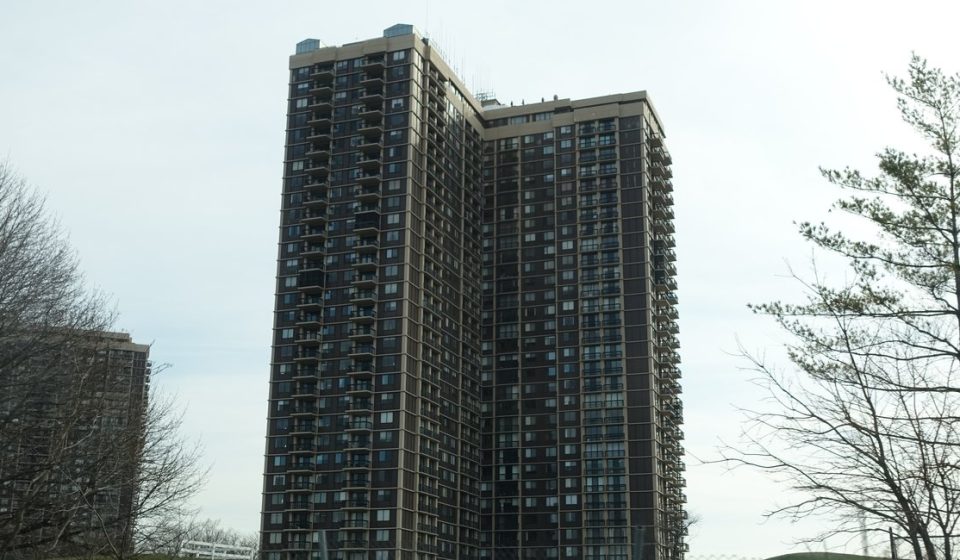
Two cases of Legionnaires’ disease appear in a Queens residential complex. Here’s what we know.

Two residents of the North Shore Towers in the Glen Oaks neighborhood of Queens have been diagnosed with Legionnaires’ disease, prompting an investigation by the New York City Department of Health and Mental Hygiene.
Chantal Gomez, a department spokeswoman, said the agency began distributing letters to residents about the cases Friday evening. The advisories advise smokers, chronic respiratory problems or people over 50 to avoid taking showers in their apartment to reduce the risk of inhaling the mist.
The North Shore Tower cases follow two deadly Legionnaires’ disease outbreaks this summer on the Upper East Side that killed 11 people and another in the South Bronx that killed two people. Unlike the two new infections isolated to Queens, the neighborhood-wide outbreaks in Manhattan and the Bronx were linked to rooftop cooling towers that spread bacteria throughout the neighborhood by emitting water vapor, health officials said.
Each year, a small number of Legionnaires’ cases are caused by plumbing systems and spread through showerheads and faucets. Bacteria can reach dangerous levels if the water in a building’s plumbing system remains hot or stagnant.
Gomez said inspectors have not yet confirmed the presence of Legionella bacteria in the building’s plumbing.
The health department urged residents to seek medical attention if they experience flu-like symptoms, such as fever, chills, muscle aches or cough.
If inhaled, water vapor contaminated with Legionella bacteria can cause Legionnaires’ disease. Health officials stressed that it was safe to drink water in the building and that the disease was not spreading between people.
The Health Ministry’s letter says most people are unlikely to get sick. Gomez also said there was “no risk to the surrounding community.”
The number of Legionnaires’ disease cases has increased tenfold in the United States over the past 20 years, according to some estimates. New York City saw double the number of cases in 2025 compared to the previous year.
The rising number of cases and continued frequency of outbreaks have fueled a debate over the city’s drinking water, with some water management experts seeking more comprehensive, but costly, solutions, such as filtering all of the city’s tap water.
Gn Health