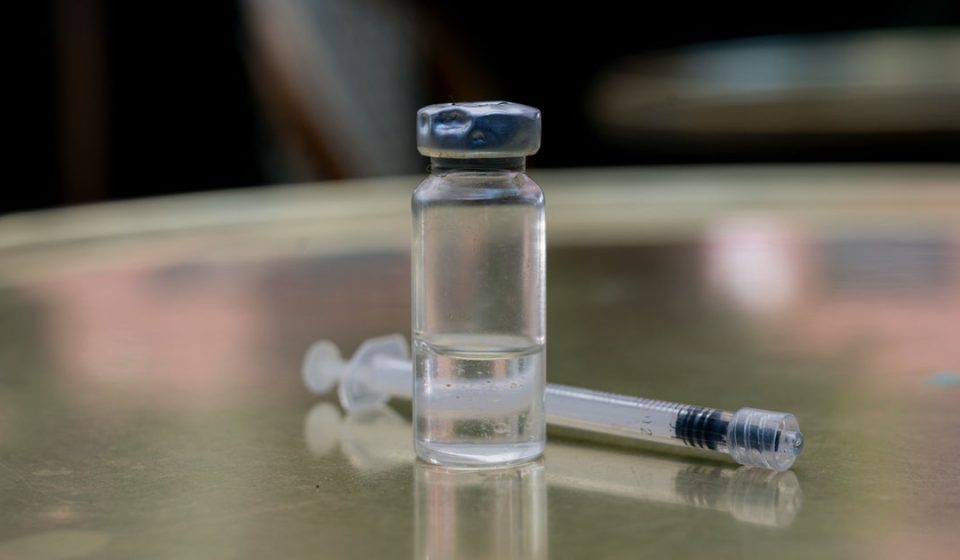

The Food and Drug Administration has received reports in recent months that two people died after taking pirated versions of an experimental weight-loss drug, according to documents reviewed by CBS News.
Reports link these deaths to products claiming to be retatrutide, a drug developed by Eli Lilly that has not been approved by the FDA. Federal law prohibits the commercial sale of unapproved drugs, but that hasn’t stopped sellers from selling knockoff versions of the experimental drug online on a scale without modern precedent.
The cases appear to be the first public accounts in the United States alleging that unauthorized use of retatrutide — or products claiming to contain it — played a role in a patient’s death, although the details have not been verified and it is unclear whether the drug was to blame.
The first death reportedly occurred in July, when a medical professional informed the FDA that an obese 41-year-old woman had suffered a cardiac arrest. The report cites retatrutide as a “suspicious product,” noting that the woman obtained it “from an unreliable source.”
Then, in September, the FDA received a report that a 49-year-old patient had died after a registered nurse “convinced” her to purchase retatrutide from an online peptide seller and that she had suffered severe dehydration, malnutrition and cardiac arrest.
Although the reports alone do not prove that the drugs caused or contributed to the patients’ deaths, they highlight the potential dangers of an illicit market for unapproved drugs like retatrutide.
“This is concerning because of the failure of our drug approval process in the United States of America,” said Pieter Cohen, an associate professor at Harvard Medical School.
“The FDA should do everything they can to get their hands on the drug that was injected by these two patients, and they should have it analyzed,” he said. “If the FDA does not aggressively investigate these cases, it is deeply concerning.”
Previous investigations by CBS News found the drug was widely available at spas, on wellness websites and even in some stores. convenience stores. Dozens of medical professionals have openly promoted access to retatrutide, and some sellers have been aided by top-tier independent certification that gives them the appearance of legitimacy and the ability to advertise it on social media.
The reported deaths were submitted to the FDA’s adverse event reporting system, designed to help the agency monitor the safety of drugs it has approved. The two reported deaths are not linked to a formal clinical trial, according to the documents and Eli Lilly, even though retatrutide is generally not expected to be available outside of a formal clinical trial.
The FDA declined to say whether it had verified information about the two reported deaths.
“We review reports of adverse events and collect additional information as necessary,” the agency said in a statement, adding that it “generally does not discuss potential or ongoing compliance matters.”
CBS News was unable to independently verify the information included in the reports, which were obtained under the U.S. Freedom of Information Act and redacted by the agency to remove identifying details of the people mentioned in them. They are part of an emerging picture of potential side effects from a drug that many people obtain from unregulated sellers and with minimal, if any, medical oversight.
The U.S. Poison Control Centers, a nonprofit organization, has seen a steady increase in reported exposures to retatrutide since it began tracking them late last year, which is common for a newly monitored drug. The centers recorded 862 exposures to retatrutide in the three months ending in September, compared to 460 in the previous three months and 249 in the first three months of 2026.
In clinical trials, retatrutide has been shown to help people lose even more weight than the most effective weight-loss drugs on the market, generating excitement about its potential and fueling Wall Street’s expectations that it will become a success. In a July press release, Eli Lilly said serious cardiac reactions “occurred less frequently than expected” in patients given retatrutide as well as those given a placebo, while the drug reduced some measures of cardiovascular risk.
“Black market retatrutide”
In a statement, Eli Lilly said the reported deaths “clearly show that both individuals were taking retatrutide on the black market.” The company said it found suspect products “containing too much, too little or the wrong active ingredient,” as well as contaminants that “may put patients at risk.”
Eli Lilly is take legal action against companies selling pirated versions of retatrutide, saying people would associate bad reactions with their product, “poisoning the well for the future of retatrutide medications.”
The first death reported to the FDA, in July, said the 41-year-old woman was taken to the hospital with a dangerously fast heart rate and died after several approaches to resuscitate her failed. The medical professional who filed the report said the patient had a history of obesity, but “appears to be a healthy adult female.” The report also states that the patient was drinking kava – an apparent reference to an herbal beverage known for its relaxing properties – at the time of the emergency.
The second death report, in September, said a 49-year-old patient purchased retatrutide after a registered nurse — whose name, location and license number were redacted by the FDA — “provided her with the link, sold her her vials, and provided her with the recommended dosages.” The report does, however, mention the source of the drugs.
An image in the report shows a vial with the name “AlphaLabs” and a website offering peptides “for research use only.” Company owner Joseph Samara filed a trademark application for the name Alpha Labs earlier this year, including screenshots listing its offerings including retatrutide.
Contacted by a CBS News reporter, Samara initially said “we don’t sell retatrutide” and that “you have the wrong Alpha Labs” before hanging up. Sinead Killeen, a lawyer representing Samara, later said in a statement that her client “had no way of verifying the caller’s identity or identifying information, did not believe he was speaking with a member of the press and refused to engage.”
Killeen said there simply wasn’t enough information in the report made to the FDA to know whether Alpha Labs sold the product or whether it came from another supplier — no lot number to check against its records, no visible names to determine whether the patient or nurse were customers. The image of the bottle included in the report “does not match the company’s current packaging,” she said.
“We extend our sympathies to the family of the individual described in the report,” Killeen wrote.
The lawyer expressed concern about the role of the nurse as described in the report. “A licensed health care professional should never recommend, provide dosage instructions, administer, or sell research-only products to a patient,” she wrote.
Killeen said the company would support a review by the authority that licensed the nurse. She said Alpha Labs has not been contacted by the FDA.
Gn Health