
Geoff Bennett:
The United States says it is closely monitoring a potential case of pneumonic plague in Russia after a laboratory worker who was studying the disease fell ill and died. Russian authorities say the worker died of pneumonia of unknown cause and insist there is no cause for alarm.
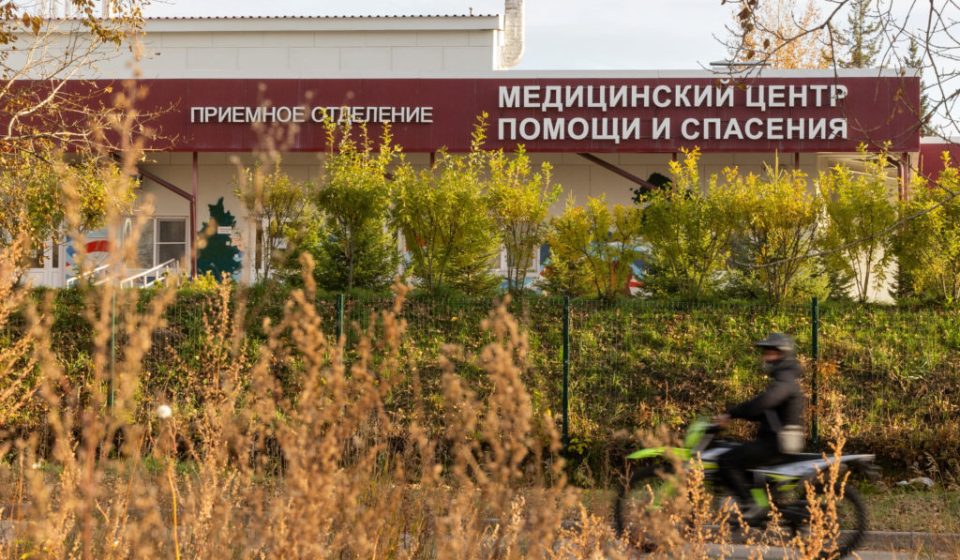
But Russian authorities have also imposed quarantines and other anti-epidemic measures at several medical facilities in Siberia, with at least 200 people now under medical observation. There is no confirmation that the worker contracted the plague, but she worked at a research center studying the disease, raising questions about what she may have been exposed to and whether there is a risk of a wider outbreak.
President Trump was asked about these concerns as he left the White House this afternoon.
Question:
What will the United States do about the risk of pneumonic plague from Russia?
President Donald Trump:
Well, we’re paying attention. We just heard about it. And they call it pneumonia. And pneumonia, years ago, you could treat pneumonia more easily. Microbes and germs have become disproportionately stronger, but we will help them.
Geoff Bennett:
For more, we’re joined now by investigative journalist Annie Jacobsen, author of “Biological War: A Scenario.”
Annie, thank you for being with us.
You wrote an entire book about a biological crisis involving pneumonic plague. When this story broke, what did you think about it?
Annie Jacobsen, author of “Biological War: A Scenario”: I mean, I was sort of shocked, not shocked.
Look, the idea that a laboratory accident causes an epidemic or pandemic is based on real facts. It’s also based on experience. So I think what’s rather alarming is not only what happened, but also the fact that the Russian Federation is working very hard to shut down all information about this.
Geoff Bennett:
So separate what we know from what we don’t know. What has actually been established about this worker’s illness and death and what remains speculative?
Annie Jacobsen:
Well, she’s dead. That’s for sure.
What we don’t know is what’s happening with the other 200 people who would be quarantined, nor with the other people at the five facilities who are also in quarantine. I think once we have information about this, it will be much clearer whether this is a transmissible variant, whether more people die.
But, once again, because we get nothing from the Russian Federation, after a very strong initial repression, the FSB was involved. It’s not nothing.
Geoff Bennett:
Is there anything in the response itself, the quarantines, the medical observation, the involvement of Russia’s top public health officials, that tells you anything about what might worry Russian authorities?
Annie Jacobsen:
Well, what worries them is that it’s an anti-plague institute, so they’re supposed to study medical countermeasures against the plague, like vaccines, antibiotics.
But this particular institute, as we know from Soviet defector scientists, was used for the design of biological weapons during their illegal program. We also know that the State Department believes that this illegal biological weapons program is continuing.
And so what they’re really concerned about is the eyes on this facility, both from the intelligence community here in the United States and the military community, looking at this facility and wondering: What’s going on?
I mean, look, the facility is… is surrounded by six-foot-high fencing. There is accordion wire on top. It is controlled inside and out. The idea that this worker broke a test tube and suddenly contracted pneumonic plague, which is an inhalation plague, doesn’t entirely resonate with someone like me.
What I would be most concerned about is that they’re sort of… one idea is that they might grind up the pathogen, making it aerosolized. This takes you straight into the world of biological weapons engineering.
Geoff Bennett:
What power, if any, does the WHO, the World Health Organization, have here, or does it depend entirely on Russia’s willingness to cooperate?
Annie Jacobsen:
The last one.
It depends entirely on Russia’s ability or willingness to cooperate. Moscow closed its WHO office during the war in Ukraine, which began. My understanding is that the WHO contacted the Russian health authorities and asked for information, but they received none.
Geoff Bennett:
Is pneumonic plague as transmissible as, say, COVID?
Annie Jacobsen:
Well, that’s the question. I mean, Mother Nature’s pneumonic plague, no. COVID was airborne. It was in aerosol. You could catch it from the air if you were in the room with someone who had COVID.
Pneumonic plague, again, Mother Nature’s variant, meaning pneumonic plague in nature, is what we call droplet transmissible. So, excuse the graphics here, but you must actually like spitting on someone or coughing loudly. And you’d also have to be very sick to do that, which would make the likelihood of you being around without some sort of PPE unusual.
But if genetic modifications take place, all bets are off regarding their transmission potential.
Geoff Bennett:
And, of course, COVID has revealed how costly a lack of transparency and cooperation between governments can be in the early stages of an outbreak.
Are there better mechanisms today that I suppose would in this case require countries to be transparent and cooperate to stop an outbreak before it starts?
Annie Jacobsen:
And that is of course the most important question and the most important point, of course.
I mean, transparency will or should be the way forward, because the more we know about an outbreak, the more countries can prepare to mitigate the threat, in essence. But, again, Russia is absolutely – not only is it not saying anything. In fact, they’re going backwards, and they’ve also apparently cracked down hard on journalists who were originally doing excellent on-the-ground reporting on quarantines.
These people remained completely silent.
Geoff Bennett:
Journalist and author Annie Jacobsen. The latest book is called “Biological War: A Scenario”.
Thank you for sharing your ideas and reports with us. We appreciate it.
Annie Jacobsen:
Thank you for having me.
Gn headline