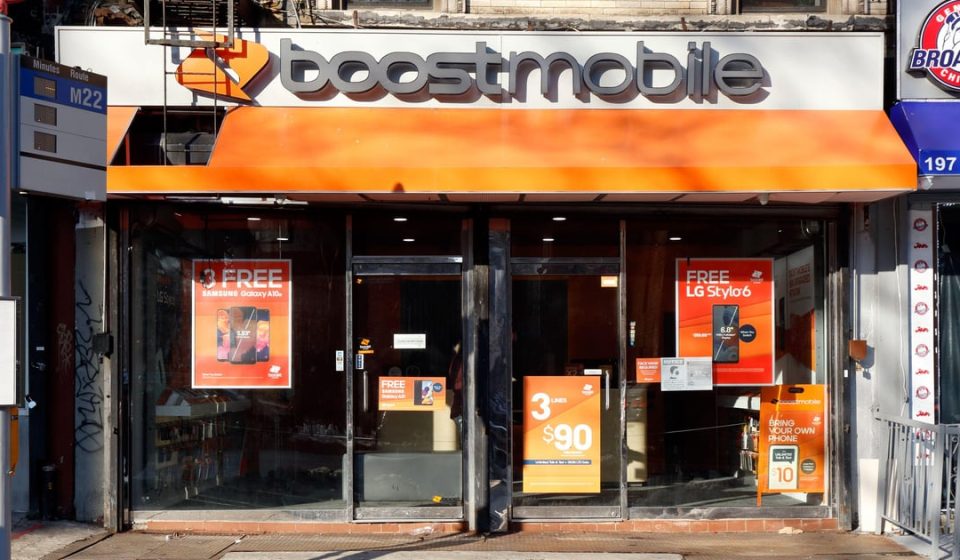
If SpaceX hopes to use the Boost Mobile acquisition as a backdoor into EchoStar’s MVNO deals, analysts say the change of control clauses built into those contracts close that door.
Opening such a backdoor appears to be on SpaceX’s agenda, according to a report from the Washington Post that SpaceX’s Elon Musk and EchoStar’s Charie Ergen discussed a deal that could provide a workaround to an MVNO agreement as SpaceX continues to face strong resistance from AT&T, T-Mobile and Verizon.
But buying Boost or accessing its network probably won’t be enough, analysts say.
“SpaceX cannot simply acquire Boost Mobile and inherit its MVNO agreements with AT&T and T-Mobile, as the Washington Post article suggests,” explained LightShed Partners analysts Walt Piecyk and Joe Galone. research note (registration required).
They pointed to an EchoStar earnings call for the first quarter of 2025, in which executives confirmed that the company could not simply pass its MVNO deal with AT&T to another party without AT&T’s approval. While there are no technical barriers to such a move, “it would require cooperation from all parties to advance wholesale relationships,” explained John Swieringa, president of technology and chief operating officer at EchoStar.
Is SpaceX a “restricted party”?
If SpaceX is looking to inherit an MVNO deal through Boost, it will likely focus on the AT&T deal. Boost’s MVNO agreement with T-Mobile expires on July 1, 2027, “which effectively makes it irrelevant,” said Craig Moffett, an analyst at MoffettNathanson, in a statement. research note (registration required).
The limitations SpaceX faces are clear in SEC Filings related to the MVNO deal that EchoStar secured through its sale of spectrum to AT&T. The ten-year agreement provided coverage on AT&T’s network to Dish’s MVNO customers (Boost, Ting and Republic Wireless).
However, EchoStar “has certain restrictions on its ability to resell services provided under the NSA (network services agreement) to third parties,” the filing explains. The filing adds that this barrier would apply to any “restricted party,” which generally includes “certain U.S. wireless service providers, certain U.S. cable operators, and certain large technology companies.”
While it is possible that SpaceX, a large technology company by any definition, is a prime example of a restricted party, the filing does not identify any company by name. But the record shows that if a restricted party triggers this clause, AT&T retains the right to terminate the agreement (with a two-year transition period).
This type of restriction is not limited to SpaceX. “Every MVNO contract has a change of control clause,” a person familiar with the MVNO industry told Light Reading. And even if SpaceX were to succeed in enforcing the change of control provision with AT&T, SpaceX would likely have to renegotiate EchoStar’s current proposed price with AT&T, the source added. “This doesn’t give Elon what he wants.”
The Post’s suggestion that SpaceX “may need consent” from AT&T and T-Mobile — Boost’s two MVNO partners — “is an understatement,” David Barden, an analyst at New Street Research, said in a statement. research note (registration required). He said it was not clear from SEC filings whether either carrier had the foresight to designate SpaceX as a restricted party.
But Barden also maintains that “the fastest, cheapest, most cost-effective, and most globally scalable commercial approach to SpaceX’s terrestrial ambition is a global approach.” Citing conversations with SpaceX, Barden said his plan A is to start building a terrestrial wireless network in the United States – with the recent agreement for Grain Management’s 800 MHz low-band spectrum serving as the basis for this initial work – with an MVNO agreement.
Regulatory jostles and legal loopholes
Analysts and industry sources suggest SpaceX could test the waters by taking a non-controlling stake in Boost to see if that triggers a change of control restriction. And if a company like AT&T were to trigger it, it might be interesting to see how FCC Chairman Brendan Carr reacts as the big three continue to reject any prospect of a SpaceX MVNO deal. Meanwhile, Deutsche Telekom CEO Tim Höttges, CEO of Deutsche Telekom (the majority controlling shareholder of T-Mobile), has exhorted US MNOs will not enter into an MVNO deal with Musk.
This caught the attention of Peter Adderton, CEO of MobileX, the MVNO being acquired by CONXCharlie Ergen’s specialist acquisition company.
“Brendan Carr, the FCC and the DOJ need to look into this,” Adderton added. wrote on LinkedIn Monday, in response to the Big Three’s continued resistance to comments from SpaceX and Höttges. “MNOs own the networks and should have a say in access to them, after all, they built them and invested in them. But when network owners use that control to limit consumer choice and protect their own businesses from competition, that’s a different story.”
Moffett wonders if Musk and Ergen’s lawyers could then try to uncover “legal loopholes” that would lead to a deal, or if they could get around contractual limitations by asking Boost to include a Starlink Mobile e-SIM in its devices. But he doesn’t expect AT&T to stay on guard if something like this happens.
“We suspect that AT&T would have mechanisms to throw sand into the cogs of such a deal, even if legally permitted, especially given AT&T CEO John Stankey’s repeated emphasis that Starlink Mobile would not be a good fit for a strategic partner that would be considered for an MVNO with AT&T,” wrote Moffett, who has long argued that Musk and SpaceX’s strategy is to “intimidate, coerce and cajole” MNOs into negotiating an agreement.
As an aside, Boost and Starlink already have ties stemming from the SpaceX-EchoStar spectrum deal. Boost has an agreement to operate Starlink’s next-generation direct-to-cell (D2D) service, and Boost stores are currently reselling Starlink.
Gn bussni