
Protesters march through central Paris amid fires, smoke, police deployments and clashes during nationwide protests against the high cost of living, October 17, 2026 in Paris, France.
Anadolu | Anadolu | Getty Images
Anger over the cost of living and pressure on public services have driven hundreds of thousands of protesters onto the streets of several European countries, with grievances ranging from expensive housing to poor conditions at schools and universities.
France saw the largest protests this weekend, with more than 500,000 people. Most protested peacefully, but some looted and vandalized stores, burned city halls and attacked police.
Separate protests also took place on Saturday and Sunday in Italy, Spain, Portugal and Albania. Their immediate triggers have been different, although high fuel and energy costs have been a backdrop in several countries. The wars in Iran and Ukraine have caused diesel prices to rise significantly across the continent.
There is no “single trigger” for the riots, Andrew Kenningham, chief Europe economist at Capital Economics, told CNBC. Rising energy costs may be playing a role, but the increase is smaller than in 2022, at the start of the Russo-Ukrainian war, when there were no comparable violent protests, he added.
Nevertheless, the protests pose a common challenge to governments: how to improve living conditions and maintain public services while supporting households and controlling strained public finances.
What sparked the protests?
Protests in France began last month when high school students criticized poor school conditions, including shoddy facilities and a shortage of teachers. They have since evolved into broader protests against living standards and the decline of public services.
In Spain, housing protests began in September after an 87-year-old woman, Maricarmen Abascal, was evicted following a 230% rent increase by an investment fund. She died fifteen days later.
Thousands of demonstrators also took to the streets across Portugal on Saturday to protest soaring housing prices and the cost of living.
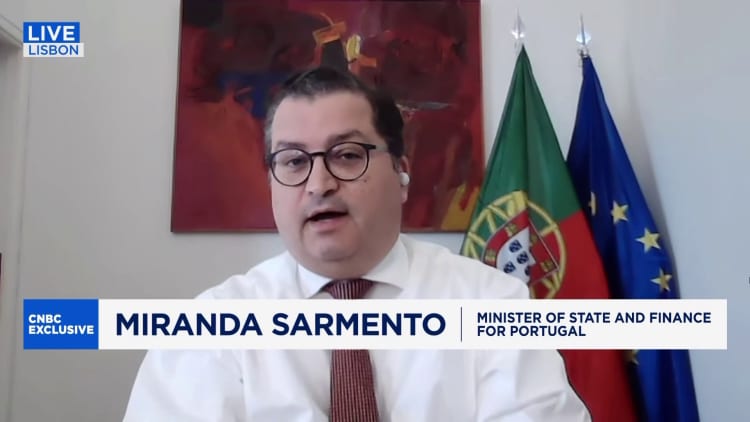
“People are obviously protesting against the cost of living with the price of diesel and fuel, but above all against the cost of housing, which has increased considerably throughout Europe, but also particularly in Portugal,” Miranda Sarmento, Portugal’s Minister of State and Finance, said on Monday.

In Albania, protesters were unhappy with poor university conditions and high tuition fees, and called for the resignation of Prime Minister Edi Rama. Some threw Molotov cocktails and other objects at police and set cars and trash cans on fire.
In Italy, a march in central Milan on Saturday against the cost of living also ended in violence, with rioters attacking police with stones and paving stones and setting barricades on fire.
“The underlying problem is that politicians are unable to offer hope for a better life to many Europeans because the economy is growing only slowly and governments have accumulated huge debts, leaving them little room to support higher public spending or cut taxes,” said Kenningham of Capital Economics.
Why now?
The escalation of violence in France in particular is due to a “combination of different elements”, declared Douglas Yates, professor at the American Graduate School in Paris.
“It was a storm that turned into a hurricane,” Yates told CNBC’s Steve Sedgwick. “There was this inflation, which brought out the cost of living protesters who would have been unhappy anyway.”
Yates said another factor was the 2027 French presidential election, as opposition parties sought to capitalize on growing public discontent with President Emmanuel Macron.
Prime Minister Sébastien Lecornu has proposed a 2027 budget aimed at reducing the French deficit, projected at 5.4% of gross domestic product this year. The measures include freezing the civil service wage index and tightening sick leave reimbursement.
“Finally, there are the students, the poor students who started all of this by reasonably demanding that their dilapidated infrastructure be repaired and maybe air conditioners installed in the classrooms. So these three forces came together and created an uncontrollable hurricane,” Yates added.
The economic context has also deteriorated. In the second quarter of 2026, the unemployment rate in France rose to 8.3%, representing 2.7 million people, according to INSEE, the national statistics office. The unemployment rate among 15-24 year olds rose to 21.6%.
Consumer prices increased by 3.1% in September year-on-year, compared to 2.4% in August, according to final data from INSEE. Energy prices jumped 21.3%. At the same time, purchasing power per consumption unit is expected to fall by 0.7% in 2026, according to INSEE figures cited by Le Monde.
Calculations by the French Institute of Economics for Le Monde estimate that the drop in purchasing power since 2024 is equivalent to a loss of 1,200 euros per year for a household of two adults and two children, and 600 euros for a single adult.
During the October 17 demonstration in Limoges, demonstrators set fire to the town hall of Limoges Haute-Vienne, in the Nouvelle-Aquitaine region, France, on October 17, 2026.
Élise Cabane | Afp | Getty Images
Portugal’s Sarmento said the situation varies across Europe, with Portugal in a stronger fiscal position and with much lower debt than France.
“These countries (those with higher public debt) have much less fiscal space to act, but the main problem is that we need to solve the problem of productivity and competitiveness at European level,” he said.
“The European economy is not growing as much as the United States, and without economic growth it is impossible to have better wages and have the resources needed for better public services and social support,” Sarmento added.
In the second quarter of 2026, Portugal recorded the highest annual increase in house prices in the EU, up 16.5% from the previous year, according to Eurostat.
The Portuguese government is seeking to increase the supply of housing to reduce purchasing and rental costs to address the problem, according to Sarmento.
Budgetary pressure in France
Yields on French government bonds rose and the euro weakened on Monday as the unrest added to investors’ worries about France’s debt and budget.
“It will be difficult to see the budget deficit decline without painful measures,” Sharon Bell, senior European equity strategist at Goldman Sachs, told CNBC’s “Squawk Box Europe” on Monday.
“Taxes may well increase for French companies. I think taxes may generally increase in France. Fiscal consolidation means you either have to spend less or tax more. These are very delicate things.”
Mike Bell, head of market strategy at RBC BlueBay Asset Management, said France faced a “very real risk” of a sovereign debt crisis.
“What we need in France is to get the fiscal house in order; they need to raise the retirement age – you can’t retire at 62 if the average person lives to 84 – but if that happens before they even start talking about it, then imagine what would happen on the streets of France if you tried to raise the retirement age… I mean, here in the UK it’s 68,” he said. added Bell.
Gn headline