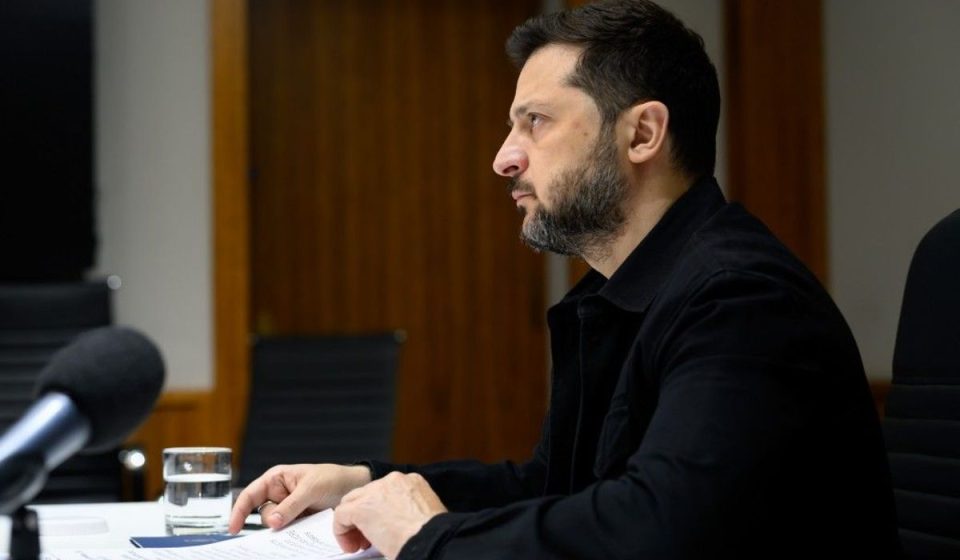

President Volodymyr Zelensky met with members of the US Congress via video conference on October 19 to discuss recent changes in US policy that have left Ukrainians perplexed, anxious and more vulnerable to Russian attacks.
The meeting, attended by Democrats and Republicans from both the Senate and the House of Representatives, was hosted by Senators Richard Blumenthal and Thom Tillis.
Zelensky briefed lawmakers on Ukraine’s current challenges, including delays in deliveries of Patriot interceptors, ongoing restrictions on Starlink access for Ukrainian soldiers, and the abrupt end to warnings about Russian missile launches.
The president described the current difficult situation – which appears to stem from US President Donald Trump’s latest pro-Russian turn – as “the most difficult situation since the very beginning of this war”.
Zelensky highlighted the progress of Ukrainian forces on the front line, including the successes of the Operation Vivaldi counter-offensive in Donetsk Oblast. But he then described a cascade of disasters that “stand in stark contrast to what we accomplish on the battlefield.”
Ukraine’s Starlink/Starshield service still operates with a speed limit that has disrupted the military’s ability to launch medium-range drone strikes and intercept Russia’s deadly, high-speed jet drones.
“(You) need to understand how serious this is. … Russia’s attacks have become even more vicious and dirty,” Zelensky told the assembled lawmakers.
“Hardly an hour goes by without Russia attacking somewhere or hitting something. And it happens every day.”
Zelensky also highlighted the lack of early warning from U.S. partners about Russian missile strikes, saying there had been three separate attacks in recent days with no advance notice to Ukraine — and “no explanation” after the fact.
The Pentagon also refuses to approve the transfer of Patriot missiles from Europe to Ukraine, even though these weapons have already been financed under the US-NATO PURL program, Zelensky said.
Ukraine desperately needs to replenish its supply of American-made Patriots, the only interceptors capable of reliably shooting down Russian ballistic missiles. But Zelensky said Washington was withholding his approval without explanation.
The president also said Ukraine had offered a 30-day moratorium on attacks on Russian refineries in exchange for Patriot supplies. Neither the United States nor Russia has expressed interest, he said.
“All of this suggests that a political decision was made to slow down the support we receive. … We want to understand what is happening, why it is happening and where this is all leading us,” he said.
In the weeks leading up to the November 3 US midterm elections, US President Donald Trump took a hard line on Ukraine: After months of ignoring the kyiv-Moscow peace process while busy in the Middle East, Trump decided to shift his focus back to Ukraine.
But instead of condemning Russian attacks on energy infrastructure or relentless ballistic missile attacks on civilian targets, Trump decided to blame Ukraine – and Zelensky – for rising fuel prices.
Trump announced a deal to buy Russian diesel on Oct. 9, kicking off the series of blows against Ukraine that Zelensky has detailed to lawmakers. The diesel announcement was followed by pressure on Ukraine to stop attacking Russian oil assets, a lifting of sanctions on Russia and restrictions on Starlink.
The White House has denied ordering restrictions on Starshield or deliberately withholding information about Russian missile strikes. The administration also defended the diesel deal despite widespread bipartisan backlash.
Speaking to reporters on October 19, Trump said Russia “hasn’t done much” in Ukraine lately.
“Frankly, Russia is doing well with Ukraine,” he said.
Gn usa