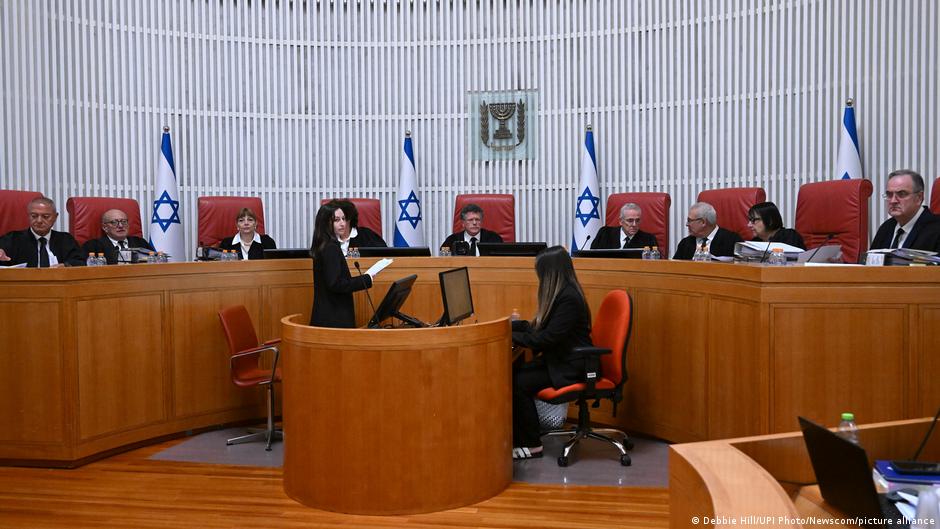

Israel’s Supreme Court ruled Friday that four Arab parties could participate in Israeli legislative elections at the end of the month. Arabs make up about a fifth of Israel’s population.
The decision reverses a decision taken in late September by the Central Elections Commission (CEC) to ban Arab parties. The CEC also sought to exclude several individual candidates from the race.
What did the Supreme Court decide?
The court’s decision means that the Joint List party, commonly known as Raam, and the Joint List, made up of the Hadash, Balad and Taal parties, will be able to run in the parliamentary vote on October 27. The decisions on Raam and the Joint List were unanimous and widely expected.
Additionally, the court also overturned a decision barring Hadash MP Ofer Cassif from running. Two of the nine judges, however, opposed this decision, reports an Israeli newspaper Haaretz reported.
However, the Supreme Court advised the leader of the Palestinian nationalist Balad party, Sami Abu Shehadeh, to step down voluntarily. The court signaled to Shehadeh to uphold the CEC’s ban on his candidacy.
In an article written by Shehadeh a day after the October 7, 2023 Hamas terrorist attack, Shehadeh called the attack “an important historical event.”
Hamas-led militants have killed around 1,200 people in Israel and kidnapped more than 250 people.
According to the Israel Times, Shehadeh told the top court he expressed regret over the article and said he condemned the October 7 attack.
“The same central election committee that disqualified me for an article refused to disqualify all the racist far-right politicians with all the serious cases that were against them,” Shehadeh told Reuters on Friday.
He added: “Committing genocide is considered acceptable and legitimate, but talking about ending the occupation (of Palestinian land) and peace is considered illegitimate.”
Israel has repeatedly rejected accusations of genocide in the Palestinian territories.
Why did the CEC decide to ban Arab parties?
The Central Election Commission is controlled by Israeli Prime Minister Benjamin Netanyahu’s coalition of right-wing and far-right parties.
According to the Basic Law of the Israeli Knesset
The Basic Law also prohibits those who demonstrate “support for the armed struggle of a hostile state or terrorist organization against the State of Israel.”
Parties such as Netanyahu’s right-wing Likud or his far-right coalition partner Otzma Yehudit have presented petitions claiming that Arab parties or various candidates are involved in the aforementioned actions, as stipulated in the Basic Law, and should be banned.
The CEC, however, did not push to exclude controversial lawmakers like National Security Minister Itamar Ben-Gvir and his Otzma Yehudit party. Ben-Gvir, for example, asserted in 2023 that the rights of Jews trumped those of Palestinians in the West Bank, drawing condemnation from the US and EU at the time. Since then, he has made many controversial statements and actions.
How will the Supreme Court’s decision impact the upcoming elections and coalition talks?
The decision by Israel’s highest court will have a significant impact on the upcoming parliamentary elections, as Netanyahu seeks another term as prime minister.
Recent polls show Netanyahu’s Likud party is in a tight race for the most votes with Gadi Eisenkot, a former Israeli general who leads the Yashar faction.
However, neither side is likely to garner enough votes to form a government on their own, meaning coalition talks will have to take place.
The conservative Raam party, led by Mansour Abbas, could be the kingmaker in coalition negotiations after the vote.
Edited by: Zac Crellin
If you rely on our team for reliable reporting, please take a moment to select us as preferred source on Google
Gn world