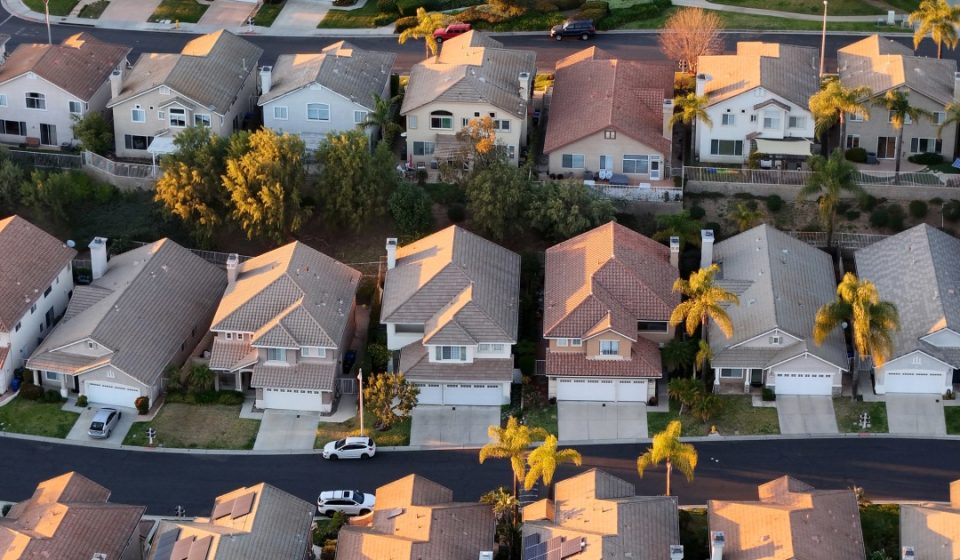

Mortgage rates are at their highest level in nearly three years as bond market turmoil continues.
U.S. Treasury bonds continued to sell off on Thursday, pushing yields on the most closely watched bonds to their highest levels since 2002.
The 10-year Treasury yield reached 5.34% at the start of the session. In the three months ending Wednesday, the 10-year yield saw its biggest quarterly rise since 1994. The 30-year yield rose to 5.69%.
As bonds sell, their yields increase.
Rising 10-year yields are also driving up U.S. mortgage rates. As of Wednesday evening, the average 30-year fixed mortgage rate rose to 7.6%, its highest level since the end of 2023.
Yields are rising for a number of reasons, but one of the main factors is inflation resulting from rising energy prices resulting from the wars in Iran and Ukraine.
The average price of regular gas in the United States on Thursday remained 47% higher than it was in late February, when the war in Iran began. At the same time, diesel prices have risen by 70% over the same period.
Although diesel is not often used by consumers, it is widely used in the shipping and agricultural sectors, meaning higher fuel costs can easily trickle down to store shelves.
Last week, S&P Global reported that “pricing pressures intensified in September” for companies at the fastest pace in four years.
Another report on Thursday echoed similar concerns. The Institute of Supply Management has released its September report on the U.S. manufacturing sector. While he said the industry remained stable, he also reported “a notable increase” in costs.
Stocks fell to record lows the day after the data was released. The S&P 500 and Nasdaq Composite fell 0.3%. The Dow Jones lost 300 points.
President Donald Trump said Wednesday he is still considering whether to ban U.S. diesel exports. However, experts, including some members of his own cabinet, have warned that a ban would only drive up prices.
A recent ban on diesel exports from Russia has been widely cited by commodity experts as one of the main causes of diesel’s recent all-time highs.
The Trump administration is also urging its European allies, such as Germany and France, to release their emergency stocks of diesel in a new attempt to reduce prices.
“I spoke yesterday with my French counterpart,” US Trade Representative Jamieson Greer told Bloomberg on Thursday morning. “I let him know that this was an idea we had had in the United States and that we would be happy to have a collaborative response on it.”
A European Commission spokesperson told reporters on Thursday that it would hold an “important” meeting with the International Energy Agency on diesel supplies on Friday. “We will then take the necessary measures,” the spokesperson said.
The Federal Reserve’s preferred inflation gauge appeared colder than expected on Wednesday, but many economists attributed that primarily to a technical change in how the data is calculated.
“Cooler on paper, warmer underneath,” is how KPMG Chief Economist Diane Swonk summed up the number.
The PCE index increased by 3.4% year-on-year, less than the expected increase of 3.7%. Core PCE, which excludes food and energy, was just 3%, also lower than the 3.3% expected by economists surveyed by Dow Jones.
“The indicator has moved. The inflation problem has not moved,” Swonk said.
Even with a methodological change, the so-called “super core” PCE, which excludes energy and housing, increased by 0.4% in September. “Sticky is an understatement,” Swonk remarked about this specific figure.
As inflation remains high, energy prices continue to rise and yields increase, affordability still remains a major issue for consumers.
Another Fed rate hike could also be on the horizon soon.
Currently, market odds indicate there is about a 60% chance of a hike at the central bank’s meeting in early December.
“Affordability concerns extend beyond the government’s inflation measures,” said PNC economists, who added that “some of its methods may not fully reflect the experience of consumers, particularly potential home buyers.”
Rising mortgage rates have put the American dream further out of reach for millions of hopeful homeowners. The number of unsold homes on the market recently reached its highest level in more than a decade.
“There may be some relief in terms of affordability, but in the short term, the cost of living will continue to stress households,” PNC economists added.
Gn bussni