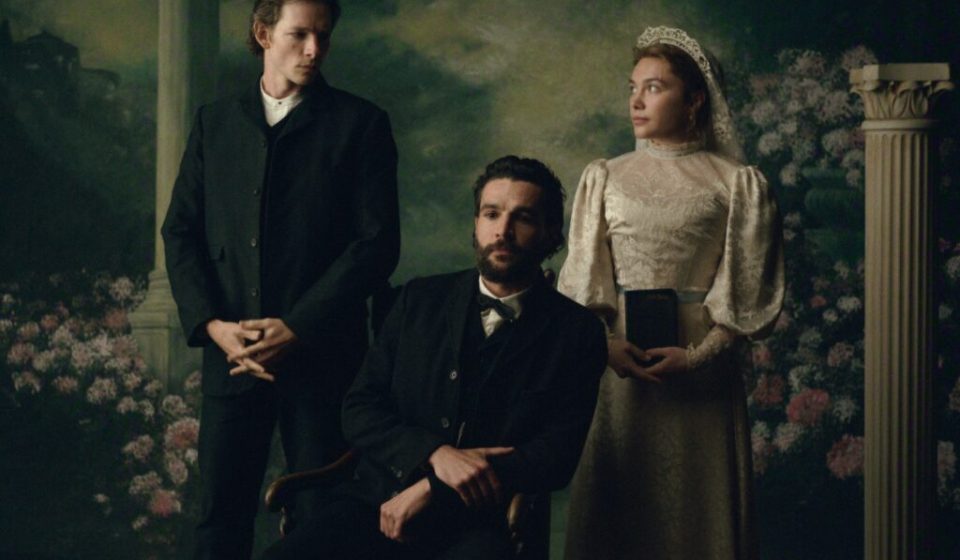

Before digesting Zoe Kazan’s seven-part reconsideration of “East of Eden,” I would never have suspected that we, as a society, had been conditioned to misread Cathy Ames, the heartbroken, angel-faced succubus of John Steinbeck’s novel.
Cathy always had her champions, mind you. The internet is full of Reddit arguments and academic reviews questioning Steinbeck’s portrayal of his bestiality. The author himself was conflicted about her, describing Cathy as a dangerous beauty and incapable of empathy in his book, while expressing how dear she was to him in letters to his editor, Pascal Covici. My English and literature teachers were probably too tired to analyze such nuances, and I don’t blame them.
Furthermore, Cathy is not an easy object of empathy. She killed her parents, drove a man to suicide when she was young, and managed to escape marriage and motherhood later. She changed her name to Kate Albey but never changed her habits.
Steinbeck never points to a definitive incentive to explain his behavior, instead writing, “I believe there are monsters born into the world of human parents” to open a chapter devoted to Cathy’s story.
When read in the author’s voice, this seems like a conclusive diagnosis. But hearing Florence Pugh present it as Cathy’s conviction and the founding paradigm of Kazan’s limited series changes things. Once we learn more about Pugh’s Cathy—once we’ve seen her commit the horrific acts I’ve listed—her observation that the only true freedom in this world is economic freedom makes more sense.
“For the modern woman,” she adds to this thought, “this poses a problem.” In her time, and in her opinion, a sensible woman’s path to financial freedom was limited to hoping for a windfall or making a fortune on the backs of others as a madam. In other words, you can depend forever on the mercy of the universe or be ruthless in bending it to achieve your ambition. This doesn’t magically justify Cathy’s criminality. But she’s not completely wrong either.
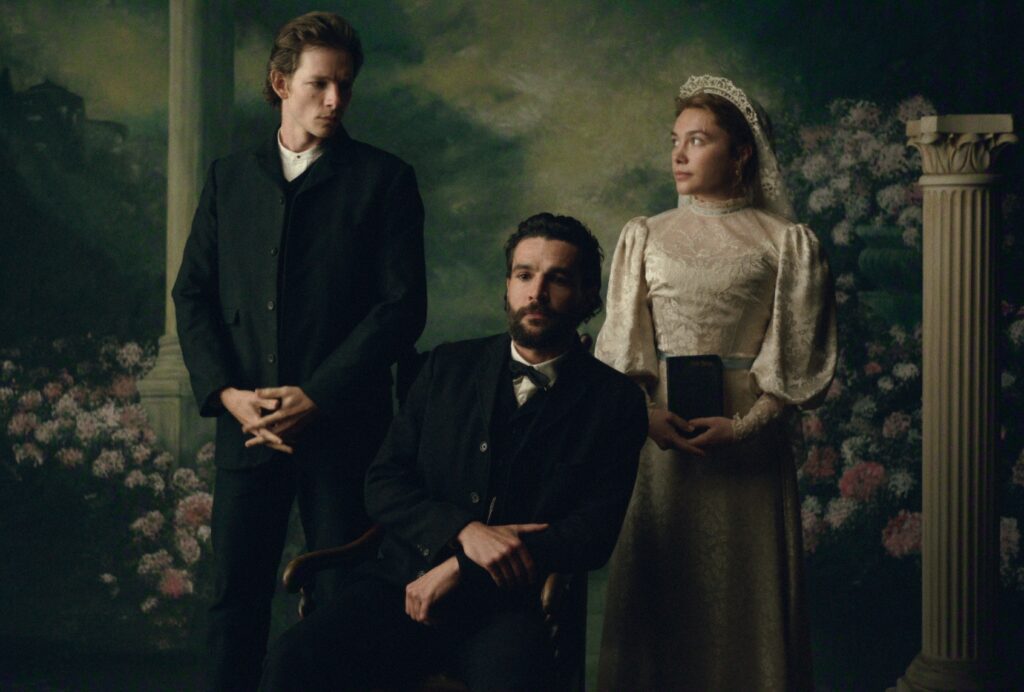
The author’s interpretation of the Hebrew word is central to Steinbeck’s novel and Kazan’s update. Timshelwhich he translates as “you can”. Adam’s servant Lee (Hoon Lee), who raises the twins Cathy abandons, explains that the term expresses free will. It’s a blessing of free will that seems much easier to accept when you have more options than Cathy. Besides, she says in the voiceover of the opening scene while clawing her bloodied and broken body across a dirt field toward the home of Charles Trask (Mike Faist) and his brother Adam (Christopher Abbott), “normality” is relative: “Everyone is normal to themselves.”
Netflix’s Cathy-centered version of “East of Eden” comes to us in a very different era than when Zoe Kazan’s grandfather, Elia, premiered his acclaimed 1955 film. It arrives in a season peppered with traumatic storylines serving as gateways to female rage — some well-executed, like Hulu’s extraordinary “Furious,” and others slipped into a messy mix of “been there, I did that,” a la “Monster: The Lizzie Borden Story.”
We also witness, from afar, the legal perils of Lindsay Clancy, a Massachusetts labor and delivery nurse on trial for killing her three children, all under the age of 5, before attempting suicide in January 2023. Clancy has pleaded not guilty, and her trial recently ended in failure due to a hung jury.
The question of why she did what she did may remain unanswered. During his trial, Clancy’s defense argued that postpartum psychosis caused Clancy to lose his mind. The prosecution’s argument is simpler and nastier, almost reminiscent of Steinbeck’s: Clancy’s actions were premeditated, her way of escaping a life she no longer wanted. Clancy’s lawyers now argue that she should be found not guilty due to the lack of sufficient evidence showing that she killed her children, and due to the lack of criminal liability due to insufficient evidence that she was not in psychosis at the time. Another status hearing is scheduled for November 2.
 (Courtesy of Netflix © 2026)
When Steinbeck first introduced Cathy Ames to audiences in 1952, and when Elia Kazan brought her version to the screen three years later, we got only a slight glimpse into her soul. Elia Kazan’s film, written by Paul Osborn, barely covers the last third of the 600 pages of Steinbeck’s epic. It also omits Lee and focuses primarily on James Dean’s Cal Trask, one of Cathy’s sons, leaving most of his story to second-hand whispers. When a lawman confirms to Cal the rumor that Cathy, then known as the next-town madam Kate, shot his father, Cal muses, “He must have done something to hurt him.”
“No, sir,” the man retorts. “He gave her everything a woman could ask for.”
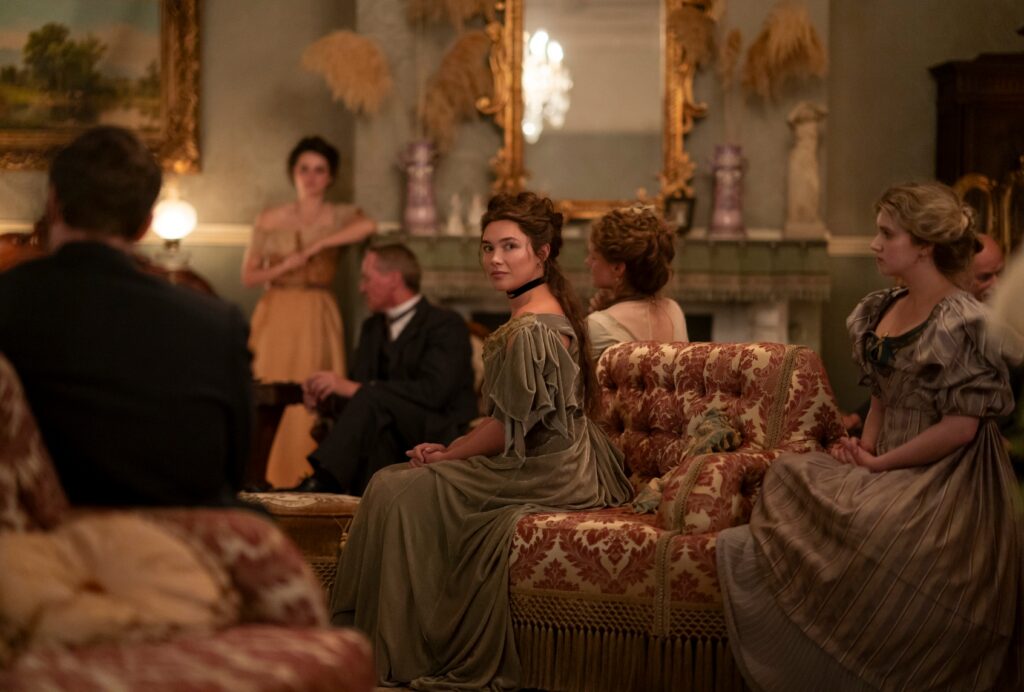
But how would he know? Zoe Kazan’s Cathy, which draws closely on Steinbeck’s original vision, challenges easy assumptions about a woman’s wants and needs. Nothing about her, or the way Pugh plays her, is simple.
“East of Eden” parallels the biblical story of Cain and Abel, first through Adam and Charles Trask, and then again through Adam’s twin sons, Aron and Caleb. Cathy, for her part, deciphers the key to life through “Alice in Wonderland” by Lewis Carroll, the story of a girl like her who survives in an upside-down world.
Steinbeck and Zoe Kazan deduce that something happened to Cathy when she was very young. The filmmaker does this through spare footage: a man luring a little girl in a blue dress with candy, persuading her to follow him into a dark hole that could lead to Wonderland or much darker places. With that, Cathy’s favorite book and its mysterious violation teach her that it is better to be a predator than a prey, to be the queen calling for her enemies’ heads rather than a man’s pawn.
 (Courtesy of Netflix © 2026)
Cathy Ames is a complicated symbol, as countless people who have looked into Clancy’s case want her to be. Viewers accustomed to crime stories featuring perpetrators whose behavior is explained, perhaps even justified, by what they survived may see Clancy as another alleged trauma plot come to life—a sum of biological and social hazards, as Elizabeth Bruenig wrote in The Atlantic.
“And some of it seems undeniably true, like the idea that Clancy’s psychiatric care was woefully uncoordinated,” Bruenig added. “But this theory also has the strange effect of making Clancy the star of her own murder trial, for which the viewer at home may be encouraged to root, which risks overshadowing the seriousness of what she did.”
Want more culture than the latest trend? The Swell highlights art made to last.
Register here
We need to be clear that the differences between the entirely fictional Cathy and Clancy, a real, suffering person, are vast. But if the best fiction can also be instructive, perhaps the final moral of Kazan’s “East of Eden” can help us hold several truths at once. Cathy’s reasons for doing terrible things may be understandable, even relatable, while the transgression remains unforgivable. A person may even warn us by calling for help or, as Cathy does, advising those about to fall into their trap to turn back.
“You’re so good to me, and I’ll only cause you trouble,” she purrs when it’s clear that Adam is in love with her. But he refuses to listen to her and marries her anyway. When Cathy discovers she is pregnant, she warns him that she will leave at the first opportunity, even attempting to self-administer an abortion with a knitting needle. Don’t worry, a kind male neighbor assures Adam: his maternal urges will manifest immediately after the babies are born. This is not the case.
Instead, Cathy puts her many precautions into action, leaving behind her crying children and bleeding husband for a new life and a fortune won through trickery, fraud, and poison. But with a few twists of fate, she could be any of us. And I wouldn’t be surprised if Pugh’s exquisite, beautifully brutal performance led more of us to his defense.
“East of Eden” is streaming on Netflix.
Learn more
from Salon Culture newsletter, The Swell
Gn entert