Dreary, gloomy weather is expected to descend on the central United States as voters head to the polls on Tuesday, but experts say the impact on election results should be minimal.
Still, weather could become a closely watched factor in a few close races in Texas and the Midwest.
On Monday, a storm system is expected to move through the central United States, bringing strong winds, the risk of tornadoes, hail and heavy rain.
“We have some moisture moving up into parts of Texas and Oklahoma and up into Kansas and Missouri, and with that moisture we’re going to have a chance of storms,” said Evan Bentley, warning coordination meteorologist for the National Weather Service Storm Prediction Center in Norman, Oklahoma. “We have enough energy to deal with severe weather, including damaging winds and perhaps a few tornadoes. »
Bentley said North Texas and Oklahoma could experience straight-line winds exceeding 75 mph Monday, sparking concerns about power outages.
“When we have the potential for 70 to 80 mile per hour winds, there’s always concern about impacts to infrastructure, such as power lines,” Bentley said, while adding that this type of weather was not uncommon in the region.
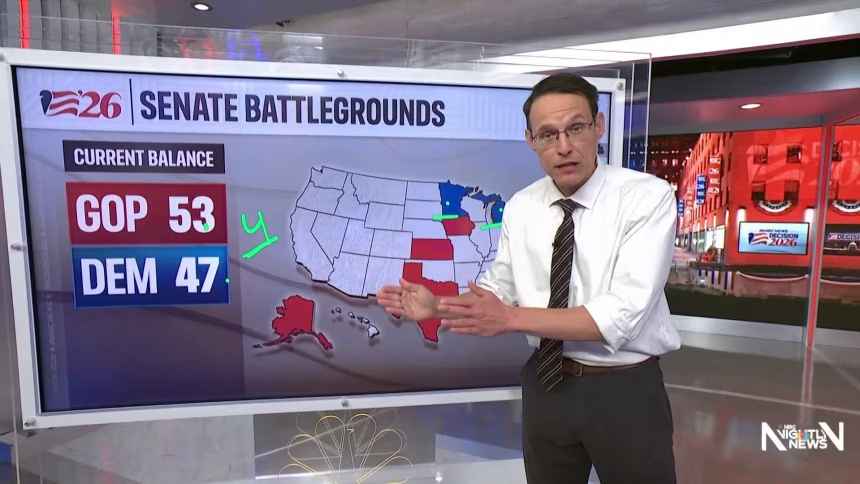
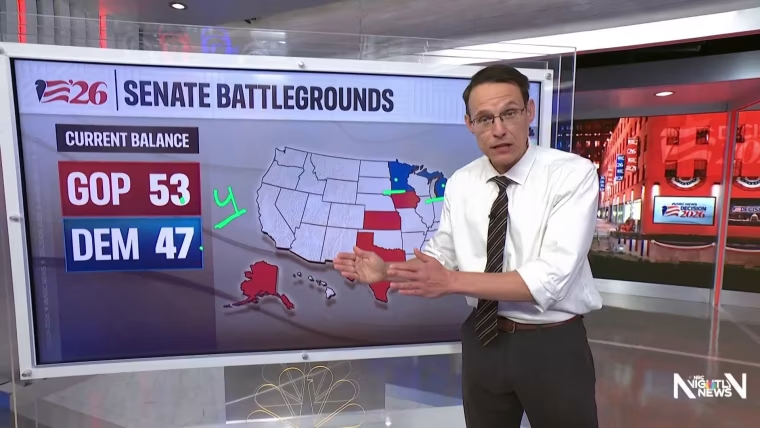
The effect of weather on voter turnout will be closely monitored by campaigns aimed at attracting as many supporters as possible to polling places. Kansas and Texas, both of which could be affected by Monday’s storms, have hotly contested Senate elections.
The storm system will move eastward Tuesday, with heavy rain possible in Mississippi, Missouri and west Tennessee.
On Election Day, “scattered flash flooding is possible” in the lower Mississippi River Valley and areas such as Memphis, said Jennifer Tate, a meteorologist at the National Weather Service Weather Prediction Center in College Park, Maryland.
Much of the rest of the central United States – from East Texas to the Midwest – can expect rainy and dreary weather on Election Day.
“There could still be locally significant amounts in Iowa,” Tate said of the precipitation. “I hope nothing would impact travel too much.”
On Election Day, the weather on the West Coast looks mostly pleasant, with pockets of rain in Northern California. The East Coast also appears clear, with some precipitation expected in Florida and Maine.
Precipitation has been shown to have a modest effect on voter turnout in analyzes of election data.
Researchers analyzed past elections to determine the extent to which unusually heavy rainfall might have dampened voter turnout in historic elections. Brad Gomez, an associate professor of political science at Florida State University, was part of a team that analyzed presidential elections from 1948 to 2000.
“What we found was that for every inch of rain that a county received above its average amount of precipitation, voter turnout decreased by about eight-tenths of a percentage point,” Gomez said.
But Gomez said there have been institutional changes to voting that make it difficult to estimate whether that effect will continue today.
“Many states have started to adopt early voting and, of course, some states, like Washington and Oregon, have started to adopt mail-in voting,” Gomez said. “Nationally, the U.S. Election Assistance Commission estimates that today, only about 37 percent of Americans actually vote on Election Day. »
This means that weather disruptions today affect a much smaller slice of voters than before the year 2000.
Early voting trends could mean weather disruptions will have more of an impact in some states than others. Gomez said only about 20% of Texans voted in person on Election Day for the 2024 election. But that figure was about 60% in Minnesota and about 45% in Kansas — so weather disruptions could be greater in those states.
Thomas Fujiwara, an associate professor of economics at Princeton University who has studied the issue and written about it in academic articles, said the effect of precipitation on voter turnout has diminished over time.
“It was stronger in the ’50s and ’60s, and it’s weaker now,” Fujiwara said. “We shouldn’t consider rain a major factor.”
Both Fujiwara and Gomez said it would be difficult to predict which party would benefit from the rain, given relatively recent changes in the way people vote.
Gn headline